
Comparison Bosch KGN39VI306 stainless steel vs Bosch KGN36VL326 silver
Add to comparison | 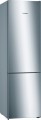 | 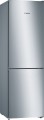 |
|---|---|---|
| Bosch KGN39VI306 stainless steel | Bosch KGN36VL326 silver | |
| Outdated Product | Outdated Product | |
| User reviews | ||
| TOP sellers | ||
| Total capacity | 366 L | 324 L |
| Number of chambers | 2 | 2 |
| Number of cooling circuits | 2 | 2 |
| Number of compressors | 1 | 1 |
| Inverter compressor |  | |
| No Frost | freezer / refrigerator compartments | freezer / refrigerator compartments |
Features | ||
| Features | door alarm reversible door | door alarm reversible door |
| More features | hidden door handles | hidden door handles |
Refrigeration chamber | ||
| Refrigerator capacity | 279 L | 237 L |
| Number of shelves | 4 | 3 |
| Storage compartments | fresh zone | fresh zone |
| Fresh zone (zero chamber) | 24 L | |
| Fast cool | | |
| Dynamic air cooling | | |
| Auto-defrost | | |
| LED lighting | | |
Freezer chamber | ||
| Freezer compartment | bottom | bottom |
| Freezer capacity | 87 L | 87 L |
| Freezer drawers | 3 | 3 |
| Freezer temperature | -24 °C | -24 °C |
| Autonomy time | 16 h | 16 h |
| Freeze capacity | 14 kg/day | 14 kg/day |
| Fast freeze | | |
More specs | ||
| Controls | internal push-buttons | internal push-buttons |
| Energy class | A++ | A++ |
| Energy consumption per year | 273 kWh | 260 kWh |
| Climate class | SN, N, ST, T (+10...+43 °С) | SN, N, ST, T (+10...+43 °С) |
| Noise class | C | |
| Noise level | 39 dB | 39 dB |
| Dimensions (HxWxD) | 203x60x66 cm | 186x60x66 cm |
| Country of origin | Turkey | Turkey |
| Color | ||
| Added to E-Catalog | october 2019 | september 2019 |


Compare Bosch KGN39VI306 and KGN36VL326
You may be interested in
My comparisons
Bosch KGN39VI306 often compared


Bosch KGN36VL326 often compared


Glossary
Total capacity
The total capacity of the refrigerator is the total capacity of all the main working chambers: refrigerating, freezing, zero, and wine chambers. The set of these chambers, of course, will be different in different models (see more about them above). Here we note that large volumes, on the one hand, simplify the storage of numerous products and, on the other hand, affect the dimensions and price of the unit. It is also worth considering that refrigerators of the same total capacity may differ in the capacity of individual chambers.
Refrigerator capacity
The total capacity of the main working chamber of the refrigerator. If there are separate zero chambers, compartments for wine and other additional functions, this paragraph takes into account only the volume of the refrigerating chamber itself, without additional equipment. In the smallest modern units, this figure does not even reach 100 liters, in the largest it can exceed 400 liters.
The choice of capacity depends on the actual storage needs of the products. At the same time, both the volume of stocks and the frequency of their replenishment (every day, once a week, etc.) matter. The chamber should not be stocked completely; this adversely affects the quality of the refrigerator. On the other hand, it is worth remembering that large volumes accordingly affect the dimensions and price of the unit.
In general, for one or two people, a capacity of 200 – 250 liters, or even less, is considered quite sufficient. The optimal capacity for a family of three is about 250 – 300 liters, for four to five people — 300 – 350 liters, and larger volumes are really needed mainly for specific situations when food has to be stored in large quantities and for a long time.
The choice of capacity depends on the actual storage needs of the products. At the same time, both the volume of stocks and the frequency of their replenishment (every day, once a week, etc.) matter. The chamber should not be stocked completely; this adversely affects the quality of the refrigerator. On the other hand, it is worth remembering that large volumes accordingly affect the dimensions and price of the unit.
In general, for one or two people, a capacity of 200 – 250 liters, or even less, is considered quite sufficient. The optimal capacity for a family of three is about 250 – 300 liters, for four to five people — 300 – 350 liters, and larger volumes are really needed mainly for specific situations when food has to be stored in large quantities and for a long time.
Number of shelves
The number of shelves supplied with the refrigerator. In this case, only shelves placed inside the main (refrigeration) chamber are taken into account. And closed drawers, which are usually at the bottom, are not considered shelves.
In general, this amount depends on the volume: the more spacious the refrigeration compartment, the more shelves are usually provided in the kit. At the same time, there is no strict dependence here, and refrigerators of similar capacity can be equipped with a different number of shelves. As for specific options, the most modest models come with 1 – 2 shelves, 3 shelves and 4 shelves can be called an average, and more are found in some units.
In most modern refrigerators the shelves are removable. In addition, they can be installed at different levels. In this case, it is not necessary to use the entire set: for example, if it is planned to place tall objects inside, one of the shelves can be removed, creating a vast space. And vice versa: if necessary, you can, usually, buy additional shelves. So the number of shelves in the kit only allows you to evaluate the overall possibilities for organizing space in the refrigerator. How to use these features depends on the user.
In general, this amount depends on the volume: the more spacious the refrigeration compartment, the more shelves are usually provided in the kit. At the same time, there is no strict dependence here, and refrigerators of similar capacity can be equipped with a different number of shelves. As for specific options, the most modest models come with 1 – 2 shelves, 3 shelves and 4 shelves can be called an average, and more are found in some units.
In most modern refrigerators the shelves are removable. In addition, they can be installed at different levels. In this case, it is not necessary to use the entire set: for example, if it is planned to place tall objects inside, one of the shelves can be removed, creating a vast space. And vice versa: if necessary, you can, usually, buy additional shelves. So the number of shelves in the kit only allows you to evaluate the overall possibilities for organizing space in the refrigerator. How to use these features depends on the user.
Fresh zone (zero chamber)
The capacity of the zero chamber provided in the refrigerator.
Typically, manufacturers choose the volume of the zero chamber by the total capacity and price category of the refrigerator. So this parameter is important mainly in cases where you plan to store many products at the same time that require the fresh zone. In such cases, it may make sense to sacrifice part of the volume of the refrigerator or freezer and choose a unit with a larger zero chamber. If the refrigerator is planned for normal domestic use, you can ignore this parameter.
Typically, manufacturers choose the volume of the zero chamber by the total capacity and price category of the refrigerator. So this parameter is important mainly in cases where you plan to store many products at the same time that require the fresh zone. In such cases, it may make sense to sacrifice part of the volume of the refrigerator or freezer and choose a unit with a larger zero chamber. If the refrigerator is planned for normal domestic use, you can ignore this parameter.
Energy consumption per year
The average amount of energy consumed by a refrigerator in a year of operation. Of course, these figures are not absolutely accurate; the actual power consumption may vary depending on the specific operating conditions. However, this parameter makes it possible to evaluate the power consumption of the refrigerator and compare different models with each other. At the same time, it often turns out to be more convenient and visual than the energy consumption class (see above) because in this paragraph we are talking about a specific figure (from which you can also calculate the cost of electricity consumed). For clarity, let's take the following example: a small two-chamber refrigerator with energy class A can consume less energy per year than a large side-by-side unit of class A+++, although formally, in terms of energy consumption classes, the second model will be more economical than the first.
Noise class
The general noise class to which the refrigerator corresponds.
The traditional designation of the noise level — in decibels — is not always obvious to the average user. Sometimes it is more misleading than helpful. Noise class labelling was introduced — in Latin letters from A to D, to remedy the situation. Accordingly, class A includes the quietest units; Class B can be described as comparatively quiet, C as moderately loud, and D as rather noisy.
The traditional designation of the noise level — in decibels — is not always obvious to the average user. Sometimes it is more misleading than helpful. Noise class labelling was introduced — in Latin letters from A to D, to remedy the situation. Accordingly, class A includes the quietest units; Class B can be described as comparatively quiet, C as moderately loud, and D as rather noisy.