
Comparison Graco Evo vs Graco Evo XT
Add to comparison | 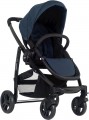 | 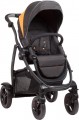 |
|---|---|---|
| Graco Evo | Graco Evo XT | |
| Outdated Product | Outdated Product | |
| User reviews | ||
| TOP sellers | ||
| Design | pushchairs | pushchairs |
| Type | single | single |
| Folding system | booklike type | booklike type |
Carrycot and walking unit | ||
| Backrest tilt adjustment |  | |
| Adjustable footrest | | |
| Fastening in the direction/against the movement | | |
| Bumper bar | | |
| Harness type | 5-point | 5-point |
Frame and chassis | ||
| Depreciation | spring | spring |
| Number of wheels | 4 | 4 |
| Carrycot installation | | |
| Car seat installation | | |
| Handle type | classic | classic |
| Handle height adjustment | + | |
| Frame material | aluminum | |
Wheels | ||
| Swivel wheels | | |
| Lockable front wheels | | |
| Wheels | rubber solid | rubber solid |
| Wheels rim | plastic | plastic |
| Front wheels diameter | 18 cm | 18 cm |
| Rear wheels diameter | 23 cm | 23 cm |
Delivery set | ||
| In box | seat unit foot cover rain cover shopping basket | seat unit foot cover rain cover shopping basket |
General | ||
| Dimensions (unfolded) (LxWxH) | 86x60x102 cm | 86x60x102 cm |
| Chassis width | 60 cm | 60 cm |
| Dimensions (folded) (LxWxH) | 106x60x41 cm | 106x60x41 cm |
| Seat width | 28 cm | 28 cm |
| Walking unit weight | 4 kg | |
| Chassis weight | 6.5 kg | |
| Weight (complete) | 9.5 kg | 10.5 kg |
| Country of origin | USA | USA |
| Color | ||
| Added to E-Catalog | october 2017 | september 2017 |


Compare Graco Evo and Evo XT
You may be interested in
Graco Evo XT often compared

Glossary
Handle height adjustment
Possibility to adjust the stroller handle in height. This function allows you to optimally adjust the length of the handle to the height of the parent. It will be especially useful if the parents are of different heights, and each of them regularly carries a stroller.
Typically, height adjustment is carried out by lowering or raising the upper segment of the handle, and in advanced implementations a telescopic mechanism is responsible for it. The retractable handle makes the stroller more adaptable to different situations and conditions. For example, it can be lengthened for more comfortable walking or shortened for ease of use in tight spaces.
Typically, height adjustment is carried out by lowering or raising the upper segment of the handle, and in advanced implementations a telescopic mechanism is responsible for it. The retractable handle makes the stroller more adaptable to different situations and conditions. For example, it can be lengthened for more comfortable walking or shortened for ease of use in tight spaces.
Frame material
The main material from which the frame of the pushchair is made.
— Aluminium. The material used in the vast majority of modern pushchairs of all price categories. This is due to a number of advantages: aluminium is light and at the same time durable, it does not rust and is not afraid of moisture, it lasts a long time, it looks nice, but it is relatively inexpensive — somewhat more expensive than steel, but noticeably cheaper than more advanced materials like carbon.
— Steel. Steel frames are as strong as aluminium frames, and they are much cheaper. On the other hand, they are quite heavy, so steel is used less often in pushchairs.
— Magnesium alloy. Premium Material: Stronger and more durable than aluminium, just as lightweight, but at a significantly higher cost. It is extremely rare, in single models of expensive pushchairs.
— Carbon. Another high-end material: carbon fiber filled with plastic. This combination gives excellent strength - comparable to steel — at a very low weight. However, carbon is very expensive, and these advantages are rarely decisive for pushchairs — in most cases simpler materials are enough. That is why carbon frames have not become widespread.
— Plastic. Plastic itself is easy to manufacture and relatively cheap; it is also not as cold to the hands in cool weather as aluminium or steel. However, modern pushchairs very rarely have frames made of this material. The fact is that low-cost vari...eties of plastic are not strong enough for this; and high-quality varieties cost accordingly - their price is close to aluminium, or even higher.
— Fibreglass. In this context, "fibreglass" typically refers to glass fibers mixed with plastic filler. Unlike conventional window glass, glass fibers are flexible and strong. The plastic filler enhances durability by offering scratch and tear resistance. The result is a material that is lightweight and very strong. However, fibreglass is prone to brittleness, especially with point impacts, and is susceptible to abrasion. As a result, it isn't widely used in pushchairs.
— Aluminium. The material used in the vast majority of modern pushchairs of all price categories. This is due to a number of advantages: aluminium is light and at the same time durable, it does not rust and is not afraid of moisture, it lasts a long time, it looks nice, but it is relatively inexpensive — somewhat more expensive than steel, but noticeably cheaper than more advanced materials like carbon.
— Steel. Steel frames are as strong as aluminium frames, and they are much cheaper. On the other hand, they are quite heavy, so steel is used less often in pushchairs.
— Magnesium alloy. Premium Material: Stronger and more durable than aluminium, just as lightweight, but at a significantly higher cost. It is extremely rare, in single models of expensive pushchairs.
— Carbon. Another high-end material: carbon fiber filled with plastic. This combination gives excellent strength - comparable to steel — at a very low weight. However, carbon is very expensive, and these advantages are rarely decisive for pushchairs — in most cases simpler materials are enough. That is why carbon frames have not become widespread.
— Plastic. Plastic itself is easy to manufacture and relatively cheap; it is also not as cold to the hands in cool weather as aluminium or steel. However, modern pushchairs very rarely have frames made of this material. The fact is that low-cost vari...eties of plastic are not strong enough for this; and high-quality varieties cost accordingly - their price is close to aluminium, or even higher.
— Fibreglass. In this context, "fibreglass" typically refers to glass fibers mixed with plastic filler. Unlike conventional window glass, glass fibers are flexible and strong. The plastic filler enhances durability by offering scratch and tear resistance. The result is a material that is lightweight and very strong. However, fibreglass is prone to brittleness, especially with point impacts, and is susceptible to abrasion. As a result, it isn't widely used in pushchairs.
Weight (complete)
The total weight of the assembled pushchair. For universal models (see "Design"), this paragraph usually indicates the weight with the seat unit installed: such an accessory is used for a longer time than the carrycot, therefore its characteristics are considered the most important. In addition, the difference in weight between cradles and walking blocks usually does not exceed 700 – 800 g (there are exceptions, but quite rarely).
Comparing similar models, a lighter pushchair may offer more convenience, but it often comes at the expense of reliability or a higher price compared to a relatively heavier counterpart. It's important to note that weight varies based on the pushchair type (refer to "Design"). Heavier pushchairs provide stability, reducing the risk of tipping over. The lightest models, weighing less than 5 kg, refer to pushchairs and single-seat ones. Models in the 6 – 10 kg are also mostly pushchairs, including variations for twins. The 11 – 15 kg range is standard for universal pushchairs and transformers. Models weighing 16 – 20 kg are notably heavy, while those exceeding 20 kg are rare and found among high-end double-seat pushchairs.
Comparing similar models, a lighter pushchair may offer more convenience, but it often comes at the expense of reliability or a higher price compared to a relatively heavier counterpart. It's important to note that weight varies based on the pushchair type (refer to "Design"). Heavier pushchairs provide stability, reducing the risk of tipping over. The lightest models, weighing less than 5 kg, refer to pushchairs and single-seat ones. Models in the 6 – 10 kg are also mostly pushchairs, including variations for twins. The 11 – 15 kg range is standard for universal pushchairs and transformers. Models weighing 16 – 20 kg are notably heavy, while those exceeding 20 kg are rare and found among high-end double-seat pushchairs.