
Comparison Gorenje BO 731 CLB vs Gorenje BO 73 CLI
Add to comparison | 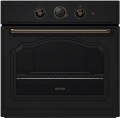 | 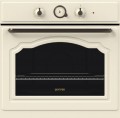 |
|---|---|---|
| Gorenje BO 731 CLB | Gorenje BO 73 CLI | |
from $321.23 up to $427.96 | from $283.17 up to $539.96 | |
| TOP sellers | ||
Main specs | ||
| Type | electric oven | electric oven |
| Design | retro | retro |
| Controls | rotary knobs | rotary knobs |
| Capacity | 67 L | 65 L |
| Cooking temperature | 50 – 275 °C | up to 275 °C |
Features | ||
| Cooking modes | grill convection | grill convection |
| Number of modes | 7 | 8 |
| Features | thermostat timer auto switch-off | thermostat timer auto switch-off |
More features | ||
| Number of door glasses | 2 | 3 |
| Guides | telescopic on one level | telescopic on two levels |
| Oven cleaning | steam | steam |
More specs | ||
| Energy class | A | A |
| Connected load | 3.3 kW | 3.3 kW |
| Dimensions (HxWxD) | 60x60x57 cm | 60x60x57 cm |
| Cut-out dimensions (HxWxD) | 583x560x550 mm | 583x560x550 mm |
| Color | ||
| Added to E-Catalog | december 2013 | september 2013 |


Compare Gorenje BO 731 CLB and BO 73 CLI
You may be interested in
My comparisons
Gorenje BO 731 CLB often compared

Gorenje BO 73 CLI often compared


Glossary
Capacity
The working capacity of the oven. The amount of food that can be cooked in the device and the amount of space required for embedding depends on this parameter.
A capacity of about 50 – 60 litres is considered quite sufficient for a family of 2 – 3 people. It is the capacity that most modern built-in ovens have. However, there are other options — modest models of 20 – 30 litres, similar in capacity to microwave ovens, large in capacity for home baking and large cabinets of 100 litres or more, designed more for cafes and restaurants than for home use.
A capacity of about 50 – 60 litres is considered quite sufficient for a family of 2 – 3 people. It is the capacity that most modern built-in ovens have. However, there are other options — modest models of 20 – 30 litres, similar in capacity to microwave ovens, large in capacity for home baking and large cabinets of 100 litres or more, designed more for cafes and restaurants than for home use.
Cooking temperature
The cooking temperature range allows you to understand which special tasks are subject to the oven. The lower temperature from which the oven starts heating, usually, is in the range of +30 to +50 ˚C. So, for example, the minimum heating temperature at +30 ˚C allows you to defrost products. Models with a minimum of 40 ˚C and 50 ˚C allow you to heat ready meals, heat tableware (before serving), dry crackers, etc.
Number of modes
The number of cooking modes provided in the design of the oven. In this case, the cooking mode means the general opertaion mode — for example, “heating”, “heating + convection”, etc. Accordingly, this indicator strongly depends on additional equipment (see "Features"). However, even in similar models, the number of modes may be different. In general, the more cooking modes, the more cooking options, the easier it will be to choose the optimal mode for a specific situation.
Number of door glasses
The number of layers of glass in the viewing window of the oven door.
Modern models, usually, have from 2 to 4 glasses. The more glasses, the less heat loss and the more economical the oven, but this parameter also affects the cost.
Modern models, usually, have from 2 to 4 glasses. The more glasses, the less heat loss and the more economical the oven, but this parameter also affects the cost.
Guides
Type of guides for installing baking sheets that are used in the oven.
— Frame. Classic guides have the form of slots with protrusions in the side walls of the oven. This design is simple and inexpensive. However, it is not very convenient — when removing baking sheets, you have to pull your hand into a heated oven, which means you will need a mitten or potholder. And the extraction itself may require effort, especially if the guides are dirty and the trays go tight in them.
— Telescopic. Retractable guides on which the baking sheet “leaves” the oven, usually, immediately when the door is opened. Such devices are more convenient than frame ones, but they are more expensive and not suitable for all situations (for example, sometimes to check a dish you only need to open the lid without pulling it out). Therefore, in most models, telescopic guides are only on one level. But telescopic guides on two levels or even three levels already classifies the device as a top segment.
— Frame. Classic guides have the form of slots with protrusions in the side walls of the oven. This design is simple and inexpensive. However, it is not very convenient — when removing baking sheets, you have to pull your hand into a heated oven, which means you will need a mitten or potholder. And the extraction itself may require effort, especially if the guides are dirty and the trays go tight in them.
— Telescopic. Retractable guides on which the baking sheet “leaves” the oven, usually, immediately when the door is opened. Such devices are more convenient than frame ones, but they are more expensive and not suitable for all situations (for example, sometimes to check a dish you only need to open the lid without pulling it out). Therefore, in most models, telescopic guides are only on one level. But telescopic guides on two levels or even three levels already classifies the device as a top segment.