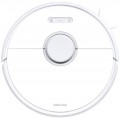
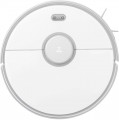
Comparison Roborock S5 Max vs Roborock S6
Add to comparison | ![]() | ![]() |
|---|---|---|
| Roborock S5 Max | Roborock S6 | |
from $549.99 | from $415.06 up to $671.47 | |
| User reviews | ||
| TOP sellers | ||
Adjusting the water supply during wet cleaning. Control from a smartphone and using voice assistants. Limiting cleaning zones through a mobile application. | Laser Cartography Map Management 3.0. Overcoming thresholds up to 2 cm. Limiting the cleaning area using a mobile application. Scheduling cleaning times for each room. 160 mL water tank. | |
| Type | robot vacuum cleaner | robot vacuum cleaner |
| Cleaning type | dry and wet | dry and wet |
| Water supply control | ||
| Dust collector | container | container |
Specs | ||
| Motor power | 58 W | 58 W |
| Suction force | 2000 Pa | 2000 Pa |
| Dust collector capacity | 0.46 L | 0.48 L |
| Water tank capacity | 0.29 L | 0.16 L |
| Smartphone connection | ||
| Power adjustment | + | + |
| Automatic power control | ||
| Fine filter | HEPA | HEPA |
Robot vacuum cleaner | ||
| Robot features | scheduled cleaning anti-fall function obstacle sensor | scheduled cleaning anti-fall function obstacle sensor |
| Mapping system | rangefinder (laser) | rangefinder (laser) |
| Cleaning area limit | app | app |
| multi-map memory | ||
| Voice assistant | Google Assistant, Amazon Alexa | Google Assistant, Amazon Alexa |
| Crossing threshold | 20 mm | 20 mm |
Nozzles included | ||
| Nozzle functions | side brush turbobrush | side brush turbobrush |
Docking station | ||
| Charging station | + | + |
Power source | ||
| Source of power | battery | battery |
| Battery voltage | 14.4 В | |
| Battery type | Li-Ion | Li-Ion |
| Battery capacity | 5.2 Ah | 5.2 Ah |
| Battery run time | 180 min | 150 min |
| Charging time | 3 h | 3 h |
More specs | ||
| Cleaning area | 250 m² | 250 m² |
| Noise level | 65 dB | 63 dB |
| Dimensions (HxWxD) | 9.65x35x35.3 cm | 9.65x35x35.3 cm |
| Weight | 3.5 kg | 3.6 kg |
| Color | ||
| Added to E-Catalog | march 2020 | july 2019 |
Compare Roborock S5 Max and S6
Roborock S5 Max and Roborock S6 robot vacuums have similar features, such as suction power (2000 Pa) and the capability for both dry and wet cleaning. However, the S5 Max stands out with a larger dustbin capacity (0.46 L compared to 0.48 L for the S6) and a larger water tank (0.29 L compared to 0.16 L for the S6), allowing it to operate longer without needing to be emptied. Users note that the S5 Max performs well in cleaning, is easy to control via the app, and offers various modes, including the ability to set cleaning zones. Meanwhile, the S6 also receives positive feedback for quality cleaning and ease of setup, although some users complain about the small trash tray. Overall, the S5 Max might be preferable for larger spaces due to its larger container volumes, while the S6 offers good performance but with some limitations in capacity.
You may be interested in
Roborock S5 Max often compared
Roborock S6 often compared
Glossary
Dust collector capacity
The nominal volume of the dust collector installed in the vacuum cleaner.
This indicator largely depends on the type of unit (see above). For example, in most handheld household models, the capacity does not exceed 0.5 L. The volume of the container in upright vacuum cleaners and robots can be somewhat larger — among the first variety there are quite a few models for 1 – 2 liters or even more, and among the second — by 0.6 – 1 liter and a little more. For conventional vacuum cleaners, the minimum figure is actually about 0.8 – 1 L; dust collectors for 1 – 2 L and 2 – 4 L are very popular in such devices; the maximum capacity is actually 4 – 6 liters — units of a similar layout, but with a larger capacity, are usually referred to as household ones. In turn, relatively small containers are occasionally found among workshop models. However, in vacuum cleaners of this type, the capacity is generally quite large — it can reach 26 – 50 liters or even more ; the same applies to industrial (construction) units.
In general, a larger dust container allows you to work longer without interruptions. On the other hand, a capacious container itself takes up more space and, accordingly, affects the size, weight and price. So when choosing th...is parameter, it is worth considering the actual features of the use of a vacuum cleaner. Here we can give such an example: for a full-scale cleaning of an average city apartment, a capacity of about 1 – 1.5 litres is required. Thus, say, a 4-litre bag allows you to carry out two such cleanings with sufficient efficiency without unloading the vacuum cleaner. There are more detailed recommendations regarding the optimal volume of the dust collector, including specific cleaning options. These recommendations can be found in special sources.
This indicator largely depends on the type of unit (see above). For example, in most handheld household models, the capacity does not exceed 0.5 L. The volume of the container in upright vacuum cleaners and robots can be somewhat larger — among the first variety there are quite a few models for 1 – 2 liters or even more, and among the second — by 0.6 – 1 liter and a little more. For conventional vacuum cleaners, the minimum figure is actually about 0.8 – 1 L; dust collectors for 1 – 2 L and 2 – 4 L are very popular in such devices; the maximum capacity is actually 4 – 6 liters — units of a similar layout, but with a larger capacity, are usually referred to as household ones. In turn, relatively small containers are occasionally found among workshop models. However, in vacuum cleaners of this type, the capacity is generally quite large — it can reach 26 – 50 liters or even more ; the same applies to industrial (construction) units.
In general, a larger dust container allows you to work longer without interruptions. On the other hand, a capacious container itself takes up more space and, accordingly, affects the size, weight and price. So when choosing th...is parameter, it is worth considering the actual features of the use of a vacuum cleaner. Here we can give such an example: for a full-scale cleaning of an average city apartment, a capacity of about 1 – 1.5 litres is required. Thus, say, a 4-litre bag allows you to carry out two such cleanings with sufficient efficiency without unloading the vacuum cleaner. There are more detailed recommendations regarding the optimal volume of the dust collector, including specific cleaning options. These recommendations can be found in special sources.
Water tank capacity
A capacity of a tank for water or detergent a vacuum cleaner with a wet cleaning function is equipped with. (see "Cleaning type").
Large capacity allows you to work longer without refilling the tank. On the other hand, an increase in capacity has a corresponding effect on the size, weight and cost of the unit. Thus, manufacturers choose this parameter taking into account the general specialization and the “weight category” of a particular model. So, in robots (see "Type"), the volume of the water tank is, by definition, small. Even in the heaviest models, it does not exceed 650 mL. But other types of vacuum cleaners can differ markedly in this parameter.
In general, for non-robot units, a capacity of 1 liter or less is considered very limited, 1 – 2 liters is small, 2 – 3 liters is average, more than 3 liters is above average. However, it much depends on the type. For example, in conventional vacuum cleaners, the capacity does not exceed 2.5 liters, and "for workshop" models this is very little — in most cases, they have a tank capacity of 3 liters or more.
Large capacity allows you to work longer without refilling the tank. On the other hand, an increase in capacity has a corresponding effect on the size, weight and cost of the unit. Thus, manufacturers choose this parameter taking into account the general specialization and the “weight category” of a particular model. So, in robots (see "Type"), the volume of the water tank is, by definition, small. Even in the heaviest models, it does not exceed 650 mL. But other types of vacuum cleaners can differ markedly in this parameter.
In general, for non-robot units, a capacity of 1 liter or less is considered very limited, 1 – 2 liters is small, 2 – 3 liters is average, more than 3 liters is above average. However, it much depends on the type. For example, in conventional vacuum cleaners, the capacity does not exceed 2.5 liters, and "for workshop" models this is very little — in most cases, they have a tank capacity of 3 liters or more.
Automatic power control
The automatic power control function is found mainly in robot vacuum cleaners. When driving onto the carpet, the vacuum cleaner automatically increases motor speed and suction power to achieve proper cleaning results. Usually robot vacuum cleaners that support this mode are equipped with a turbo brush and a spacious dust container. It must be taken into account that when cleaning carpets at high power, the battery life of the vacuum cleaner is reduced.
Battery voltage
The rated voltage of the battery used in the vacuum cleaner with the corresponding type of power supply (see above).
Initially, manufacturers select the characteristics of the battery (including voltage) in such a way that the vacuum cleaner can be guaranteed to deliver the power claimed in the specifications. Therefore, when choosing this indicator often does not play a decisive role. However, it can also be useful in such cases — for the most reliable comparison between models with different battery capacities in ampere-hours. See "Battery capacity" for details.
In addition, voltage data can be useful during operation — for example, to find a spare/replacement battery or a third-party charger.
Initially, manufacturers select the characteristics of the battery (including voltage) in such a way that the vacuum cleaner can be guaranteed to deliver the power claimed in the specifications. Therefore, when choosing this indicator often does not play a decisive role. However, it can also be useful in such cases — for the most reliable comparison between models with different battery capacities in ampere-hours. See "Battery capacity" for details.
In addition, voltage data can be useful during operation — for example, to find a spare/replacement battery or a third-party charger.
Battery run time
The operating time of a battery-powered vacuum cleaner (see "Power supply") on a single battery charge.
Usually, the average operating time in normal mode is indicated here. Accordingly, in fact, the battery life of the vacuum cleaner may differ slightly from the claimed one, depending on the chosen application format. Nevertheless, the operating time indicated in the specifications is a fairly reliable indicator; it can be used both for a general assessment of battery life and for comparing the selected vacuum cleaner with other models.
Separately, we note that increasing battery life requires either the use of more capacious (and therefore more expensive and heavier) batteries or a decrease in engine power (and the efficiency of the unit as a whole). So it is worth looking specifically for a long working vacuum cleaner if these moments are outweighed by a long operating time.
Usually, the average operating time in normal mode is indicated here. Accordingly, in fact, the battery life of the vacuum cleaner may differ slightly from the claimed one, depending on the chosen application format. Nevertheless, the operating time indicated in the specifications is a fairly reliable indicator; it can be used both for a general assessment of battery life and for comparing the selected vacuum cleaner with other models.
Separately, we note that increasing battery life requires either the use of more capacious (and therefore more expensive and heavier) batteries or a decrease in engine power (and the efficiency of the unit as a whole). So it is worth looking specifically for a long working vacuum cleaner if these moments are outweighed by a long operating time.
Noise level
The noise level produced by the vacuum cleaner during operation. Usually, the value for normal operation at maximum engine power is indicated here. With less power, the loudness of the unit may be lower, but the key is precisely the maximum indicator.
Regarding specific numbers, keep in mind that the decibel used to measure the noise level is a non-linear quantity. Therefore, it is worth evaluating specific indicators using special comparative tables. In general, vacuum cleaners are quite noisy appliances; so in this case, models are considered quiet if this indicator does not exceed 65 dB — this is the level of a loud conversation between 2 – 3 people at a distance of 1 m. The quietest of these models give out only 40 dB — this is the average volume of a person’s speech in normal tones (and the minimum volume allowed for constant noise sources in living quarters during the day). For louder units, the comparison table looks like this:
— 66 – 70 dB — loud conversations between several groups of people at a distance of about 1 m;
— 71 – 75 dB — the volume of a cry or laughter in full voice at a distance of about 1 m;
— 76 – 80 dB — the volume of a mechanical alarm clock or the engine of an old truck;
— more than 80 dB — a very high noise level, exceeding the level of a loud scr...eam; when working with a vacuum cleaner having such specifications for a long time, it is highly desirable to use hearing protection.
Also note that the noise level largely depends on the engine power, as well as some other features (for example, it is strongly affected by the presence of an aquafilter — see "Dust collector"). At the same time, there is no hard connection here, and units with a similar set of specifications can differ markedly in actual loudness. In such cases, when choosing here, it is worth proceeding from the fact that a quieter vacuum cleaner will be more comfortable to use. However, it will most likely cost noticeably more.
Regarding specific numbers, keep in mind that the decibel used to measure the noise level is a non-linear quantity. Therefore, it is worth evaluating specific indicators using special comparative tables. In general, vacuum cleaners are quite noisy appliances; so in this case, models are considered quiet if this indicator does not exceed 65 dB — this is the level of a loud conversation between 2 – 3 people at a distance of 1 m. The quietest of these models give out only 40 dB — this is the average volume of a person’s speech in normal tones (and the minimum volume allowed for constant noise sources in living quarters during the day). For louder units, the comparison table looks like this:
— 66 – 70 dB — loud conversations between several groups of people at a distance of about 1 m;
— 71 – 75 dB — the volume of a cry or laughter in full voice at a distance of about 1 m;
— 76 – 80 dB — the volume of a mechanical alarm clock or the engine of an old truck;
— more than 80 dB — a very high noise level, exceeding the level of a loud scr...eam; when working with a vacuum cleaner having such specifications for a long time, it is highly desirable to use hearing protection.
Also note that the noise level largely depends on the engine power, as well as some other features (for example, it is strongly affected by the presence of an aquafilter — see "Dust collector"). At the same time, there is no hard connection here, and units with a similar set of specifications can differ markedly in actual loudness. In such cases, when choosing here, it is worth proceeding from the fact that a quieter vacuum cleaner will be more comfortable to use. However, it will most likely cost noticeably more.