
Comparison Intertool LB-0105 vs Intertool LB-0104
Add to comparison | 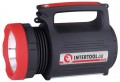 | 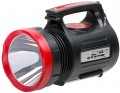 |
|---|---|---|
| Intertool LB-0105 | Intertool LB-0104 | |
| Outdated Product | Outdated Product | |
| User reviews | ||
| TOP sellers | ||
You can connect 2 LED lamps to the flashlight (included). The flashlight is charged both from the network and from the separate solar panel that comes with the kit. | You can connect 3 LED lamps of 3 W each (included) with a 3-metre cord to the flashlight. The flashlight is charged both from the mains and from the separate solar battery that comes with the kit. Mp3 player with sockets for flash drives (USB, memory cards) and FM radio. | |
| Type | hand lamp | hand lamp |
Specs | ||
| Lamp type | lED with reflector | lED with reflector |
| Lighting range | 300 m | |
| Brightness levels | 1 | 1 |
| Additional modes | 1 pcs lamp | 1 pcs lamp |
Power supply | ||
| Power source | battery | battery |
| Battery capacity | 5500 mAh | 6000 mAh |
| Operating time (Low mode) | 4 h | |
| Solar battery |  | |
| Charge level indicator | | |
| Power Bank function | | |
In box | ||
| In box | battery(s) torch charger strap | battery(s) torch charger strap |
General | ||
| Material | plastic | plastic |
| Length | 19.5 cm | 18 cm |
| Weight | 1833 g | 2375 g |
| Color | ||
| Added to E-Catalog | october 2019 | october 2019 |


Compare Intertool LB-0105 and LB-0104
You may be interested in
My comparisons
Glossary
Lighting range
The maximum range at which the flashlight provides any effective illumination of objects. Different manufacturers have different criteria for this efficiency when measuring ranges, and therefore it is only possible to unequivocally compare among themselves in range only models of one manufacturer. At the same time, this parameter allows us to compare models from different manufacturers with some certainty: for example, flashlights with a lighting range of 15 m and 100 m will clearly belong to different range classes, regardless of manufacturers.
Note that the range of illumination depends not only on the maximum luminous flux provided by the lantern (see above), but also on the features of its design: the narrower the beam is provided by the reflector of the lantern, the greater the range will be, and vice versa — scattered light does not spread far. Some models allow you to adjust the beam width depending on the requirements of the situation (for more details, see "Adjusting the focus").
It is also worth bearing in mind that models with the same claimed lighting range can cover different spaces. For example, a hand lamp (see Type) with a reflector diameter of 20 cm will be able to provide a wider beam than a conventional hand lamp with a 5 cm reflector. And although in both cases the objects that fall into the light spot will be illuminated in the same way, however, in the first case, the size of the spot itself will be larger, and the actual efficien...cy of the flashlight will be correspondingly higher (in light of the fact that it is easier to "feel" individual objects with a wide beam, especially at a considerable distance).
Note that the range of illumination depends not only on the maximum luminous flux provided by the lantern (see above), but also on the features of its design: the narrower the beam is provided by the reflector of the lantern, the greater the range will be, and vice versa — scattered light does not spread far. Some models allow you to adjust the beam width depending on the requirements of the situation (for more details, see "Adjusting the focus").
It is also worth bearing in mind that models with the same claimed lighting range can cover different spaces. For example, a hand lamp (see Type) with a reflector diameter of 20 cm will be able to provide a wider beam than a conventional hand lamp with a 5 cm reflector. And although in both cases the objects that fall into the light spot will be illuminated in the same way, however, in the first case, the size of the spot itself will be larger, and the actual efficien...cy of the flashlight will be correspondingly higher (in light of the fact that it is easier to "feel" individual objects with a wide beam, especially at a considerable distance).
Battery capacity
The capacity of the battery provided in the design or delivery of the flashlight.
Theoretically, a higher capacity allows to achieve greater battery life, but in fact, not everything is so simple. Firstly, the actual battery life will also depend on power consumption — and it can be different even in models with the same luminous flux (this is due to the difference in the characteristics of individual LEDs). Secondly, the physical features of the designation in milliamp-hours (mAh) are such that only batteries with the same nominal voltage can be directly compared by this indicator (in other cases, indicators must be recalculated using special formulas).
In light of all this, we can say that battery capacity is more of a reference than a practically significant parameter. So, in some cases, it allows you to compare different models of flashlights with each other, but only very approximately. For example, a device with a 1600 mAh battery will definitely have a longer battery life than a model with an 800 mAh battery that is similar in brightness, lamp type and “weight category”; but how much battery life will be higher is impossible to say for sure. So, in order to assess the practical capabilities of a flashlight, it is worth focus on more "close to life" characteristics — first of all, on the directly claimed maximum battery life (see above), as well as battery life indicators in different modes indicated in the manufacturer's documentation.
Theoretically, a higher capacity allows to achieve greater battery life, but in fact, not everything is so simple. Firstly, the actual battery life will also depend on power consumption — and it can be different even in models with the same luminous flux (this is due to the difference in the characteristics of individual LEDs). Secondly, the physical features of the designation in milliamp-hours (mAh) are such that only batteries with the same nominal voltage can be directly compared by this indicator (in other cases, indicators must be recalculated using special formulas).
In light of all this, we can say that battery capacity is more of a reference than a practically significant parameter. So, in some cases, it allows you to compare different models of flashlights with each other, but only very approximately. For example, a device with a 1600 mAh battery will definitely have a longer battery life than a model with an 800 mAh battery that is similar in brightness, lamp type and “weight category”; but how much battery life will be higher is impossible to say for sure. So, in order to assess the practical capabilities of a flashlight, it is worth focus on more "close to life" characteristics — first of all, on the directly claimed maximum battery life (see above), as well as battery life indicators in different modes indicated in the manufacturer's documentation.
Operating time (Low mode)
The operating time in Low mode indicates how long the flashlight shines at low brightness before there’s a noticeable decrease in light level according to factory tests, usually at room temperature and with the battery provided. Low is chosen for long-duration tasks: set it as a tent light, attach it with a magnetic tail under the hood, or leave it as a nightlight or marker—situations where autonomy and moderate brightness are important. In this mode, the electronics heat up less and consume power more efficiently than in Medium/High, so the stated hours often reach the tens, especially in models with 18650/21700 batteries. It's important to consider that the actual "Low mode runtime" varies depending on the quality and capacity of the battery, outdoor temperature, and driver settings (such as whether there are steps and constant brightness maintenance). Compared to "Eco/Ultralow," Low provides a more practical level of light for household and service tasks, preserving the main advantage—long autonomy without overheating and unnecessary battery resource loss.