
Comparison Cambridge CXA81 vs Cambridge CXA61
Add to comparison | 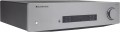 | 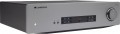 |
|---|---|---|
| Cambridge CXA81 | Cambridge CXA61 | |
| Compare prices 1 | from $599.00 | |
| User reviews | ||
| TOP sellers | ||
| Device type | integrated amplifier | integrated amplifier |
| Element base | transistor | transistor |
| Toroidal transformer |  | |
Amplifier parameters | ||
| Number of channels | 4 | 4 |
| Frequency range | 5 – 60000 Hz | 5 – 60000 Hz |
| Power per channel (8Ω) | 80 W | 60 W |
| Power per channel (4Ω) | 120 W | 90 W |
| Signal to noise ratio | 105 dB | 105 dB |
| Damping factor | 110 | 110 |
| Harmonic distortion | 0.02 % | 0.02 % |
Channel sensitivity / impedance | ||
| Line input | 370 mV 43 kOhm | 370 mV 43 kOhm |
Connectors | ||
| Inputs | USB B coaxial S/PDIF optical RS-232 control input (IR) | USB B coaxial S/PDIF optical RS-232 control input (IR) |
| To amplifier (Main) | RCA/XLR | RCA |
| RCA | 4 pairs | 4 pairs |
| XLR (balanced) | 2 шт | |
| Trigger | 1 шт | 1 шт |
| Outputs | Pre-Amp to subwoofer | Pre-Amp to subwoofer |
| For acoustics | 4 шт | 4 шт |
| Trigger output | 1 шт | 1 шт |
| Front panel | indicators headphone output | indicators audio input jack headphone output |
Features | ||
| Adjustments | level adjustment | level adjustment |
| More features | By-pass/Direct Bi-Wiring external devices control Bluetooth | By-pass/Direct Bi-Wiring external devices control Bluetooth |
General | ||
| Remote control | | |
| PSU | internal | internal |
| Power consumption | 750 W | 600 W |
| Standby consumption | 0.5 W | 0.5 W |
| Dimensions (WxDxH) | 430x341x115 mm | 430x341x115 mm |
| Weight | 8.7 kg | 8.7 kg |
| Color | ||
| Added to E-Catalog | january 2020 | january 2020 |



Compare Cambridge CXA81 and CXA61
Amplifiers Cambridge CXA81 and CXA61 have similar characteristics, but there are key differences. The CXA81 offers power per channel of 80 W (8Ω) and 120 W (4Ω), whereas the CXA61 has 60 W and 90 W respectively. Both devices have a transistor element base and support Bluetooth, but the CXA81 consumes 750 W, and the CXA61 consumes 600 W. Both amplifiers have the same dimensions and weight, as well as the same number of inputs and outputs. The choice between them will depend on your power requirements and energy consumption.
Price comparison
You may be interested in
My comparisons
Cambridge CXA81 often compared


Cambridge CXA61 often compared


Glossary
Power per channel (8Ω)
The nominal sound power output by the amplifier per channel when operating with a load having a dynamic resistance (impedance) of 8 ohms. In our catalog, this parameter is indicated for the mode when all channels of the amplifier work under load (see "Number of channels"); in the presence of unused channels, the rated power may be slightly higher, but this mode cannot be called standard.
Rated power can be simply described as the highest output signal power at which the amplifier is able to work stably for a long time (at least an hour) without negative consequences. These are average figures, because in fact, the audio signal is by definition unstable, and individual level jumps can significantly exceed the rated power. However, it is she who is the main basis for assessing the overall loudness of the sound.
This indicator also determines which speakers can be connected to the amplifier: their rated power should not be lower than that of the amplifier.
According to the laws of electrodynamics, with different dynamic load resistance, the output power of the amplifier will also be different. In modern speakers, the standard values \u200b\u200bare 8, 6, 4 and 2 Ohms, and power levels are indicated for them.
Rated power can be simply described as the highest output signal power at which the amplifier is able to work stably for a long time (at least an hour) without negative consequences. These are average figures, because in fact, the audio signal is by definition unstable, and individual level jumps can significantly exceed the rated power. However, it is she who is the main basis for assessing the overall loudness of the sound.
This indicator also determines which speakers can be connected to the amplifier: their rated power should not be lower than that of the amplifier.
According to the laws of electrodynamics, with different dynamic load resistance, the output power of the amplifier will also be different. In modern speakers, the standard values \u200b\u200bare 8, 6, 4 and 2 Ohms, and power levels are indicated for them.
Power per channel (4Ω)
The nominal sound power output by the amplifier per channel when a load with a dynamic resistance (impedance) of 4 ohms is connected to it. See Power per Channel (8Ω) for more information on power rating and its relationship to impedance.
XLR (balanced)
The number of stereo inputs in the design of the amplifier with XLR connectors having three pins and capable of providing the so-called balanced connection. Note that we are talking about an analogue line input, the signal from which passes through all additional processing circuits (for example, bass / treble settings, see "Adjustments"); do not confuse it with Main and balanced digital AES / EBU — these are different interfaces, despite the identity of the connectors.
The main advantage of this connection is that the functions of noise reduction and shielding from interference are performed by the cable itself. This moment is especially useful when it is necessary to connect system components located at a large distance from each other (from 2 m): a balanced cable maintains signal purity even at a rather large length. The quality of such a connection is at least indicated by the fact that balanced XLR is a standard interface for professional recording studios. And its presence in the amplifier, usually, indicates a high level of the device.
There are usually two XLR inputs in amplifiers — this is the minimum number needed to work with stereo sound, and more is most often not required in fact.
The main advantage of this connection is that the functions of noise reduction and shielding from interference are performed by the cable itself. This moment is especially useful when it is necessary to connect system components located at a large distance from each other (from 2 m): a balanced cable maintains signal purity even at a rather large length. The quality of such a connection is at least indicated by the fact that balanced XLR is a standard interface for professional recording studios. And its presence in the amplifier, usually, indicates a high level of the device.
There are usually two XLR inputs in amplifiers — this is the minimum number needed to work with stereo sound, and more is most often not required in fact.
Front panel
— Display. The presence of a display on the front panel of the amplifier. Such displays may have a different design and size, but they are all used to display service information: operating mode, selected signal source, special notifications, overload messages, errors, etc. This provides additional ease of use.
— Indicators. In this case, it means that there are indicators on the front panel that indicate the currently used signal source. Usually they look like a row of light bulbs with the appropriate signatures — "Phono", "CD", "Tuner", "AUX", etc. Such pointers are not as versatile as the display, but they are still very convenient.
— Arrow indicators. Presence on the front panel of indicators in the form of scales with arrows. Usually, such indicators are designed to display the peak level of the output signal. They make it easy to track overloads, and many users find this option more convenient and visual than displays. In addition, the arrow scales give the amplifier a stylish appearance, and, unlike the same displays, do not have complex electronics that can distort the sound. However, this category also includes other types of indicators with scales; some of them may not use an arrow, but other indicators (for example, light ones).
— Regulators behind a hidden panel. The presence of a cover on the front panel that hides the controls of the amplifier. Many models are e...quipped with additional controls on the front panel; they can be used to adjust both the sound — volume, bass / treble, balance, etc. — and other operation parameters (for example, selecting a signal source or switching between the main and additional speakers). Sometimes these controls (as well as the front panel inputs) are provided with a cover, usually for aesthetic reasons. an abundance of small elements would give the device a sloppy appearance. The cover can also perform protective functions — for example, it reduces the amount of dust that enters the connectors.
— Input audio jack. The presence on the front panel of an input for connecting an audio signal — usually linear, in analogue format. On the one hand, such an input greatly simplifies work with signal sources that need to be connected only occasionally and for a short time — for example, MP3 players: the front panel is always in sight, while getting to the connectors on the back is sometimes very difficult. On the other hand, usually the role of the front audio jack is played by AUX IN with a 3.5 mm mini-Jack jack. This connector is not used among the main inputs, but it is quite popular in portable electronics, in particular, the players already mentioned. Some models may have a pair of RCA jacks on the front panel (see "RCA (pair)"), but this option is less common.
— Headphone output. Headphone output on the front panel of the amplifier. Headphones are portable devices, and on average you have to reconnect them significantly more often than most other components of the audio system; the output located on the front panel greatly simplifies the process.
— Indicators. In this case, it means that there are indicators on the front panel that indicate the currently used signal source. Usually they look like a row of light bulbs with the appropriate signatures — "Phono", "CD", "Tuner", "AUX", etc. Such pointers are not as versatile as the display, but they are still very convenient.
— Arrow indicators. Presence on the front panel of indicators in the form of scales with arrows. Usually, such indicators are designed to display the peak level of the output signal. They make it easy to track overloads, and many users find this option more convenient and visual than displays. In addition, the arrow scales give the amplifier a stylish appearance, and, unlike the same displays, do not have complex electronics that can distort the sound. However, this category also includes other types of indicators with scales; some of them may not use an arrow, but other indicators (for example, light ones).
— Regulators behind a hidden panel. The presence of a cover on the front panel that hides the controls of the amplifier. Many models are e...quipped with additional controls on the front panel; they can be used to adjust both the sound — volume, bass / treble, balance, etc. — and other operation parameters (for example, selecting a signal source or switching between the main and additional speakers). Sometimes these controls (as well as the front panel inputs) are provided with a cover, usually for aesthetic reasons. an abundance of small elements would give the device a sloppy appearance. The cover can also perform protective functions — for example, it reduces the amount of dust that enters the connectors.
— Input audio jack. The presence on the front panel of an input for connecting an audio signal — usually linear, in analogue format. On the one hand, such an input greatly simplifies work with signal sources that need to be connected only occasionally and for a short time — for example, MP3 players: the front panel is always in sight, while getting to the connectors on the back is sometimes very difficult. On the other hand, usually the role of the front audio jack is played by AUX IN with a 3.5 mm mini-Jack jack. This connector is not used among the main inputs, but it is quite popular in portable electronics, in particular, the players already mentioned. Some models may have a pair of RCA jacks on the front panel (see "RCA (pair)"), but this option is less common.
— Headphone output. Headphone output on the front panel of the amplifier. Headphones are portable devices, and on average you have to reconnect them significantly more often than most other components of the audio system; the output located on the front panel greatly simplifies the process.
Power consumption
The power consumed by the amplifier during normal operation. Some manufacturers may indicate average power values, some — indicators at maximum load. However, anyway, this parameter allows you to quite adequately assess the power consumption of the device and the requirements for connected power.
In addition, it can be useful if you have doubts about the accuracy of the claimed data on the output power (see "Power per channel (8Ω)"). The basic rule is that the total power rating of all channels cannot exceed the total power consumption of the amplifier. In addition, there are special formulas that allow you to derive the maximum possible rated power depending on the power supply and type of amplifier; they can be found in special sources.
In addition, it can be useful if you have doubts about the accuracy of the claimed data on the output power (see "Power per channel (8Ω)"). The basic rule is that the total power rating of all channels cannot exceed the total power consumption of the amplifier. In addition, there are special formulas that allow you to derive the maximum possible rated power depending on the power supply and type of amplifier; they can be found in special sources.