
Comparison Sven PS-490 vs Sven PS-470
Add to comparison | 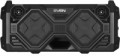 | 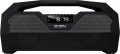 |
|---|---|---|
| Sven PS-490 | Sven PS-470 | |
| Outdated Product | Outdated Product | |
| TOP sellers | ||
Connection | ||
| Sources and media | Bluetooth mini-Jack (3.5 mm) USB card reader FM receiver | Bluetooth mini-Jack (3.5 mm) USB card reader FM receiver |
Acoustic characteristics | ||
| Number of channels | 2.0 (stereo) | 2.0 (stereo) |
| Passive emitter |  |  |
| Output power | 36 W | 18 W |
| Frequency range | 80 – 22000 Hz | 100 – 20000 Hz |
| More features | LCD display handle / strap | LCD display handle / strap |
Battery | ||
| Battery capacity | 2000 mAh | 1800 mAh |
| USB charging port | microUSB | microUSB |
General | ||
| Material | plastic | plastic |
| Size (HxWxD) | 210x465x200 mm | 190x400x154 mm |
| Weight | 2900 g | 2050 g |
| Color | ||
| Added to E-Catalog | may 2019 | october 2017 |


Compare Sven PS-490 and PS-470
You may be interested in
Sven PS-490 often compared


Sven PS-470 often compared


Glossary
Passive emitter
The presence of a passive radiator in the design of the speaker system.
Such an emitter is a speaker cone that does not have its own coil and magnet — in other words, it does not produce sound itself, but only vibrates from the sound of other speakers. Like the phase inverter (see above), this part is intended to improve sound pressure and sound depth, especially at low frequencies; at the same time, the advantage of a passive radiator is the absence of a tube, due to which the design is simpler and more compact than with a phase inverter.
Such an emitter is a speaker cone that does not have its own coil and magnet — in other words, it does not produce sound itself, but only vibrates from the sound of other speakers. Like the phase inverter (see above), this part is intended to improve sound pressure and sound depth, especially at low frequencies; at the same time, the advantage of a passive radiator is the absence of a tube, due to which the design is simpler and more compact than with a phase inverter.
Output power
The total power of all channels of the speaker system. The higher the power, the larger the size of the room in which the audio system can be used, however, more powerful portable speakers usually have larger dimensions and weight.
Frequency range
The range of audio frequencies reproduced by the audio system. The wider the range, the richer the sound, the more details the speakers can convey, especially in the low and high frequencies. At the same time, we note that the average human ear is able to hear sounds in the range of about 16 – 20,000 Hz, and it makes no sense to provide a wider range in speakers — a person simply will not hear it. Also note that a wide frequency range alone does not guarantee good sound quality.
Battery capacity
Theoretically, a higher capacity allows to achieve greater battery life, but in fact, the operating time also depends on the power consumption of acoustics — and it can be very different, depending on the characteristics and design features. So this parameter is secondary, and when choosing it is worth paying attention not so much to the battery capacity, but to the directly claimed operating time (see below).