
Comparison HECHT 745 vs Hyundai T1810-E
Add to comparison | 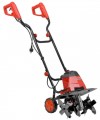 | 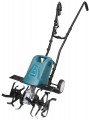 |
|---|---|---|
| HECHT 745 | Hyundai T1810-E | |
| Outdated Product | Outdated Product | |
| TOP sellers | ||
| Motor type | electric (mains) | electric (mains) |
Soil cultivation | ||
| Working width | 40 cm | 40 cm |
| Working depth | 22 cm | 22 cm |
| Number of blades | 6 | 6 |
| Speed rotation | 200 rpm | 140 rpm |
Design characteristics | ||
| Design | transportation wheels | transportation wheels |
| Reducer | worm | worm |
| Gears | 1 forward | 1 forward |
Motor | ||
| Motor power | 1500 W | 1350 W |
General | ||
| Noise level | 93 dB | |
| Dimensions | 114x41x117 cm | |
| Weight | 12 kg | 14 kg |
| Added to E-Catalog | february 2019 | september 2018 |


Compare HECHT 745 and Hyundai T1810-E
You may be interested in
HECHT 745 often compared


Hyundai T1810-E often compared


Glossary
Speed rotation
The speed of rotation of the cutters provided by the two-wheel tractor in normal operation. For models with several gears and, accordingly, several speed options, this paragraph usually gives the maximum speed.
The value of this parameter directly depends on the type of cutter used in the two-wheel tractor. In models with active rototillers (see below), only the intensity of cultivation and the degree of crushing of the soil depend on the rotation speed; it is believed that it should be at least 270 – 280 rpm. And in motor cultivators, where the cutter is installed on the power axis of the unit (the so-called axial structure), the overall speed of movement will also depend on its speed — and it should not be too high, otherwise the user simply will not keep up with the unit. In such models, manufacturers select the rotation speed depending on the diameter of the cutter so that the speed of the machine in the end is less than 6 – 7 km/h. Therefore, in large motor cultivators, the rotation speed usually does not exceed 130 rpm, and in compact battery models with small diameter cutters, it can reach 300 rpm and even more.
The value of this parameter directly depends on the type of cutter used in the two-wheel tractor. In models with active rototillers (see below), only the intensity of cultivation and the degree of crushing of the soil depend on the rotation speed; it is believed that it should be at least 270 – 280 rpm. And in motor cultivators, where the cutter is installed on the power axis of the unit (the so-called axial structure), the overall speed of movement will also depend on its speed — and it should not be too high, otherwise the user simply will not keep up with the unit. In such models, manufacturers select the rotation speed depending on the diameter of the cutter so that the speed of the machine in the end is less than 6 – 7 km/h. Therefore, in large motor cultivators, the rotation speed usually does not exceed 130 rpm, and in compact battery models with small diameter cutters, it can reach 300 rpm and even more.
Motor power
The power of the two-wheel tractor/cultivator engine in watts. This designation is usually used for electric engines, but can also be used for petrol/diesel engines, along with horsepower (for more information, see the "Motor power" section above).
More powerful motor allows achieving higher productivity, width and depth of processing. On the other hand, high power significantly affects the price, weight and dimensions of the unit, as well as the consumption of electricity / fuel. In light of this, the engine power is selected by the manufacturer taking into account what "weight category" the walk-behind tractor belongs to, what characteristics it should show. So, the lightest models have a power of up to 1.5 kW, this is the device that is best suited for a small area of 6 - 8 acres. Walk-behind tractors up to 3 kW can cope with 10 - 15 acres, a power of 3.5 - 5 kW is suitable for a plot of 50 acres to a couple of hectares. Units for 5 - 10 kW are already classified as professional level, they can "tame" spaces of 7 - 10 hectares; and the heaviest and most powerful modern walk-behind tractors have a power of more than 10 kW.
More powerful motor allows achieving higher productivity, width and depth of processing. On the other hand, high power significantly affects the price, weight and dimensions of the unit, as well as the consumption of electricity / fuel. In light of this, the engine power is selected by the manufacturer taking into account what "weight category" the walk-behind tractor belongs to, what characteristics it should show. So, the lightest models have a power of up to 1.5 kW, this is the device that is best suited for a small area of 6 - 8 acres. Walk-behind tractors up to 3 kW can cope with 10 - 15 acres, a power of 3.5 - 5 kW is suitable for a plot of 50 acres to a couple of hectares. Units for 5 - 10 kW are already classified as professional level, they can "tame" spaces of 7 - 10 hectares; and the heaviest and most powerful modern walk-behind tractors have a power of more than 10 kW.
Noise level
The maximum noise level produced by the cultivator / two-wheel tractor during operation. A noise of 70 dB is comparable to a very loud conversation, 80 dB to a busy city street, 100 dB to a production shop. The lower the noise level, the more comfortable the use of the unit for the operator himself and the less inconvenience it causes to others.