
Comparison ZTE MF825 vs ZTE MF823
Add to comparison | 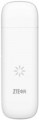 | 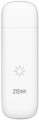 |
|---|---|---|
| ZTE MF825 | ZTE MF823 | |
| Outdated Product | from $37.80 | |
| TOP sellers | ||
| Device type | USB modem | USB modem |
Connection | ||
| Communication generation | 2G 3G 4G (LTE) | 2G 3G 4G (LTE) |
| 4G (LTE) | Cat.4 (150/50 Mbps) | Cat.3 (100/50 Mbps) |
| Transmission technology | GPRS EDGE W-CDMA HSUPA HSDPA HSPA+ LTE | GPRS EDGE W-CDMA HSUPA HSDPA HSPA+ LTE |
| Ports | USB | USB |
Features | ||
| External antenna connector |  |  |
| MIMO antenna connection | | |
| Memory card slot | | |
| SIM card slot | | |
General | ||
| Dimensions | 90x28.4x13 mm | 91x34x13 mm |
| Weight | 60 g | 45 g |
| Added to E-Catalog | january 2015 | january 2015 |


Compare ZTE MF825 and MF823
You may be interested in
ZTE MF825 often compared


ZTE MF823 often compared


Glossary
4G (LTE)
The 4G (LTE) mobile connection speed supported by the modem.
All modern LTE equipment is assigned one or another category (Cat.3, Cat.4, Cat.6, Cat.7, Cat.9, Cat.12, Cat.13, Cat.16, Cat.18, Cat.19, Cat.20, Cat.22), on which the transmission speed directly depends. This paragraph specifies both this category and specific speed indicators, moreover, in two parameters — for reception and for transmission. The transmission speed is always much lower, but given the specifics of mobile Internet access, this is usually not critical.
Note that equipment with different speed categories will be quite compatible with each other, however, the throughput will be limited by the capabilities of the slower device. It is also worth saying that this paragraph indicates the theoretical maximum; practical amounts can be noticeably lower (depending on the quality of the network coverage and the features of specific electronics). However, a modem with a higher speed category will perform faster in fact.
All modern LTE equipment is assigned one or another category (Cat.3, Cat.4, Cat.6, Cat.7, Cat.9, Cat.12, Cat.13, Cat.16, Cat.18, Cat.19, Cat.20, Cat.22), on which the transmission speed directly depends. This paragraph specifies both this category and specific speed indicators, moreover, in two parameters — for reception and for transmission. The transmission speed is always much lower, but given the specifics of mobile Internet access, this is usually not critical.
Note that equipment with different speed categories will be quite compatible with each other, however, the throughput will be limited by the capabilities of the slower device. It is also worth saying that this paragraph indicates the theoretical maximum; practical amounts can be noticeably lower (depending on the quality of the network coverage and the features of specific electronics). However, a modem with a higher speed category will perform faster in fact.
External antenna connector
The presence of a connector for an external removable antenna in the modem design. The meaning of all external antennas is described above; here we note that the connector makes it possible to use rather large antennas with the modem, which significantly exceed the capabilities of stock antennas (both internal and external non-removable ones). In addition, the user can choose the antenna at his discretion.
MIMO antenna connection
The ability to connect the MIMO antenna (the antenna itself, usually, must be purchased separately).
MIMO technology is used in Wi-Fi communications, as well as in 4G LTE networks (starting with Cat.2). Its general principle is to split the transmitted signal into several transmitting and receiving antennas; at the same time, each of the transmitting antennas broadcasts a signal to all receiving antennas at once (or at least to several of them). This format of operation allows more efficient use of the frequency range, increases the actual data transfer rate, and also increases resistance to interference. But antennas for MIMO are rather bulky, in the case of modems it is difficult to make them built-in; and such feature is required not so often. Therefore, separate external antennas are used to work with this technology.
Note that even in portable Wi-Fi hotspots (see "Type"), this feature is used exclusively for 4G/LTE; Wi-Fi connection is provided by built-in antennas.
MIMO technology is used in Wi-Fi communications, as well as in 4G LTE networks (starting with Cat.2). Its general principle is to split the transmitted signal into several transmitting and receiving antennas; at the same time, each of the transmitting antennas broadcasts a signal to all receiving antennas at once (or at least to several of them). This format of operation allows more efficient use of the frequency range, increases the actual data transfer rate, and also increases resistance to interference. But antennas for MIMO are rather bulky, in the case of modems it is difficult to make them built-in; and such feature is required not so often. Therefore, separate external antennas are used to work with this technology.
Note that even in portable Wi-Fi hotspots (see "Type"), this feature is used exclusively for 4G/LTE; Wi-Fi connection is provided by built-in antennas.