
Comparison TP-LINK LS1008G vs TP-LINK TL-SG1008D
Add to comparison | 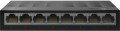 |  |
|---|---|---|
| TP-LINK LS1008G | TP-LINK TL-SG1008D | |
| Compare prices 5 | Compare prices 7 | |
| User reviews | ||
| TOP sellers | ||
| Type | unmanaged | unmanaged |
| Mount | desktop | desktop |
| Bandwidth | 16 Gbps | 16 Gbps |
| MAC address table size | 4K | 4K |
Ports | ||
| Gigabit Ethernet | 8 | 8 |
General | ||
| PSU | external | external |
| Supply voltage | 5 В | 5 В |
| Power consumption | 3.9 W | |
| Dimensions (WxDxH) | 127x67x23 mm | 165x108x28 mm |
| Added to E-Catalog | november 2019 | september 2014 |






Compare TP-LINK LS1008G and TL-SG1008D
What is the difference between TP-LINK LS1008G and TL-SG1008D?
LS1008G and TL-SG1008D are very similar in everyday use since both are unmanaged 8‑port Gigabit desktop switches with the same 16 Gbps switching capacity and a 4K MAC table. The practical difference is mostly physical: TL-SG1008D is noticeably larger, while LS1008G is more compact for tight desk or shelf setups.
Which is better?
Better pick for most buyers: TP-LINK LS1008G. It delivers the same core networking performance as the TL-SG1008D but in a smaller, more space-friendly box, which is often the main practical difference with basic 8-port unmanaged switches.
Both are unmanaged desktop switches with 8 Gigabit Ethernet ports, 16 Gbps switching capacity, and a 4K MAC table, so real-world speed and compatibility are essentially the same for home and small office use. The LS1008G is notably more compact (127×67×23 mm vs 165×108×28 mm), making it easier to tuck behind a TV or mount area with limited space. Both use an external power supply and 5 V input.
Price comparison
You may be interested in
My comparisons
TP-LINK LS1008G often compared


TP-LINK TL-SG1008D often compared


