
Comparison Samsung EP-N5200 vs Samsung EP-PG950
Add to comparison | 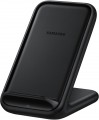 | 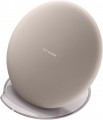 |
|---|---|---|
| Samsung EP-N5200 | Samsung EP-PG950 | |
| Compare prices 1 | from $90.00 | |
| TOP sellers | ||
Cable and power adapter included. Control from your phone. The built-in cooler prevents the smartphone from heating up. | Folding body. microUSB to USB-C adapter. | |
| Type | wireless charger | wireless charger |
| Charging areas | 1 | 1 |
| Wireless charging | Qi2.0 | |
| Wireless charging power | 15 W | 9 W |
| Features | work indicator detachable charger power cable | work indicator detachable charger power cable |
| Charger connection port | USB-C | USB-C |
| Cable included | + | |
| Cable length | 1 m | |
| Power adapter |  |  |
| Dimensions | 122x115x75 mm | 117x117x29 mm |
| Weight | 179 g | 227 g |
| Color | ||
| Added to E-Catalog | october 2019 | october 2019 |



Compare Samsung EP-N5200 and EP-PG950
Price comparison
You may be interested in
My comparisons
Samsung EP-N5200 often compared


Samsung EP-PG950 often compared


Glossary
Wireless charging
The presence of wireless charging in a charger means it can charge a compatible smartphone without a cable, while versions like MagSafe and Qi2 also offer magnetic alignment for more precise and convenient attachment. This is particularly handy at home, in the office, or by the bed when the phone can simply be placed on the pad or stand without searching for the port.
MagSafe is mainly aimed at the Apple ecosystem, while Qi2.0 develops the same idea of magnetic positioning as an open standard, with the newer Qi2.2 revision additionally offering increased power up to 25W. Compared to regular wireless charging without magnets, this option seems more practical because the smartphone aligns better with the charging area and is less dependent on how accurately it is placed on the device.
MagSafe is mainly aimed at the Apple ecosystem, while Qi2.0 develops the same idea of magnetic positioning as an open standard, with the newer Qi2.2 revision additionally offering increased power up to 25W. Compared to regular wireless charging without magnets, this option seems more practical because the smartphone aligns better with the charging area and is less dependent on how accurately it is placed on the device.
Wireless charging power
The key indicator that determines the speed of wireless energy transmission to the device's battery. The higher this value, the faster the gadget will recharge: for example, a 15W charger will complete the task significantly faster than basic 5W models.
Unlike the wired method, a portion of the energy is inevitably lost as heat, making the wireless method generally less efficient than a cable. It is also important for proper operation that the charger's power matches the smartphone's technical specifications; otherwise, the speed will be limited to the minimum value.
Unlike the wired method, a portion of the energy is inevitably lost as heat, making the wireless method generally less efficient than a cable. It is also important for proper operation that the charger's power matches the smartphone's technical specifications; otherwise, the speed will be limited to the minimum value.
Cable included
The presence of a cable in the delivery kit of the charger, or any other specific type of included cable.
The presence of a cable is indicated mainly for wireless devices (see “Type”) — in such cases, we are talking about the power cable of the charger itself. For wired models, the type of connectors on the stock wire (s) for charging gadgets is usually specified. At the same time, the USB port is used by default to connect to the charger itself, so this plug may not be mentioned in the description of the wire. On the other hand, there may be such connectors:
— USB-C. A miniature version of the USB connector, gradually replacing microUSB in modern portable devices. It has a convenient reversible plug design, and can also provide some advanced power options not available with microUSB. Also note that USB-C can be used in a cable not only to connect to a gadget, but also to connect to the charger itself (along with traditional USB); so on the market you can find corresponding cables like "USB-C — microUSB", "USB-C — Lightning", etc.
— microUSB. Universal connector, extremely popular in portable gadgets of various types; only relatively recently has it begun to give way to the more advanced USB-C (which differs from it in its one-sided design and lower power supply).
— Lightning. Universal connector, used e...xclusively in portable Apple devices. Like USB-C, it has a two-way layout, but a slightly different design.
The presence of a cable is indicated mainly for wireless devices (see “Type”) — in such cases, we are talking about the power cable of the charger itself. For wired models, the type of connectors on the stock wire (s) for charging gadgets is usually specified. At the same time, the USB port is used by default to connect to the charger itself, so this plug may not be mentioned in the description of the wire. On the other hand, there may be such connectors:
— USB-C. A miniature version of the USB connector, gradually replacing microUSB in modern portable devices. It has a convenient reversible plug design, and can also provide some advanced power options not available with microUSB. Also note that USB-C can be used in a cable not only to connect to a gadget, but also to connect to the charger itself (along with traditional USB); so on the market you can find corresponding cables like "USB-C — microUSB", "USB-C — Lightning", etc.
— microUSB. Universal connector, extremely popular in portable gadgets of various types; only relatively recently has it begun to give way to the more advanced USB-C (which differs from it in its one-sided design and lower power supply).
— Lightning. Universal connector, used e...xclusively in portable Apple devices. Like USB-C, it has a two-way layout, but a slightly different design.
Cable length
The length of the cable supplied with or included with the charger. For wireless models, the length of the power cable of the charger itself is indicated here, for wired models, the length of the cord for charging gadgets
Anyway, a longer cable gives more freedom of movement, but it creates inconvenience for short distances. Also note that charging is supposed to be used in the immediate vicinity of sockets, so wires longer than 2 m are practically not found among such devices. A length of more than 1.5 m is considered significant, from 1 to 1.5 m — medium, from 0.5 to 1 m — small, and in some models there are wires shorter than 0.5 m.
Anyway, a longer cable gives more freedom of movement, but it creates inconvenience for short distances. Also note that charging is supposed to be used in the immediate vicinity of sockets, so wires longer than 2 m are practically not found among such devices. A length of more than 1.5 m is considered significant, from 1 to 1.5 m — medium, from 0.5 to 1 m — small, and in some models there are wires shorter than 0.5 m.
Power adapter
Whether or not a power adapter is included with the charger.
This feature is relevant primarily for wireless models, including the ones for cars(see "Type"). Such devices usually consist of three parts: the charger itself with a platform/stand/latch, a charger power cable and an adapter for connecting the wire to a power outlet or cigarette lighter. If the presence of an adapter is initially indicated in the specifications, then the charger is supplied in a complete set; it is these models that you should pay attention to if you want to use the device right out of the box, without the hassle of finding additional accessories.
Also, this feature can be indicated for individual car chargers of the traditional, wired type. This usually means that the device is similar in layout to wireless models: main unit, power cord and cigarette lighter adapter. This design allows you to use the charger at some distance from the dashboard of the car — for example, take it to the back seat, giving passengers the opportunity to charge their phones. In this case, the adapter can have its own charging outputs (usually USB) and can be used separately from the main unit.
This feature is relevant primarily for wireless models, including the ones for cars(see "Type"). Such devices usually consist of three parts: the charger itself with a platform/stand/latch, a charger power cable and an adapter for connecting the wire to a power outlet or cigarette lighter. If the presence of an adapter is initially indicated in the specifications, then the charger is supplied in a complete set; it is these models that you should pay attention to if you want to use the device right out of the box, without the hassle of finding additional accessories.
Also, this feature can be indicated for individual car chargers of the traditional, wired type. This usually means that the device is similar in layout to wireless models: main unit, power cord and cigarette lighter adapter. This design allows you to use the charger at some distance from the dashboard of the car — for example, take it to the back seat, giving passengers the opportunity to charge their phones. In this case, the adapter can have its own charging outputs (usually USB) and can be used separately from the main unit.