
Comparison Xiaomi Mi VR vs Xiaomi Mi VR Play
Add to comparison | 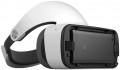 | 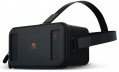 |
|---|---|---|
| Xiaomi Mi VR | Xiaomi Mi VR Play | |
| Outdated Product | from $72.68 up to $88.88 | |
| TOP sellers | ||
Connecting a smartphone to VR glasses via a USB Type-C connector | ||
| Device type | VR glasses for phone | VR glasses for phone |
| Purpose (compatibility) | Android iOS (iPhone) | Android iOS (iPhone) |
Specs | ||
| Max. phone screen size | 5.7 " | 5.7 " |
| Proximity sensor |  |  |
General | ||
| Magnetic button | | |
| Controller | | |
| Material | plastic | fabric |
| Dimensions (HxWxD) | 156x200x295 mm | 107x201x91 mm |
| Weight | 408 g | 209 g |
| Added to E-Catalog | september 2017 | october 2016 |


Compare Xiaomi Mi VR and Mi VR Play
You may be interested in
My comparisons
Xiaomi Mi VR often compared


Xiaomi Mi VR Play often compared


Glossary
Proximity sensor
The presence of a sensor in the glasses that reacts to approaching the user's face.
A similar sensor is used to automatically switch between operating and standby modes: for example, when the user takes off the glasses, the sensor turns off the built-in screens (or the phone, if it is connected to the glasses via a connector), saving battery power and equipment life, and when put on, it turns on points for full functionality.
A similar sensor is used to automatically switch between operating and standby modes: for example, when the user takes off the glasses, the sensor turns off the built-in screens (or the phone, if it is connected to the glasses via a connector), saving battery power and equipment life, and when put on, it turns on points for full functionality.
Controller
The presence of a controller — an additional control device — is included in the delivery of glasses.
The design and functionality of such an accessory may be different. So, the most popular option is specialized game controllers with a characteristic look — a handle with an analogue lever and buttons. There can be two such handles at once, under both hands; and in some models they are also used to control gestures. The movement of the hands can be tracked both by sensors in the controllers themselves and by cameras on the glasses. There are also simpler solutions — for example, portable gamepads or remote controls for controlling video playback.
The design and functionality of such an accessory may be different. So, the most popular option is specialized game controllers with a characteristic look — a handle with an analogue lever and buttons. There can be two such handles at once, under both hands; and in some models they are also used to control gestures. The movement of the hands can be tracked both by sensors in the controllers themselves and by cameras on the glasses. There are also simpler solutions — for example, portable gamepads or remote controls for controlling video playback.
Material
The main material used in the construction of the hull.
— Plastic. Having a relatively low cost, plastic is at the same time quite practical, lightweight, easy to process and generally well suited for virtual reality glasses. This material is most popular in modern glasses, it is found in models of all price categories — from low-cost to top. Note that the actual quality of the plastic may be different, it also depends markedly on the price.
— Cardboard. Glasses made of classic cardboard — thick thick paper. The main advantage of this material is its extremely low cost — even lower than that of plastic. The case, usually, is delivered unassembled, it must be folded in a special way before use; however, for some users, this is also an advantage, because. working with the "constructor" provides additional interest. In addition, cardboard is considered a more “environmentally friendly” and easy-to-recycle material. On the other hand, the strength and rigidity of such cases is very low, they are easily deformed and require careful handling. And the comfort during use is very conditional: soft pads are usually not provided at the points of contact with the face, the edge of the cardboard sheet is directly adjacent to the skin. As a result, this material has become widespread only in glasses for mobile phones (see "Signal source"), created as extremely simple and affordable solutions.
...
— Cloth. Glasses with a case made of dense thick fabric. Such cases are relatively inexpensive, although much more expensive than the same cardboard cases (see above). On the other hand, fabric glasses are much more reliable and at the same time more comfortable — in particular, they almost always have soft inserts at the points of contact with the head, and the fabric surface itself is pleasant to the touch. Most of these models are designed for mobile phones (see "Signal source"), while the design may include original details — for example, a "pocket" for a mobile phone, fastened with a zipper. Also note that the fabric itself looks interesting even in neutral colours, and design options can be very unusual — for example, denim, camouflage, bright embroidery, etc. Among the shortcomings, it is worth noting the sensitivity of the fabric to dirt — despite the fact that the ability to remove and wash the upper shell is far from mandatory for such gadgets.
— Plastic. Having a relatively low cost, plastic is at the same time quite practical, lightweight, easy to process and generally well suited for virtual reality glasses. This material is most popular in modern glasses, it is found in models of all price categories — from low-cost to top. Note that the actual quality of the plastic may be different, it also depends markedly on the price.
— Cardboard. Glasses made of classic cardboard — thick thick paper. The main advantage of this material is its extremely low cost — even lower than that of plastic. The case, usually, is delivered unassembled, it must be folded in a special way before use; however, for some users, this is also an advantage, because. working with the "constructor" provides additional interest. In addition, cardboard is considered a more “environmentally friendly” and easy-to-recycle material. On the other hand, the strength and rigidity of such cases is very low, they are easily deformed and require careful handling. And the comfort during use is very conditional: soft pads are usually not provided at the points of contact with the face, the edge of the cardboard sheet is directly adjacent to the skin. As a result, this material has become widespread only in glasses for mobile phones (see "Signal source"), created as extremely simple and affordable solutions.
...
— Cloth. Glasses with a case made of dense thick fabric. Such cases are relatively inexpensive, although much more expensive than the same cardboard cases (see above). On the other hand, fabric glasses are much more reliable and at the same time more comfortable — in particular, they almost always have soft inserts at the points of contact with the head, and the fabric surface itself is pleasant to the touch. Most of these models are designed for mobile phones (see "Signal source"), while the design may include original details — for example, a "pocket" for a mobile phone, fastened with a zipper. Also note that the fabric itself looks interesting even in neutral colours, and design options can be very unusual — for example, denim, camouflage, bright embroidery, etc. Among the shortcomings, it is worth noting the sensitivity of the fabric to dirt — despite the fact that the ability to remove and wash the upper shell is far from mandatory for such gadgets.