
Comparison Yamaha THR10 vs Yamaha THR5
Add to comparison | 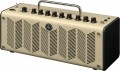 | 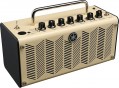 |
|---|---|---|
| Yamaha THR10 | Yamaha THR5 | |
| Outdated Product | from $249.99 | |
| User reviews | ||
| TOP sellers | ||
Digital output (USB type B) Models THR10, THR10X and THR10C differ in different types of amplification | Digital output (USB type B) | |
| Device type | combo amplifier | combo amplifier |
| Features | electric guitar | electric guitar |
| Type | digital | digital |
Specs | ||
| Power | 10 W | 10 W |
| Number of speakers | 2 | 2 |
| Woofer size (LF/MF) | 3 " | 3 " |
Effects and adjustments | ||
| Equalizer | 3-band | |
| Analogue simulation |  | |
| Gain | | |
| Effects | Reverb Tremolo Chorus Delay Flanger, Fhaser | Reverb Tremolo Chorus Delay Flanger, Fhaser |
Connectors | ||
| Instrumental | 1 pc | 1 pc |
| Line input | mini-Jack (3.5 mm) | mini-Jack (3.5 mm) |
| Headphones | Jack (6.35 mm) | Jack (6.35 mm) |
General | ||
| Display | | |
| Autonomous power supply | | |
| Dimensions | 184x360x140 mm | 167x271x120 mm |
| Weight | 2.8 kg | 2 kg |
| Color | ||
| Added to E-Catalog | september 2017 | june 2017 |


Compare Yamaha THR10 and THR5
Combo amplifiers Yamaha THR10 and Yamaha THR5 have similar characteristics, such as 10 W power, two speakers with a 3-inch diameter, and support for analog modeling. However, the THR10 offers a broader range of functions with a display and built-in effects (Reverb, Tremolo, Chorus, Delay), while the THR5 has a similar range of effects but without additional capabilities. The weight of the THR10 is 2.8 kg, whereas the THR5 is lighter at 2 kg. Both amplifiers support autonomous power from 8 AA batteries and have a digital USB type B output. The choice between them depends on preferences in functionality and weight.
You may be interested in
My comparisons
Yamaha THR10 often compared


Yamaha THR5 often compared


Glossary
Equalizer
Type of equalizer provided in the device design
An equalizer allows you to change the volume of a separate part of the sound range (frequency band), thus changing the color of the entire sound. This is one of the most important functions related to audio settings; therefore, it can be provided directly in the guitar amplifiers themselves. And the type of equalizer is indicated by the number of bands available for adjustment.
The more of these bands, the more accurately you can adjust the sound, but the more complex and expensive the equipment becomes. In light of this, the simplest option involves only 2 bands - low and high frequencies; Often such an equalizer looks like two separate knobs for adjusting the bass and treble levels. At the same time, we note that similar functionality can be found in both budget and high-end guitar amplifiers: in the second case, it is assumed that if finer adjustments are needed, you can use external equipment. However, three-band solutions (low, mid and high frequencies) are the most popular these days: such an equalizer provides quite extensive possibilities for adjusting the sound and is relatively inexpensive (and if finer adjustments are required, you can use external equipment). 4-band equalizers are noticeably less common, but are also quite popular (including in inexpensive devices); and some models provide...5 or more (up to 12) adjustment bands.
An equalizer allows you to change the volume of a separate part of the sound range (frequency band), thus changing the color of the entire sound. This is one of the most important functions related to audio settings; therefore, it can be provided directly in the guitar amplifiers themselves. And the type of equalizer is indicated by the number of bands available for adjustment.
The more of these bands, the more accurately you can adjust the sound, but the more complex and expensive the equipment becomes. In light of this, the simplest option involves only 2 bands - low and high frequencies; Often such an equalizer looks like two separate knobs for adjusting the bass and treble levels. At the same time, we note that similar functionality can be found in both budget and high-end guitar amplifiers: in the second case, it is assumed that if finer adjustments are needed, you can use external equipment. However, three-band solutions (low, mid and high frequencies) are the most popular these days: such an equalizer provides quite extensive possibilities for adjusting the sound and is relatively inexpensive (and if finer adjustments are required, you can use external equipment). 4-band equalizers are noticeably less common, but are also quite popular (including in inexpensive devices); and some models provide...5 or more (up to 12) adjustment bands.