
Comparison Kentavr SM-152 vs Forte MC-1000
Add to comparison | 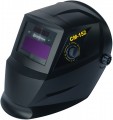 | 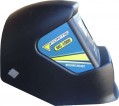 |
|---|---|---|
| Kentavr SM-152 | Forte MC-1000 | |
| Outdated Product | from $10.88 up to $14.72 | |
| User reviews | ||
| TOP sellers | ||
| Type | chameleon helmet | chameleon helmet |
Specs | ||
| Light filtering levels | 4 DIN | 4 DIN |
| Min. degree of darkening | 9 DIN | 9 DIN |
| Max. degree of darkening | 13 DIN | 13 DIN |
| Protection from UV/IR | 16 DIN | 16 DIN |
| Turn-on time | 66.7 ms | 50 ms |
| Filter class | 1/2/1/2 | 1/1/1/2 |
| Filter viewing area (WxH) | 90x35 mm | 92x42 mm |
| Filter cartridge dimensions (WxH) | 110x90 mm | 110x90 mm |
| Filter cartridge thickness | 9 mm | 9 mm |
| Optical sensors | 2 | 2 |
| Operating temperature | -5 – 55 °C | -5 – 55 °C |
| Helmet weight | 540 g | 460 g |
Filter functions | ||
| Darkening adjustment | external mechanical | external mechanical |
| Colour rendering | standard (shades of green) | standard (shades of green) |
| Design features | controls outside | controls outside |
| Color | ||
| Added to E-Catalog | december 2017 | november 2015 |


Compare Kentavr SM-152 and Forte MC-1000
You may be interested in
My comparisons
Forte MC-1000 often compared


Glossary
Turn-on time
The turn-on time of the filter in the chameleon mask (see "Type"), in other words, the time between striking the arc and darkening the filter to the operating level.
From a safety point of view, the turn-on time should be as short as possible: the faster the "chameleon" works, the less bright light from the arc enters the welder's eyes. On the other hand, reducing the reaction time affects the cost of the product. So for relatively small volumes of work, it is quite acceptable to use relatively “slow” masks — for 100 μs or more(especially since even in the simplest models, the reaction time does not exceed 1200 μs, while theoretically the maximum allowable value is 2000 μs). But for more serious use, you should pay attention to more "fast" options; nowadays, you can find masks with response times from 75 to 100 µs, from 50 to 75 µs, and even less than 50 µs.
From a safety point of view, the turn-on time should be as short as possible: the faster the "chameleon" works, the less bright light from the arc enters the welder's eyes. On the other hand, reducing the reaction time affects the cost of the product. So for relatively small volumes of work, it is quite acceptable to use relatively “slow” masks — for 100 μs or more(especially since even in the simplest models, the reaction time does not exceed 1200 μs, while theoretically the maximum allowable value is 2000 μs). But for more serious use, you should pay attention to more "fast" options; nowadays, you can find masks with response times from 75 to 100 µs, from 50 to 75 µs, and even less than 50 µs.
Filter class
Class is a complex indicator that determines the overall quality of the light filter in a chameleon mask (see "Type"). The class is indicated by 4 numbers, each of which describes a specific optical parameter. So, the first number indicates the overall clarity and lack of distortion; the second is the degree of light scattering; third — uniformity of blackout (presence/absence of visible blackout spots); the fourth is the angular dependence (how much the filter brightens when the angle of view deviates from the perpendicular). In each case, the larger the number, the worse this parameter is. The perfect indicator is considered to be 1/1/1/1, but in fact it is very difficult to achieve an perfect angular dependence, and there is no need to. Therefore, an indicator of 1/1/1/2 is considered quite sufficient even for a high-end professional filter.
Filter viewing area (WxH)
The size of the transparent part of the light filter — the "working window", the area through which the welder sees the place of work. A larger working window provides ease of use and a wide field of view, but it significantly affects the cost of the mask and somewhat reduces the strength of the light filter.