
Comparison Edon ED-9000 vs Edon ED-6000
Add to comparison | 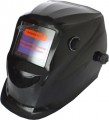 | 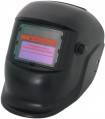 |
|---|---|---|
| Edon ED-9000 | Edon ED-6000 | |
from $16.16 | from $12.88 up to $13.40 | |
| TOP sellers | ||
| Type | chameleon helmet | chameleon helmet |
Specs | ||
| Light filtering levels | 4 DIN | 4 DIN |
| Min. degree of darkening | 9 DIN | 9 DIN |
| Max. degree of darkening | 13 DIN | 13 DIN |
| Protection from UV/IR | 13 DIN | |
| Turn-on time | 62.5 ms | |
| Filter cartridge dimensions (WxH) | 110x90 mm | 110x90 mm |
| Filter cartridge thickness | 10 mm | 9 mm |
| Optical sensors | 2 | 2 |
| Operating temperature | -5 – 55 °C | -5 – 55 °C |
| Helmet weight | 490 g | 490 g |
Filter functions | ||
| Darkening adjustment | external mechanical | external mechanical |
| Sensitivity adjustment | internal mechanical | internal mechanical |
| Delay time adjustment | internal mechanical | internal mechanical |
| Colour rendering | standard (shades of green) | standard (shades of green) |
| Design features | internal and external controls | internal and external controls |
| Color | ||
| Added to E-Catalog | november 2016 | november 2016 |


Compare Edon ED-9000 and ED-6000
You may be interested in
My comparisons
Edon ED-9000 often compared


Glossary
Protection from UV/IR
The degree of protection against infrared and ultraviolet radiation provided by the complete mask light filter.
Such protection is relevant primarily when working with electric welding: it is the electric arc that produces a large amount of IR and UV radiation. Exposure to these types of radiation on the skin can cause burns, and ultraviolet light is also harmful to the eyes. The degree of protection in this case is indicated in DIN units, and the larger the number in such a designation, the higher the degree of protection. In this case, 12 DIN is considered the minimum acceptable indicator, however, masks / goggles can be found on the market with higher protection rates — up to 16 DIN inclusive.
From a purely practical point of view, the higher this level of protection, the better; however, this characteristic significantly affects the price, and sometimes also the weight of the mask / goggles. So when choosing, it is worth considering the features of the planned work. For example, it is hardly worth specifically looking for a model for 15 – 16 DIN, if you have to cook rarely and little by little, but for professional use and large volumes of work, this level of protection will be very useful.
Such protection is relevant primarily when working with electric welding: it is the electric arc that produces a large amount of IR and UV radiation. Exposure to these types of radiation on the skin can cause burns, and ultraviolet light is also harmful to the eyes. The degree of protection in this case is indicated in DIN units, and the larger the number in such a designation, the higher the degree of protection. In this case, 12 DIN is considered the minimum acceptable indicator, however, masks / goggles can be found on the market with higher protection rates — up to 16 DIN inclusive.
From a purely practical point of view, the higher this level of protection, the better; however, this characteristic significantly affects the price, and sometimes also the weight of the mask / goggles. So when choosing, it is worth considering the features of the planned work. For example, it is hardly worth specifically looking for a model for 15 – 16 DIN, if you have to cook rarely and little by little, but for professional use and large volumes of work, this level of protection will be very useful.
Turn-on time
The turn-on time of the filter in the chameleon mask (see "Type"), in other words, the time between striking the arc and darkening the filter to the operating level.
From a safety point of view, the turn-on time should be as short as possible: the faster the "chameleon" works, the less bright light from the arc enters the welder's eyes. On the other hand, reducing the reaction time affects the cost of the product. So for relatively small volumes of work, it is quite acceptable to use relatively “slow” masks — for 100 μs or more(especially since even in the simplest models, the reaction time does not exceed 1200 μs, while theoretically the maximum allowable value is 2000 μs). But for more serious use, you should pay attention to more "fast" options; nowadays, you can find masks with response times from 75 to 100 µs, from 50 to 75 µs, and even less than 50 µs.
From a safety point of view, the turn-on time should be as short as possible: the faster the "chameleon" works, the less bright light from the arc enters the welder's eyes. On the other hand, reducing the reaction time affects the cost of the product. So for relatively small volumes of work, it is quite acceptable to use relatively “slow” masks — for 100 μs or more(especially since even in the simplest models, the reaction time does not exceed 1200 μs, while theoretically the maximum allowable value is 2000 μs). But for more serious use, you should pay attention to more "fast" options; nowadays, you can find masks with response times from 75 to 100 µs, from 50 to 75 µs, and even less than 50 µs.