
Comparison Zubr SR1 vs Zubr R116y
Add to comparison | 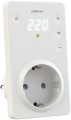 | 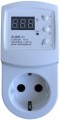 |
|---|---|---|
| Zubr SR1 | Zubr R116y | |
| Outdated Product | Outdated Product | |
| User reviews | ||
| TOP sellers | ||
Touch control | ||
| Device | voltage Monitoring Relays | voltage Monitoring Relays |
| Voltage | variable | variable |
| Number of phases | 1 | 1 |
| Mount | into socket | into socket |
Specs | ||
| Power | 3 kVA | 3 kVA |
| Maximum current | 16 А | 16 А |
| Voltage measuring range | 100 – 420 В | 100 – 400 В |
| Cut-off time (lower limit) | 0.04 с | 1.2 с |
| Off time (upper limit) | 0.04 с | 0.05 с |
| Reclosing delay | 3 – 600 с | 3 – 600 с |
| Lower cut-off limit | 120 – 210 В | 120 – 210 В |
| Upper cut-off limit | 220 – 280 В | 220 – 280 В |
| Functions | display operation indicator thermal protection fault memory | display operation indicator thermal protection fault memory |
General | ||
| Adjustment | digital | digital |
| Protection level | IP20 | IP20 |
| Dimensions | 60x106x76 mm | 57x124x83 mm |
| Weight | 185 g | 185 g |
| Added to E-Catalog | may 2018 | december 2017 |


Compare Zubr SR1 and R116y
You may be interested in
Zubr SR1 often compared


Zubr R116y often compared


Glossary
Voltage measuring range
Voltage measurement range supported by the device.
Many modern control relays are equipped with digital displays, which can display, including current voltage; this parameter specifies the operating range of the built-in voltmeter. In this case, the voltage measurement range can be noticeably wider than the difference between the smallest minimum and the largest maximum shutdown threshold (see below). This allows you to use the relay also for online diagnostics of the network status.
For a current relay (see "Device") in this case, the range of operating voltages can be given directly — the voltage at which the device can normally perform its functions.
Many modern control relays are equipped with digital displays, which can display, including current voltage; this parameter specifies the operating range of the built-in voltmeter. In this case, the voltage measurement range can be noticeably wider than the difference between the smallest minimum and the largest maximum shutdown threshold (see below). This allows you to use the relay also for online diagnostics of the network status.
For a current relay (see "Device") in this case, the range of operating voltages can be given directly — the voltage at which the device can normally perform its functions.
Cut-off time (lower limit)
Time to turn off the device on the lower limit of voltage or current. This is a kind of "reaction time" of the relay: the period of time between reaching the lower limit and turning off the protected network segment.
The lower this value, the more advanced the protection will be, the lower the probability of failure of sensitive devices due to untimely operation of the relay. On the other hand, a high response rate for the lower limit is not as critical as for the upper one, and the shutdown time can be quite long — 1 s or more.
Also note that for some devices, this paragraph gives the minimum turn-off time (fastest response time), while in certain modes this time may be longer. For example, a voltage relay with a lower limit of 160 V may provide tripping after less than 0.05 s when the voltage drops below 120 V and tripping after 1 s when the voltage is in the range of 120 – 160 V, but above 120 V. This avoids unnecessary shutdowns with relatively weak and short-term voltage deviations. In the characteristics of such a device, 0.05 s will be indicated.
The lower this value, the more advanced the protection will be, the lower the probability of failure of sensitive devices due to untimely operation of the relay. On the other hand, a high response rate for the lower limit is not as critical as for the upper one, and the shutdown time can be quite long — 1 s or more.
Also note that for some devices, this paragraph gives the minimum turn-off time (fastest response time), while in certain modes this time may be longer. For example, a voltage relay with a lower limit of 160 V may provide tripping after less than 0.05 s when the voltage drops below 120 V and tripping after 1 s when the voltage is in the range of 120 – 160 V, but above 120 V. This avoids unnecessary shutdowns with relatively weak and short-term voltage deviations. In the characteristics of such a device, 0.05 s will be indicated.
Off time (upper limit)
The device shutdown time on the upper limit of voltage or current. This is a kind of "reaction time" of the relay: the period of time between reaching the upper limit and turning off the protected network segment.
The lower this value, the more advanced the protection will be, the lower the probability of failure of sensitive devices due to untimely operation of the relay. Note that a short reaction time in this case is especially important, because too high a voltage or current is a serious danger to any device.
The lower this value, the more advanced the protection will be, the lower the probability of failure of sensitive devices due to untimely operation of the relay. Note that a short reaction time in this case is especially important, because too high a voltage or current is a serious danger to any device.