
Comparison Dr. Frei Turbo Base vs Dr. Frei Turbo Mini
Add to comparison | 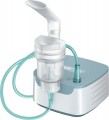 | 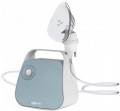 |
|---|---|---|
| Dr. Frei Turbo Base | Dr. Frei Turbo Mini | |
| Outdated Product | from $59.92 up to $65.40 | |
| User reviews | ||
| TOP sellers | ||
| Type | compressor | compressor |
| Purpose | stationary | stationary |
Specs | ||
| Medicine container | 10 ml | 2 ml |
| Compressor power | 120 W | 120 W |
| Max air flow | 15 L/min | |
| Nebulization rate | 0.3 ml/min | 0.3 ml/min |
| Medium particle size (MMAD) | 3 µm | 3 µm |
| Noise level | 55 dB | 55 dB |
| Nozzles | adult mask children's mask nozzle for mouth | adult mask children's mask nozzle for nose nozzle for mouth |
General | ||
| Power source | mains | mains |
| Dimensions | 110x110x62 mm | 167x106x164 mm |
| Weight | 1300 g | |
| Added to E-Catalog | december 2017 | july 2016 |


Compare Dr. Frei Turbo Base and Turbo Mini
You may be interested in
My comparisons
Dr. Frei Turbo Base often compared


Dr. Frei Turbo Mini often compared


Glossary
Medicine container
The nebuliser's built-in medicine reservoir volume is a crucial consideration. It's important to align this parameter with medical guidelines for the prescribed treatment. A too-small capacity may require frequent refilling, disrupting the treatment process.
Also, knowing the volume of the reservoir and the nebulization rate (see below), it is possible to estimate the operating time of the nebuliser on a single refill.
Also, knowing the volume of the reservoir and the nebulization rate (see below), it is possible to estimate the operating time of the nebuliser on a single refill.
Max air flow
The maximum air output of a compressor nebuliser during operation is a key factor to consider. It's important to note that actual performance during normal operation is often lower. Different applications have recommended air flow intensities, and knowing this parameter helps assess how well the inhaler aligns with specific recommendations.
Nozzles
Types of nozzles included in the delivery of the nebuliser.
— The mask for adult. A mask is a dual-purpose nozzle covering both the mouth and nose, typically secured with a strap. It ensures effective drug inhalation, accommodating variations in breathing patterns. Masks are versatile, suitable for use during sleep or unconsciousness. However, their larger size may hinder portability when carrying them with a nebuliser (refer to "Purpose"). Despite their convenience, specialized devices offer higher aerosol concentration. This type of mask is tailored for the average adult.
— Children's mask. Reduced version of the mask, designed for children. The design may provide additional decorative elements (see "Appearance for children"), and in terms of functionality and main features, such masks do not differ from the adults described above.
— Nozzle for nose. A drug delivery nozzle for the nose typically features a distinctive "fork" shape with two separate protrusions inserted into the nostrils. These protrusions may gently compress the nasal septum, ensuring comfortable usage. These devices are particularly effective for treating conditions focused on the nasal cavity, such as rhinitis, as they provide a higher medicine concentration compared to masks. Additionally, nasal nozzles are more compact for easy storage.
— Nozzle for mouth....An inhalation nozzle designed for drug administration through the mouth is a specialized device that offers a higher concentration of the active substance compared to a mask. This is particularly beneficial for intensive treatment of the oral cavity or larynx. Despite their small size, these nozzles are well-suited for use with pocket nebulisers. However, a drawback is the requirement for conscious patient participation, as they need to securely hold the tube with their lips and inhale through the mouth. While not as convenient as a mask, it somewhat restricts the application scope.
— The mask for adult. A mask is a dual-purpose nozzle covering both the mouth and nose, typically secured with a strap. It ensures effective drug inhalation, accommodating variations in breathing patterns. Masks are versatile, suitable for use during sleep or unconsciousness. However, their larger size may hinder portability when carrying them with a nebuliser (refer to "Purpose"). Despite their convenience, specialized devices offer higher aerosol concentration. This type of mask is tailored for the average adult.
— Children's mask. Reduced version of the mask, designed for children. The design may provide additional decorative elements (see "Appearance for children"), and in terms of functionality and main features, such masks do not differ from the adults described above.
— Nozzle for nose. A drug delivery nozzle for the nose typically features a distinctive "fork" shape with two separate protrusions inserted into the nostrils. These protrusions may gently compress the nasal septum, ensuring comfortable usage. These devices are particularly effective for treating conditions focused on the nasal cavity, such as rhinitis, as they provide a higher medicine concentration compared to masks. Additionally, nasal nozzles are more compact for easy storage.
— Nozzle for mouth....An inhalation nozzle designed for drug administration through the mouth is a specialized device that offers a higher concentration of the active substance compared to a mask. This is particularly beneficial for intensive treatment of the oral cavity or larynx. Despite their small size, these nozzles are well-suited for use with pocket nebulisers. However, a drawback is the requirement for conscious patient participation, as they need to securely hold the tube with their lips and inhale through the mouth. While not as convenient as a mask, it somewhat restricts the application scope.