
Comparison Little Doctor LD-210C vs Little Doctor LD-211C
Add to comparison | 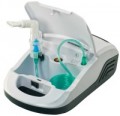 | 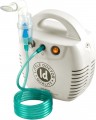 |
|---|---|---|
| Little Doctor LD-210C | Little Doctor LD-211C | |
from $58.00 up to $71.84 | from $43.20 up to $54.60 | |
| TOP sellers | ||
Rich equipment. Accessory storage container. The presence of various sprayers. Regulating particle size. Spray speed adjustment. Medication-saving design. The possibility of using various drugs. | Possibility of battery operation. The presence of various sprayers. Particle size control. Container for storage of accessories. | |
| Type | compressor | compressor |
| Purpose | stationary | stationary |
| Design for kids |  |  |
Specs | ||
| Medicine container | 10 ml | 10 ml |
| Compressor power | 60 W | 60 W |
| Nebulization rate | 0.5 ml/min | 0.3 ml/min |
| Medium particle size (MMAD) | 3.5 µm | 3.5 µm |
| Particle size changing | | |
| Noise level | 65 dB | 65 dB |
| Nozzles | adult mask children's mask nozzle for nose nozzle for mouth | adult mask children's mask nozzle for nose nozzle for mouth |
General | ||
| Accessory compartment | | |
| Power source | mains | mains |
| Dimensions | 340x178x130 mm | 175x150x105 mm |
| Weight | 2590 g | 1890 g |
| Added to E-Catalog | may 2014 | may 2014 |


Compare Little Doctor LD-210C and LD-211C
You may be interested in
Little Doctor LD-210C often compared


Little Doctor LD-211C often compared


Glossary
Design for kids
This category includes nebulisers made in a characteristic "childish" design. Such a design may include bright colours, additional decorative details (for example, in the form of figurines) and even the original shape of the entire body of the nebuliser — in the form of an animal, a fairy-tale castle, etc. Also included are models that are regularly produced in the "adult" version, but also have a "childish" colour version.
Nebulization rate
The nebuliser's nebulization capacity per minute.
The ideal nebulization rate can differ based on factors such as the patient's health condition, the type of disease, and the composition of the inhaled medication, as outlined in medical guidelines. This rate is crucial in assessing the inhaler's effectiveness for specific situations and also influences how long the device operates on a single medication refill.
Some models have a nebulization speed control — in such cases, the maximum value is usually indicated in the characteristics.
The ideal nebulization rate can differ based on factors such as the patient's health condition, the type of disease, and the composition of the inhaled medication, as outlined in medical guidelines. This rate is crucial in assessing the inhaler's effectiveness for specific situations and also influences how long the device operates on a single medication refill.
Some models have a nebulization speed control — in such cases, the maximum value is usually indicated in the characteristics.