
Comparison Dewang X4 vs Myriwell RP100C
Add to comparison | 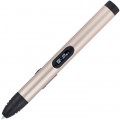 | 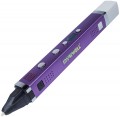 |
|---|---|---|
| Dewang X4 | Myriwell RP100C | |
from $64.00 | Outdated Product | |
| User reviews | ||
| TOP sellers | ||
Display for displaying parameters. Flexible temperature control. Automatic plastic feed. Collapsible body. Mains powered and via USB. | Display for displaying parameters. Automatic plastic feed. Mains powered and via USB. Auto power off after 2 min. inaction. Roulette for winding the cord. The package does not always include a power adapter. | |
| Product Type | hot printing | hot printing |
| Filament Material | ABS + PLA | ABS + PLA |
| Min thread diameter | 1.75 mm | 1.75 mm |
| Nozzle Diameter | 0.6 mm | 0.6 mm |
Features | ||
| Temperature Adjust |  | |
| Number of Speeds | 3 | 4 |
| USB powered | | |
| Auto Power Off | |  |
| Display | | |
General | ||
| Tip Material | ceramics | |
| Country of brand origin | China | China |
| Dimensions | 179x19x17 mm | 175x18x18 mm |
| Thickness | 17 mm | 18 mm |
| Weight | 52 g | 55 g |
| Added to E-Catalog | march 2017 | november 2016 |


Compare Dewang X4 and Myriwell RP100C
You may be interested in
Dewang X4 often compared


Myriwell RP100C often compared


Glossary
Number of Speeds
The number of fixed speed settings provided in the pen. This spec is specified only if there is more than one such setting.
The speed control allows you to adjust the mode of operation to the circumstances: for example, a low speed will be convenient for fine work, and a high speed is so for large elements. And the more speed settings there are in the pen, the wider the choice for the user to configure the device more accurately. In the most advanced models, the number of speeds can reach eight.
Note that the speed adjust can be not only stepwise, but also smooth (see above).
The speed control allows you to adjust the mode of operation to the circumstances: for example, a low speed will be convenient for fine work, and a high speed is so for large elements. And the more speed settings there are in the pen, the wider the choice for the user to configure the device more accurately. In the most advanced models, the number of speeds can reach eight.
Note that the speed adjust can be not only stepwise, but also smooth (see above).
Auto Power Off
Automatic power off of the pen for being idle for a while. Usually, auto-off triggers after a few minutes.
This feature is found mainly in models with a "hot" type of operation (see "Product Type"). It saves energy and reduces the risk of getting burned by accidentally touching the pen that is left on. However, there are also "cold" models with auto-off.
This feature is found mainly in models with a "hot" type of operation (see "Product Type"). It saves energy and reduces the risk of getting burned by accidentally touching the pen that is left on. However, there are also "cold" models with auto-off.
Tip Material
The material of the pen tip.
— Ceramics. Usually, high-durability varieties of ceramics are used in 3D pens, which also have low thermal conductivity. The latter has a positive effect on the quality of work, and also reduces the risk of getting burned. Theoretically, ceramic is a fairly brittle material, but practically, to damage such a tip, a very strong impact is needed, and the plastic body of the pen is more likely to crack than the ceramic nozzle. Thereby, most of the modern 3D pens use ceramics.
— Metal. Metal tips are considered more reliable and impact resistant than ceramic ones, and are somewhat cheaper. However, in fact, these differences are usually not noticeable. But the thermal conductivity of metal is significantly higher than that of ceramics, which is why such a tip heats up quite strongly during operation and requires additional care. Thereby, this material is much less common than ceramics.
— Ceramics. Usually, high-durability varieties of ceramics are used in 3D pens, which also have low thermal conductivity. The latter has a positive effect on the quality of work, and also reduces the risk of getting burned. Theoretically, ceramic is a fairly brittle material, but practically, to damage such a tip, a very strong impact is needed, and the plastic body of the pen is more likely to crack than the ceramic nozzle. Thereby, most of the modern 3D pens use ceramics.
— Metal. Metal tips are considered more reliable and impact resistant than ceramic ones, and are somewhat cheaper. However, in fact, these differences are usually not noticeable. But the thermal conductivity of metal is significantly higher than that of ceramics, which is why such a tip heats up quite strongly during operation and requires additional care. Thereby, this material is much less common than ceramics.