
Comparison Honor Band A2 vs iWOWN i6 HR
Add to comparison | 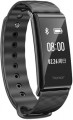 | 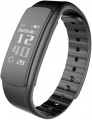 |
|---|---|---|
| Honor Band A2 | iWOWN i6 HR | |
from $17.51 | Outdated Product | |
| User reviews | ||
| TOP sellers | ||
Large OLED screen. Long battery life. Magnetic charging. | ||
| Type | fitness tracker | fitness tracker |
| Interface | Bluetooth v4.2 | Bluetooth v4.0 |
Telephony | ||
| Calls and alerts | notifications vibration | notifications vibration |
Sports and tourism | ||
| Possible measurements | heart rate monitor number of steps distance traveled calories burned activity time | heart rate monitor number of steps distance traveled calories burned activity time |
Display | ||
| Touch screen |  | |
| Type | monochrome | monochrome |
| Display type | OLED | OLED |
| Size | 0.96 " | 0.96 " |
| Screen resolution | 128x64 px | |
| PPI | 149 ppi | |
| Watch face protection | Gorilla Glass | plastic |
Hardware | ||
| Extra features | accelerometer | accelerometer |
Power source | ||
| Device charging | microUSB | proprietary connector |
| Source of power | Li-Ion | Li-Ion |
| Battery capacity | 95 mAh | 75 mAh |
| Operating time (normal mode) | 18 days | 7 days |
| Operating time (active mode) | 216 h | |
Case and strap | ||
| Material | plastic | plastic |
| Strap | non-removable | removable |
| Strap Options | rubber/silicone | rubber/silicone |
| Clasp options | snap fastener | |
General | ||
| Protection rating | IP67 | IP67 |
| Dimensions (without strap) | 46.8x20.5x11.2 mm | 19x49x10 mm |
| Weight | 22 g | 18 g |
| Color | ||
| Added to E-Catalog | november 2017 | september 2017 |


Compare Honor Band A2 and iWOWN i6 HR
You may be interested in
Honor Band A2 often compared


iWOWN i6 HR often compared


Glossary
Interface
The primary way to connect a wrist gadget with external devices. For smartwatches and fitness bands (see "Type"), it is assumed to be connected to a smartphone or tablet, while in the case of watch-phones, it's usually about headsets.
— Bluetooth. A wireless technology for direct communication between various devices. There are different versions that indicate the device's capabilities.
— Bluetooth. A wireless technology for direct communication between various devices. There are different versions that indicate the device's capabilities.
- — 5.0. The fifth generation of Bluetooth was released in 2016. The key innovation in version 5.0 was expanding the capabilities related to the "Internet of Things." For example, the Bluetooth Low Energy protocol introduced the ability to double data transfer speed (up to 2 Mbps) at the cost of reducing range, as well as quadruple the range at the cost of reducing speed; additionally, several improvements were introduced concerning simultaneous operation with a large number of connected devices.
- — v 5.1. An update of the version v 5.0 described above. In addition to general improvements in connection quality and reliability, this update implemented an interesting feature such as determining the direction from which the Bluetooth signal comes. This makes it possible to determine the location of connected devices with centimeter accuracy.
- — v 5.2. The update following 5.1 of the fifth-generation Bluetooth. The main innovations in this version included several security improvements, additional optimization of power consumption in LE mode, and a new audio signal format for synchronizing parallel playback on multiple devices.
- — v 5.3.... The Bluetooth v 5.3 wireless communication protocol was introduced in early 2022. Innovations included speeding up the process of coordinating the communication channel between the controller and the device, implementing a feature for rapid switching between low-duty cycle and high-speed modes, improved bandwidth and connection stability by reducing susceptibility to interference. In the event of unexpected interference in Low Energy mode, the procedure for selecting a communication channel for switching is sped up. There were no fundamental innovations in protocol 5.3; however, it is evident that there are several qualitative improvements.
- — v 5.4. The standard generation approved in 2023, which became an intermediate step before Bluetooth 6. The main innovation was the introduction of the PAwR (Periodic Advertising with Responses) mode, allowing watches and other devices to exchange data in large sensor networks with minimal power consumption. Also added was the Encrypted Advertising Data mechanism, enhancing protection against eavesdropping and packet forgery, which is important when using watches for contactless keys or payments. Compared to earlier versions 5.2 and 5.3, Bluetooth 5.4 focuses on security, energy efficiency, and operation in a "noisy" radio environment. In real-world use, this is manifested in more stable data transmission from sensors (heart rate, steps, sleep), battery savings with constant phone connection, and the reliability of functions like notifications or fitness tracking even with many connected devices around.
- — v 6.0. Bluetooth 6 has been officially approved by Bluetooth SIG and offers a number of significant benefits in smartwatches compared to version 5.4. Thanks to the improved Channel Sounding system and LE Audio optimization, such devices maintain connections faster and more stably, determine the distance to the smartphone more accurately (to centimeters), lose frames less frequently during calls or Auracast broadcasts, and provide longer battery life. In practice, this manifests in functions like unlocking a laptop upon approach, precise indoor watch search, reliable operation of heart rate sensors and sports sensors, as well as stable calls even in crowded gyms.
Naturally, to utilize all the capabilities of a particular Bluetooth version, it must be supported not only by the gadget itself but also by the smartphone/tablet to which it is connected.
Screen resolution
Screen size in dots (pixels) horizontally and vertically. In general, this is one of the indicators that determine the image quality: the higher the resolution, the clearer and smoother the picture on the screen (with the same size), the less noticeable are the individual dots. On the other hand, an increase in the number of pixels affects the cost of displays, their power consumption and requirements for a hardware platform (more powerful hardware is required, which itself will cost more). In addition, the specifics of using smartwatches is such that there is simply no need to install high-resolution screens in them. Therefore, modern wrist accessories use displays with a relatively low resolution: for example, 320x320 with a size of about 1.6" is considered quite sufficient even for premium watches.
PPI
The density of dots on the screen of the gadget, namely, the number of pixels that are on each inch of the panel vertically or horizontally.
The higher the PPI, the higher the detail of the screen, the clearer and smoother the image is. On the other hand, this indicator affects the price accordingly. Therefore, the higher the density of points, the more advanced, usually, this gadget is in terms of general capabilities. However, when choosing a screen, manufacturers take into account the general purpose and functionality of the device; so that even a small number of PPIs usually does not interfere with comfortable use.
The higher the PPI, the higher the detail of the screen, the clearer and smoother the image is. On the other hand, this indicator affects the price accordingly. Therefore, the higher the density of points, the more advanced, usually, this gadget is in terms of general capabilities. However, when choosing a screen, manufacturers take into account the general purpose and functionality of the device; so that even a small number of PPIs usually does not interfere with comfortable use.
Watch face protection
The material from which the transparent cover of the display is made.
— Plastic. Inexpensive, moreover, quite durable and impact-resistant material: even with a strong impact, the plastic is more likely to crack than crumble into fragments. At the same time, scratches easily appear on such a surface, and over time it inevitably becomes cloudy. Because of this, plastic is found predominantly in inexpensive wearable gadgets.
— Glass. In this case, it can mean both classic silicate glass (the same as, for example, in windows), and some original types of impact-resistant glass that are not related to Gorilla Glass(see below). Regular glass costs more than plastic, but not by much, and it looks better and stays clear longer due to its scratch resistance. The main disadvantages of this material are fragility and a tendency to crumble into sharp fragments upon impact. Impact-resistant glass types are devoid of this drawback to one degree or another, but they are also more expensive. According to the price category of the gadget, you can quite accurately determine what kind of glass it uses — ordinary or shock-resistant.
— Sapphire. The coating made of synthetic sapphire is used exclusively in premium-class gadgets — this is due to the complexity of its production and, accordingly, the high cost. On the practical s...ide, sapphire is extremely scratch resistant (it is only possible to scratch such glass with a diamond or special tools), but at the same time it is fragile and easily breaks from impact.
— Gorilla glass. A family of shock-resistant glass types created by Corning and widely used in modern electronics, including wearable gadgets. In addition to strength, Gorilla Glass is also distinguished by good scratch resistance, while being relatively inexpensive (by the standards of such a coating), which has led to their popularity. However, the specific properties of such glass depend on its version; Here are the options that are relevant for modern wearable devices:
— Plastic. Inexpensive, moreover, quite durable and impact-resistant material: even with a strong impact, the plastic is more likely to crack than crumble into fragments. At the same time, scratches easily appear on such a surface, and over time it inevitably becomes cloudy. Because of this, plastic is found predominantly in inexpensive wearable gadgets.
— Glass. In this case, it can mean both classic silicate glass (the same as, for example, in windows), and some original types of impact-resistant glass that are not related to Gorilla Glass(see below). Regular glass costs more than plastic, but not by much, and it looks better and stays clear longer due to its scratch resistance. The main disadvantages of this material are fragility and a tendency to crumble into sharp fragments upon impact. Impact-resistant glass types are devoid of this drawback to one degree or another, but they are also more expensive. According to the price category of the gadget, you can quite accurately determine what kind of glass it uses — ordinary or shock-resistant.
— Sapphire. The coating made of synthetic sapphire is used exclusively in premium-class gadgets — this is due to the complexity of its production and, accordingly, the high cost. On the practical s...ide, sapphire is extremely scratch resistant (it is only possible to scratch such glass with a diamond or special tools), but at the same time it is fragile and easily breaks from impact.
— Gorilla glass. A family of shock-resistant glass types created by Corning and widely used in modern electronics, including wearable gadgets. In addition to strength, Gorilla Glass is also distinguished by good scratch resistance, while being relatively inexpensive (by the standards of such a coating), which has led to their popularity. However, the specific properties of such glass depend on its version; Here are the options that are relevant for modern wearable devices:
- Gorilla Glass v3. The oldest current version was released in 2013. Nevertheless, even such a coating is noticeably superior to traditional glass (not to mention plastic) in terms of transparency and scratch resistance.
- Gorilla Glass v4. Version released in 2014. A key feature was that the development of this coating focused on impact resistance (whereas previous generations focused mainly on scratch resistance). As a result, the glass turned out to be twice as strong as in version 3, despite the fact that its thickness was only 0.4 mm.
- Gorilla Glass SR+. The first version of Gorilla Glass, designed specifically for smartwatches and other miniature wearable gadgets; presented in 2016. According to the creators, the scratch resistance of such coatings approaches those of sapphire glass while maintaining the main advantages of Gorilla Glass — high strength and transparency. In general, for this material, superiority over "alternative options" is claimed by 70% in terms of strength specs and by 25% in terms of optical properties.
- Gorilla Glass DX. Another type of glass, specially designed for wearable devices. It was released in 2018 at the same time as the DX+ version (see below). Of the key improvements in Gorilla Glass DX, in particular, increased anti-reflective properties and an increase in the contrast level of the visible image by 50% are announced; the latter, among other things, allows you to reduce the actual brightness and, accordingly, the power consumption of screens without compromising image quality, which is especially important for miniature wearable devices. And this material differs from the DX+ type coating, on the one hand, by lower scratch resistance, and, on the other hand, by higher anti-reflective specs.
- Gorilla Glass DX+. Almost the same as the original version of DX, related to the same specialization — wearable wearable gadgets and other miniature devices. At the same time, DX + has a higher scratch resistance, but has slightly worse anti-reflective specs. Otherwise, these types of coverage are almost identical.
Device charging
The method of charging the battery provided in the gadget.
— MicroUSB. Charging via standard microUSB port. The main advantage of this option is the ability to charge from any microUSB cable or charger with such a connector, not necessarily branded. On the other hand, the connector itself is quite large by the standards of wrist devices and can significantly affect the increase in the dimensions of the gadget.
— USB type C. A compact version of the USB interface with a reversible design that allows the plug to be inserted in either direction. The USB type C specification provides for a number of advanced power options - in particular, various fast charging technologies have been developed for this connector.
- Branded connector. Charging via a cable that connects to the watch using the original proprietary interface. The other end of the cable, as a rule, has a standard interface - most often USB, which allows you to use any computer port or network adapter with such a connector for charging. Branded connectors can be smaller than microUSB, and fit better into the layout of the clock. However, for charging, as a rule, you have to use only original accessories, including branded cradles-stands, which are intended mainly for permanent stay in one place.
- Wireless. The main advantage of wireless c...harging technology is the absence of any connectors - which is important, given the miniature size of wrist gadgets. At the same time, this method takes more time and significantly affects the cost of the device. Note that wireless charging is not contactless: the corresponding chargers can take the form of a stand or platform on which you need to put the watch, or a magnet attached to the back cover of the gadget, etc.
- Magnetic. Charging via a cable with convex metal contacts that are magnetized to the connector on the back cover of the wearable gadget. The magnetic contact group has no gaps, which improves the dust and moisture protection qualities of the smartwatch, and the charging plug itself is attracted to the magnetic connector, eliminating the need to look for the correct position for connecting the cable.
- USB A connector. The presence of a built-in connector allows you to connect the gadget directly to the charger, laptop, power bank without using additional cables.
— MicroUSB. Charging via standard microUSB port. The main advantage of this option is the ability to charge from any microUSB cable or charger with such a connector, not necessarily branded. On the other hand, the connector itself is quite large by the standards of wrist devices and can significantly affect the increase in the dimensions of the gadget.
— USB type C. A compact version of the USB interface with a reversible design that allows the plug to be inserted in either direction. The USB type C specification provides for a number of advanced power options - in particular, various fast charging technologies have been developed for this connector.
- Branded connector. Charging via a cable that connects to the watch using the original proprietary interface. The other end of the cable, as a rule, has a standard interface - most often USB, which allows you to use any computer port or network adapter with such a connector for charging. Branded connectors can be smaller than microUSB, and fit better into the layout of the clock. However, for charging, as a rule, you have to use only original accessories, including branded cradles-stands, which are intended mainly for permanent stay in one place.
- Wireless. The main advantage of wireless c...harging technology is the absence of any connectors - which is important, given the miniature size of wrist gadgets. At the same time, this method takes more time and significantly affects the cost of the device. Note that wireless charging is not contactless: the corresponding chargers can take the form of a stand or platform on which you need to put the watch, or a magnet attached to the back cover of the gadget, etc.
- Magnetic. Charging via a cable with convex metal contacts that are magnetized to the connector on the back cover of the wearable gadget. The magnetic contact group has no gaps, which improves the dust and moisture protection qualities of the smartwatch, and the charging plug itself is attracted to the magnetic connector, eliminating the need to look for the correct position for connecting the cable.
- USB A connector. The presence of a built-in connector allows you to connect the gadget directly to the charger, laptop, power bank without using additional cables.
Battery capacity
The capacity of the battery that is installed in the gadget.
Theoretically, the higher the capacity, the longer the battery can work on a single charge. However, in fact, the battery life of the gadget also depends on its power consumption, and it is determined by the specs of the display and the hardware. Therefore, only models of the same type with very similar specs can be compared in terms of battery capacity; and for an accurate assessment of battery life, it is better to focus on the directly claimed operating time in one mode or another.
It is also worth mentioning that high-capacity batteries inevitably turn out to be quite heavy and bulky. So the capacity of batteries installed in wearable gadgets is also greatly limited by size and weight.
Theoretically, the higher the capacity, the longer the battery can work on a single charge. However, in fact, the battery life of the gadget also depends on its power consumption, and it is determined by the specs of the display and the hardware. Therefore, only models of the same type with very similar specs can be compared in terms of battery capacity; and for an accurate assessment of battery life, it is better to focus on the directly claimed operating time in one mode or another.
It is also worth mentioning that high-capacity batteries inevitably turn out to be quite heavy and bulky. So the capacity of batteries installed in wearable gadgets is also greatly limited by size and weight.
Operating time (normal mode)
The time that the gadget can work on one battery charge (or the supplied battery) in normal use.
Normal mode, as a rule, means working with a relatively low load. At this time, the display can display some data, and basic functions can also work (counting steps, periodically checking heart rate, etc.), but in any case, power consumption is low. Therefore, the operating time in normal mode can be quite impressive, up to several weeks, or even months. However, when choosing, it doesn’t hurt to also pay attention to the stated time in active mode (see below) — especially if a long operating time is critical, or you plan to use the gadget intensively. The actual autonomy of the device will most likely be somewhere in between these two values, depending on the actual load. If only the time in normal mode is indicated for the gadget, you should choose with a certain reserve.
Normal mode, as a rule, means working with a relatively low load. At this time, the display can display some data, and basic functions can also work (counting steps, periodically checking heart rate, etc.), but in any case, power consumption is low. Therefore, the operating time in normal mode can be quite impressive, up to several weeks, or even months. However, when choosing, it doesn’t hurt to also pay attention to the stated time in active mode (see below) — especially if a long operating time is critical, or you plan to use the gadget intensively. The actual autonomy of the device will most likely be somewhere in between these two values, depending on the actual load. If only the time in normal mode is indicated for the gadget, you should choose with a certain reserve.
Operating time (active mode)
The time that the gadget is able to work on one charge of the battery in the active mode of use.
For watch-phones (see “Type”), this usually means a talk mode, for other gadgets, an intensive work mode when numerous features and sensors are used and there is a constant exchange of data with a smartphone/tablet. However, the specific understanding of the "active mode" for different manufacturers may vary: some indicate the time at maximum performance (that is, in fact, guaranteed battery life), others — in some kind of "average mode". However, anyway, this is a fairly clear parameter that describes the battery life of a particular model quite well (and is much closer to real indicators than the time in normal mode mentioned above).
Note that for models with a GPS sensor (see "Navigation"), the specifications may additionally specify the time of active operation using such a sensor. See "Operating time (GPS)" for details.
For watch-phones (see “Type”), this usually means a talk mode, for other gadgets, an intensive work mode when numerous features and sensors are used and there is a constant exchange of data with a smartphone/tablet. However, the specific understanding of the "active mode" for different manufacturers may vary: some indicate the time at maximum performance (that is, in fact, guaranteed battery life), others — in some kind of "average mode". However, anyway, this is a fairly clear parameter that describes the battery life of a particular model quite well (and is much closer to real indicators than the time in normal mode mentioned above).
Note that for models with a GPS sensor (see "Navigation"), the specifications may additionally specify the time of active operation using such a sensor. See "Operating time (GPS)" for details.
Strap
Different straps not only look, but often feel different; so simply replacing the strap allows you to further adjust the gadget to the user’s preferences.
— Quick release. Quick-release straps and bracelets are those that can be put on and taken off without the use of special tools. For this purpose, the design provides appropriate fastenings. This ease of replacement entails a number of other advantages. For example, when purchasing an additional strap, you can immediately try several options in practice and confidently decide which one suits you best. And if the gadget is used in different situations, you can have several straps for each occasion: for example, strict black for work hours and bright orange for weekends. On the other hand, when looking for quick-release bracelets, you should pay special attention to compatibility.
- Removable. The ability to remove the included strap of the gadget and replace it with another one, at your own request. Replacement options may vary between different models: for example, some smart watches and watch-phones are compatible even with straps from regular wristwatches, but fitness bracelets, as a rule, are designed only for branded accessories. Be that as it may, replacing the strap allows you to change both the appearance of the gadget and the feeling of wearing it (after all, different materials feel different on the hand).
— Quick release. Quick-release straps and bracelets are those that can be put on and taken off without the use of special tools. For this purpose, the design provides appropriate fastenings. This ease of replacement entails a number of other advantages. For example, when purchasing an additional strap, you can immediately try several options in practice and confidently decide which one suits you best. And if the gadget is used in different situations, you can have several straps for each occasion: for example, strict black for work hours and bright orange for weekends. On the other hand, when looking for quick-release bracelets, you should pay special attention to compatibility.
- Removable. The ability to remove the included strap of the gadget and replace it with another one, at your own request. Replacement options may vary between different models: for example, some smart watches and watch-phones are compatible even with straps from regular wristwatches, but fitness bracelets, as a rule, are designed only for branded accessories. Be that as it may, replacing the strap allows you to change both the appearance of the gadget and the feeling of wearing it (after all, different materials feel different on the hand).