
Comparison MIOL 82-020 vs Intertool AT-3013
Add to comparison | 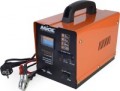 | 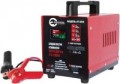 |
|---|---|---|
| MIOL 82-020 | Intertool AT-3013 | |
from $79.52 up to $80.34 | from $58.60 up to $73.16 | |
| User reviews | ||
| TOP sellers | ||
| Device | charger & jump starter | charger & jump starter |
| Type | transformer | |
Specs | ||
| Battery compatibility | WET/EFB (Lead-Acid) | |
| Battery voltage | 6 В 12 В | 6 В 12 В |
| Rated starting power | 55 А | 70 А |
| Peak output current | 100 А | 140 А |
| Min. charging current | 2 А | 2 А |
| Max. charging current | 6 А | 12 А |
| Current adjustment | 2 modes | 2 modes |
| Battery capacity 12V | 100 Ah | 100 Ah |
| Features | ammeter charging indicator overcharge protection | ammeter charging indicator overcharge protection |
General | ||
| Power source | 230 В | 230 В |
| Power consumption (charge) | 140 W | 140 W |
| Size | 150x250x280 mm | |
| Weight | 5.5 kg | |
| Added to E-Catalog | november 2014 | november 2014 |


Compare MIOL 82-020 and Intertool AT-3013
You may be interested in
Glossary
Type
— Transformer. The design of such devices is based on a transformer with a rectifier, operating on the principle of electromagnetic induction. It converts alternating power from the network into a small direct power for charging the battery. Transformer chargers are distinguished by increased reliability, simple design and low cost. At the same time, they have large dimensions and solid weight.
— Pulse (inverter). Pulse (inverter) chargers affect the battery by supplying high-frequency pulses of low-amperage power. Using pulse chargers, it is possible to supply both direct and alternating power; sometimes they are used for mixed or combined charging of batteries. The vast majority of such chargers operate in an autonomous mode with automatic parameter control. Also, pulse chargers are many times more compact and lighter than transformer counterparts, but they are more expensive.
— Pulse (inverter). Pulse (inverter) chargers affect the battery by supplying high-frequency pulses of low-amperage power. Using pulse chargers, it is possible to supply both direct and alternating power; sometimes they are used for mixed or combined charging of batteries. The vast majority of such chargers operate in an autonomous mode with automatic parameter control. Also, pulse chargers are many times more compact and lighter than transformer counterparts, but they are more expensive.
Battery compatibility
The parameter determines compatibility with batteries, that is, with what types of batteries a charger or start-charger or a car booster can be used. Incorrect charger operation mode promises overcharging of the battery, its swelling and failure.
WET / EFB (Lead-Acid). The abbreviation WET is used to designate traditional lead-acid batteries with a liquid electrolyte. EFB (Enhanced Flooded Battery) is their improved subtype with thicker pure lead plates and a positive electrode in a special microfiber envelope. Both transformer devices and most impulse batteries are suitable for charging acid batteries.
AGM. In the design of AGM batteries, the electrolyte is in an absorbed state: the compartments of such a battery are filled with porous fiberglass material, which contains acid. This type of battery is particularly sensitive to overcharging - it is necessary to select a suitable charger with a certain set of automatic functions for it.
gel. In gel batteries, the electrolyte is brought to a jelly-like state with the help of special thickeners. The key to choosing the right GEL battery charger is the ability to vary the amount of charging current depending on how badly the battery is discharged.
LifePO4. Lithium iron phosphate batteries are charged with constant voltage an...d current. As the voltage in the battery approaches the maximum value, the charge current should decrease, and after the end of the charging process, its supply should stop completely. To keep LiFePO4 batteries in good shape, devices with appropriate automatic functions are suitable.
Li-Ion. Lithium-ion Li-Ion batteries are charged in the same way as lithium-iron-phosphate counterparts. For them, you will need to pick up an automatic device with the ability to supply constant voltage and current.
WET / EFB (Lead-Acid). The abbreviation WET is used to designate traditional lead-acid batteries with a liquid electrolyte. EFB (Enhanced Flooded Battery) is their improved subtype with thicker pure lead plates and a positive electrode in a special microfiber envelope. Both transformer devices and most impulse batteries are suitable for charging acid batteries.
AGM. In the design of AGM batteries, the electrolyte is in an absorbed state: the compartments of such a battery are filled with porous fiberglass material, which contains acid. This type of battery is particularly sensitive to overcharging - it is necessary to select a suitable charger with a certain set of automatic functions for it.
gel. In gel batteries, the electrolyte is brought to a jelly-like state with the help of special thickeners. The key to choosing the right GEL battery charger is the ability to vary the amount of charging current depending on how badly the battery is discharged.
LifePO4. Lithium iron phosphate batteries are charged with constant voltage an...d current. As the voltage in the battery approaches the maximum value, the charge current should decrease, and after the end of the charging process, its supply should stop completely. To keep LiFePO4 batteries in good shape, devices with appropriate automatic functions are suitable.
Li-Ion. Lithium-ion Li-Ion batteries are charged in the same way as lithium-iron-phosphate counterparts. For them, you will need to pick up an automatic device with the ability to supply constant voltage and current.
Rated starting power
Nominal starting current of the starter charger or booster (see "Type").
In this case, it refers to the current that the device can deliver in engine starting mode for a relatively long period (at least 30 seconds, or even more). This indicator should not be lower than the nominal starting current consumed by the car's starter — otherwise, the device simply will not have enough power for effective starter cranking and engine starting. Information about the required starting current can be clarified by the car's documentation or by the specifications of the standard battery used in it. For most passenger cars, this figure ranges from 200 to 400 A; less powerful starting devices are mainly intended for motorcycles and other similar vehicles, while more powerful ones are for buses, trucks, and other heavy equipment, among such "starters" there are models for 400 – 600 A and even over 1000 A.
In this case, it refers to the current that the device can deliver in engine starting mode for a relatively long period (at least 30 seconds, or even more). This indicator should not be lower than the nominal starting current consumed by the car's starter — otherwise, the device simply will not have enough power for effective starter cranking and engine starting. Information about the required starting current can be clarified by the car's documentation or by the specifications of the standard battery used in it. For most passenger cars, this figure ranges from 200 to 400 A; less powerful starting devices are mainly intended for motorcycles and other similar vehicles, while more powerful ones are for buses, trucks, and other heavy equipment, among such "starters" there are models for 400 – 600 A and even over 1000 A.
Peak output current
Peak starting current of the starter charger or booster (see «Type»).
The peak current is the highest current that the device can issue without problems for a short time (1 – 2 seconds). This current is significantly higher than the nominal starting current (see above), which corresponds to the operation of a car starter: as it begins to spin, the starter consumes a very high current that decreases almost immediately.
The peak starting current of the starter charger or booster should not be lower than the peak starting current of the starter. This can be specified in the car's documentation or based on the characteristics of the standard car battery used.
The peak current is the highest current that the device can issue without problems for a short time (1 – 2 seconds). This current is significantly higher than the nominal starting current (see above), which corresponds to the operation of a car starter: as it begins to spin, the starter consumes a very high current that decreases almost immediately.
The peak starting current of the starter charger or booster should not be lower than the peak starting current of the starter. This can be specified in the car's documentation or based on the characteristics of the standard car battery used.
Max. charging current
The highest current that the charger can provide in charging mode. For models with one current adjustment (see below), its value is also indicated in this paragraph.
Different battery models may differ in charging parameters, including over the optimum current range. Accordingly, it is worth choosing a charger in such a way that it matches this range. Detailed selection recommendations can be found in special sources — in particular, documentation for batteries.
Different battery models may differ in charging parameters, including over the optimum current range. Accordingly, it is worth choosing a charger in such a way that it matches this range. Detailed selection recommendations can be found in special sources — in particular, documentation for batteries.