
Comparison Vulkan CT-60 vs Vulkan CT-15
Add to comparison | 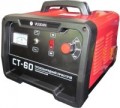 | 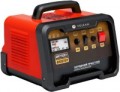 |
|---|---|---|
| Vulkan CT-60 | Vulkan CT-15 | |
from $82.19 | from $45.22 | |
| TOP sellers | ||
| Device | charger & jump starter | charger |
| Type | transformer | transformer |
Specs | ||
| Battery compatibility | WET/EFB (Lead-Acid) | WET/EFB (Lead-Acid) |
| Battery voltage | 12 В 24 В | 12 В 24 В |
| Rated starting power | 150 А | |
| Peak output current | 300 А | |
| Max. charging current | 55 А | 7.1 А |
| Current adjustment | 2 modes | 2 modes |
| Battery capacity 12V | 30 – 450 Ah | 20 – 150 Ah |
| Features | ammeter charging indicator overcharge protection | ammeter charging indicator overcharge protection |
General | ||
| Power source | 230 В | 230 В |
| Power consumption (charge) | 150 W | |
| Size | 290x250x290 mm | |
| Weight | 4.2 kg | |
| Added to E-Catalog | march 2015 | march 2015 |


Compare Vulkan CT-60 and CT-15
You may be interested in
My comparisons
Vulkan CT-60 often compared


Glossary
Device
— Charger. In accordance with the name, such devices are designed to charge discharged batteries. In standard mode car batteries are recharged from the car's on-board power supply when the engine is running, but this option does not give sufficient guarantees: the battery can be discharged from a long staying in the garage, from being in the cold, due to headlights left on, etc. Chargers allow you to bring the battery back to normal in case of such troubles: they convert alternating current from a 230 V to direct current, with the parameters necessary for charging.
— Starting device (booster). Devices designed to start the engine when it is impossible to use the battery for this — if it is discharged or out of order. Such devices will be useful in cases where there is no time or opportunity to charge a standard battery (in particular, when “you need to go right now”). Typically, the booster has its own battery or supercapacitor, which allows such devices to be used regardless of sockets (see "Built-in battery capacity"). Also note that some “launchers” also provide use as a charger for various gadgets and are equipped with the appropriate connectors — USB or DC (for both, see below).
— Charger and jump starter. This category includes models that combine the capabilities of the types described above and are able to work both in the charger mode and in the starter mode. Such units are th...e most versatile, however, they usually cost accordingly.
— Automatic battery charger. A specific type of chargers (see above) based on advanced control circuits using microprocessors. This design gives much more features than in the usual "charger". So, automatic chargers can be produced based on specific types of batteries that have special requirements for the charging procedure. Some models allow the connection of two energy sources at once, with automatic selection of the best option; this possibility is indispensable when using alternative energy sources, the power specifications of which can constantly change (for example, solar panels or wind generators). The design may even include temperature sensors that optimize the operation mode depending on the ambient temperature. The main disadvantage of automatic chargers is their high cost (despite the fact that for most classic car batteries, these advantages are not particularly important).
— Starting device (booster). Devices designed to start the engine when it is impossible to use the battery for this — if it is discharged or out of order. Such devices will be useful in cases where there is no time or opportunity to charge a standard battery (in particular, when “you need to go right now”). Typically, the booster has its own battery or supercapacitor, which allows such devices to be used regardless of sockets (see "Built-in battery capacity"). Also note that some “launchers” also provide use as a charger for various gadgets and are equipped with the appropriate connectors — USB or DC (for both, see below).
— Charger and jump starter. This category includes models that combine the capabilities of the types described above and are able to work both in the charger mode and in the starter mode. Such units are th...e most versatile, however, they usually cost accordingly.
— Automatic battery charger. A specific type of chargers (see above) based on advanced control circuits using microprocessors. This design gives much more features than in the usual "charger". So, automatic chargers can be produced based on specific types of batteries that have special requirements for the charging procedure. Some models allow the connection of two energy sources at once, with automatic selection of the best option; this possibility is indispensable when using alternative energy sources, the power specifications of which can constantly change (for example, solar panels or wind generators). The design may even include temperature sensors that optimize the operation mode depending on the ambient temperature. The main disadvantage of automatic chargers is their high cost (despite the fact that for most classic car batteries, these advantages are not particularly important).
Rated starting power
Nominal starting current of the starter charger or booster (see "Type").
In this case, it refers to the current that the device can deliver in engine starting mode for a relatively long period (at least 30 seconds, or even more). This indicator should not be lower than the nominal starting current consumed by the car's starter — otherwise, the device simply will not have enough power for effective starter cranking and engine starting. Information about the required starting current can be clarified by the car's documentation or by the specifications of the standard battery used in it. For most passenger cars, this figure ranges from 200 to 400 A; less powerful starting devices are mainly intended for motorcycles and other similar vehicles, while more powerful ones are for buses, trucks, and other heavy equipment, among such "starters" there are models for 400 – 600 A and even over 1000 A.
In this case, it refers to the current that the device can deliver in engine starting mode for a relatively long period (at least 30 seconds, or even more). This indicator should not be lower than the nominal starting current consumed by the car's starter — otherwise, the device simply will not have enough power for effective starter cranking and engine starting. Information about the required starting current can be clarified by the car's documentation or by the specifications of the standard battery used in it. For most passenger cars, this figure ranges from 200 to 400 A; less powerful starting devices are mainly intended for motorcycles and other similar vehicles, while more powerful ones are for buses, trucks, and other heavy equipment, among such "starters" there are models for 400 – 600 A and even over 1000 A.
Peak output current
Peak starting current of the starter charger or booster (see «Type»).
The peak current is the highest current that the device can issue without problems for a short time (1 – 2 seconds). This current is significantly higher than the nominal starting current (see above), which corresponds to the operation of a car starter: as it begins to spin, the starter consumes a very high current that decreases almost immediately.
The peak starting current of the starter charger or booster should not be lower than the peak starting current of the starter. This can be specified in the car's documentation or based on the characteristics of the standard car battery used.
The peak current is the highest current that the device can issue without problems for a short time (1 – 2 seconds). This current is significantly higher than the nominal starting current (see above), which corresponds to the operation of a car starter: as it begins to spin, the starter consumes a very high current that decreases almost immediately.
The peak starting current of the starter charger or booster should not be lower than the peak starting current of the starter. This can be specified in the car's documentation or based on the characteristics of the standard car battery used.
Max. charging current
The highest current that the charger can provide in charging mode. For models with one current adjustment (see below), its value is also indicated in this paragraph.
Different battery models may differ in charging parameters, including over the optimum current range. Accordingly, it is worth choosing a charger in such a way that it matches this range. Detailed selection recommendations can be found in special sources — in particular, documentation for batteries.
Different battery models may differ in charging parameters, including over the optimum current range. Accordingly, it is worth choosing a charger in such a way that it matches this range. Detailed selection recommendations can be found in special sources — in particular, documentation for batteries.
Battery capacity 12V
The capacity of batteries with an operating voltage of 12 V, for which a starter charger can be used. As a rule, modern units are not designed for one specific value, but for a range of capacities, which greatly facilitates the search filter according to the required parameters.
Note that although the discrepancy between the rechargeable battery in terms of capacity is not as critical as in terms of current or voltage, this does not mean that this parameter should not be paid attention to. Both too capacious and too “small” a battery will cause the charger to work in an off-design mode, which is harmful to both the “charger” and the battery, and can even lead to accidents.
Note that although the discrepancy between the rechargeable battery in terms of capacity is not as critical as in terms of current or voltage, this does not mean that this parameter should not be paid attention to. Both too capacious and too “small” a battery will cause the charger to work in an off-design mode, which is harmful to both the “charger” and the battery, and can even lead to accidents.
Power consumption (charge)
Electrical power consumed by the charger during operation. Both the amount of electricity “consumed” by the unit and the load it creates on the power grid depend on this indicator (with a power of more than 5 kW, connection is required according to special rules). Note that high current (see above) requires high power.
For universal starting-charging models (see "Type"), this paragraph indicates the power consumed in the charging mode; keep in mind that in start-up mode, power consumption can be several times higher.
For universal starting-charging models (see "Type"), this paragraph indicates the power consumed in the charging mode; keep in mind that in start-up mode, power consumption can be several times higher.