
Comparison Alpine CDE-193BT vs Alpine CDE-195BT
Add to comparison | 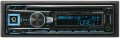 | 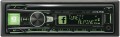 |
|---|---|---|
| Alpine CDE-193BT | Alpine CDE-195BT | |
from $191.20 up to $230.00 | from $222.80 up to $271.00 | |
| TOP sellers | ||
Clear and deep sound. Three pairs of line outputs. Wide arsenal of sound settings. Bluetooth module. Speakerphone. Duplicate notifications from Facebook. Fine-tuning the screen backlight. | ||
| Application area | car | car |
| DIN size | 1DIN | 1DIN |
| Front panel | detachable | detachable |
| Media types | CD USB storage (front) iPod/iPhone connection Android connection | CD USB storage (front) iPod/iPhone connection Android connection |
| FLAC support |  |  |
Equipment | ||
| Multimedia | Bluetooth | Bluetooth |
Equalizer | ||
| Number of bands | 9 | 9 |
| Number of fixed settings | 10 | 10 |
| High Pass Filter (HPF) | | |
| Low Pass Filter (LPF) | | |
| Bass Boost function | | |
Amplifier specs | ||
| Power per channel | 50 W | 50 W |
| Number of channels | 4 | 4 |
Control | ||
| Volume control | knob control | |
| Control functions | remote control steering wheel controls | remote control steering wheel controls |
Outputs | ||
| Speaker connection | ISO/RCA | ISO/RCA |
| Line out | 3 | 3 |
Inputs | ||
| front AUX | | |
More features | ||
| Tuner bands | FM/MW/LW | FM/MW/LW |
| Illumination colour selection | | |
| Backlight | RGB | RGB |
| Added to E-Catalog | february 2016 | february 2015 |


Compare Alpine CDE-193BT and CDE-195BT
You may be interested in
My comparisons
Alpine CDE-193BT often compared


Alpine CDE-195BT often compared
Glossary
Volume control
The type of volume control provided in the radio. Rotary knobs, sensors or mechanical buttons are most often used in this role; Here is a more detailed description of each of these options.
— Rotary regulator. The traditional regulator in the form of a round knob, which does not lose popularity nowadays — in fact, it is he who is installed in most modern car radios. Such prevalence, among other things, is due to the fact that the rotary knob is compatible with both digital and analogue volume control circuits — which means that it can be used in devices of any level, from top-end to the most simple and inexpensive. In addition, such a regulator stands out noticeably on the radio panel, so you can even find and turn it by touch, without being distracted once again from the road. The disadvantages of rotary knobs include perhaps some bulkiness compared to buttons and sensors, but this moment is extremely rarely significant.
— Mechanical buttons. Traditional mechanical buttons — more precisely, most often one double-sided rocker button, vertical or horizontal. Unlike the rotary knobs described above, they can only be used with digital volume control circuits; therefore, most radio tape recorders with buttons are advanced devices with extensive functionality and a size of at least 2DIN (or a screen of at least 5 ", for standard models). In such cases, the advant...age of buttons over rotary controls is that the rocker can be made very narrow and install even on a very thin screen frame, while the handle requires a fairly wide additional panel. And if you compare this option with sensors, then mechanical buttons are somewhat cheaper, and you can control them blindly without taking your eyes off the road to the radio panel. On the other hand, the mechanics tend to wear out with use, making it less reliable, and many users simply don't like buttons more than sensors, and for these reasons, and a few others, this option is relatively rare.
— Touch buttons. Controls in the form of sensors that are triggered not by pressing, but by touch. Like mechanical buttons (see above), this control is only compatible with digital volume control and is mainly used in advanced radios with large screens. At the same time, the sensors give the device the most advanced and “technological” appearance, attractive to many users from a purely aesthetic side. The main disadvantage of this option is that the touch buttons usually do not protrude from the panel — so it is almost impossible to find the right sensor blindly, and when controlling the radio, you inevitably have to be distracted from the road. However, with more or less decent driving skills and due care, this moment is not a serious drawback, so this type of control in high-end radio tape recorders is used much more often than traditional buttons.
— Rotary regulator. The traditional regulator in the form of a round knob, which does not lose popularity nowadays — in fact, it is he who is installed in most modern car radios. Such prevalence, among other things, is due to the fact that the rotary knob is compatible with both digital and analogue volume control circuits — which means that it can be used in devices of any level, from top-end to the most simple and inexpensive. In addition, such a regulator stands out noticeably on the radio panel, so you can even find and turn it by touch, without being distracted once again from the road. The disadvantages of rotary knobs include perhaps some bulkiness compared to buttons and sensors, but this moment is extremely rarely significant.
— Mechanical buttons. Traditional mechanical buttons — more precisely, most often one double-sided rocker button, vertical or horizontal. Unlike the rotary knobs described above, they can only be used with digital volume control circuits; therefore, most radio tape recorders with buttons are advanced devices with extensive functionality and a size of at least 2DIN (or a screen of at least 5 ", for standard models). In such cases, the advant...age of buttons over rotary controls is that the rocker can be made very narrow and install even on a very thin screen frame, while the handle requires a fairly wide additional panel. And if you compare this option with sensors, then mechanical buttons are somewhat cheaper, and you can control them blindly without taking your eyes off the road to the radio panel. On the other hand, the mechanics tend to wear out with use, making it less reliable, and many users simply don't like buttons more than sensors, and for these reasons, and a few others, this option is relatively rare.
— Touch buttons. Controls in the form of sensors that are triggered not by pressing, but by touch. Like mechanical buttons (see above), this control is only compatible with digital volume control and is mainly used in advanced radios with large screens. At the same time, the sensors give the device the most advanced and “technological” appearance, attractive to many users from a purely aesthetic side. The main disadvantage of this option is that the touch buttons usually do not protrude from the panel — so it is almost impossible to find the right sensor blindly, and when controlling the radio, you inevitably have to be distracted from the road. However, with more or less decent driving skills and due care, this moment is not a serious drawback, so this type of control in high-end radio tape recorders is used much more often than traditional buttons.