
Comparison Nomi E100 vs Golf Hive10
Add to comparison | 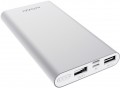 |  |
|---|---|---|
| Nomi E100 | Golf Hive10 | |
| Outdated Product | Outdated Product | |
| TOP sellers | ||
Slim aluminium body. Lightning connector. | ||
| Battery capacity | 10000 mAh | 10000 mAh |
| Battery type | Li-Pol | Li-Pol |
Charging gadgets / outputs | ||
| USB-A | 2 pcs | 2 pcs |
Power bank charging | ||
| Power bank charging inputs | Apple Lightning microUSB | Apple Lightning microUSB |
| Charge cycles | 500 | |
Features | ||
| Bundled cables (adapters) | microUSB | microUSB Apple Lightning |
General | ||
| Body material | aluminium | plastic |
| Dimensions | 130x65x15 mm | 133x65x15 mm |
| Weight | 210 g | 205 g |
| Color | ||
| Added to E-Catalog | november 2017 | august 2017 |


Compare Nomi E100 and Golf Hive10
You may be interested in
Nomi E100 often compared


Golf Hive10 often compared

Glossary
Charge cycles
The number of charge-discharge cycles that the battery can withstand without significant loss of performance.
During operation, batteries wear out, and because of this, their specs (primarily capacity) noticeably deteriorate. Battery life is usually measured in charge-discharge cycles. The features of counting cycles are described in detail in special sources, but here we note that not always models with the same claimed resource turn out to be equally durable in fact. The fact is that different manufacturers may understand “significant loss of performance” differently: for example, one brand can indicate a resource up to a 20% decrease in capacity, the second — up to a 60% decrease. Therefore, when choosing, it makes sense to focus not only on pure numbers, but also on other sources — test results, reviews, etc.
Also note that battery life can be noticeably reduced if the operating conditions are violated — for example, in case of overheating or excessive cold.
During operation, batteries wear out, and because of this, their specs (primarily capacity) noticeably deteriorate. Battery life is usually measured in charge-discharge cycles. The features of counting cycles are described in detail in special sources, but here we note that not always models with the same claimed resource turn out to be equally durable in fact. The fact is that different manufacturers may understand “significant loss of performance” differently: for example, one brand can indicate a resource up to a 20% decrease in capacity, the second — up to a 60% decrease. Therefore, when choosing, it makes sense to focus not only on pure numbers, but also on other sources — test results, reviews, etc.
Also note that battery life can be noticeably reduced if the operating conditions are violated — for example, in case of overheating or excessive cold.
Bundled cables (adapters)
Types of cables and/or adapters for charging external devices included with the power bank.
The type of these cables is indicated by the plug used to connect to the charging gadget; the connection to the power bank itself is usually through a standard USB-A or USB type C output. It should be emphasized that this refers to removable cables/adapters; types of built-in charging cables are specified separately (if available — see below).
Overall, this parameter allows you to assess the capabilities of the power bank available "out of the box," without purchasing additional accessories. As for specific interfaces, most external batteries these days come with cables/adapters for microUSB, USB type C, and/or Lightning; more specific connectors are extremely rare. Here are the features of the most popular options:
— microUSB. A connector extremely common in modern portable gadgets. It is less convenient than the newer USB type C and has fewer working characteristics, but it still maintains popularity.
— USB type C. A relatively new standard for miniature USB connectors, used for charging both in portable devices and larger ones — particularly some ultra-compact laptops. Physically, it differs from microUSB with slightly larger sizes and a reversible design, allowing the plug to be connected in either direction. In terms of performance, USB...type C is notable for better compatibility with fast-charging technologies: more such technologies can be used with it, and Power Delivery was originally designed for this connector. However, having a USB type C cable does not necessarily mean support for fast charging.
— Lightning. A standard proprietary connector used in compact Apple gadgets; such technology is not found with other manufacturers.
Note that if several types of included cables/adapters are specified in the characteristics, the specific format of such accessories may vary. For example, the "microUSB plus USB type C" option could mean two separate cables, one cable with two plugs, a cable with one connector plus an adapter for another, etc.
The type of these cables is indicated by the plug used to connect to the charging gadget; the connection to the power bank itself is usually through a standard USB-A or USB type C output. It should be emphasized that this refers to removable cables/adapters; types of built-in charging cables are specified separately (if available — see below).
Overall, this parameter allows you to assess the capabilities of the power bank available "out of the box," without purchasing additional accessories. As for specific interfaces, most external batteries these days come with cables/adapters for microUSB, USB type C, and/or Lightning; more specific connectors are extremely rare. Here are the features of the most popular options:
— microUSB. A connector extremely common in modern portable gadgets. It is less convenient than the newer USB type C and has fewer working characteristics, but it still maintains popularity.
— USB type C. A relatively new standard for miniature USB connectors, used for charging both in portable devices and larger ones — particularly some ultra-compact laptops. Physically, it differs from microUSB with slightly larger sizes and a reversible design, allowing the plug to be connected in either direction. In terms of performance, USB...type C is notable for better compatibility with fast-charging technologies: more such technologies can be used with it, and Power Delivery was originally designed for this connector. However, having a USB type C cable does not necessarily mean support for fast charging.
— Lightning. A standard proprietary connector used in compact Apple gadgets; such technology is not found with other manufacturers.
Note that if several types of included cables/adapters are specified in the characteristics, the specific format of such accessories may vary. For example, the "microUSB plus USB type C" option could mean two separate cables, one cable with two plugs, a cable with one connector plus an adapter for another, etc.
Body material
The main material used in the the body of a power bank.
In addition to traditional plastic, nowadays, external batteries are produced in cases made of more advanced and/or "prestigious" materials. Of these materials, aluminium is the most widely used; also you can find products made of steel, zinc, leather, fabric and even wood. Here are the main features of each option:
— Plastic. The most popular material for the bodies of modern power banks. Plastic, on the one hand, is inexpensive, on the other hand, it is quite durable and has a small weight, on the third hand, it makes it easy to create cases of any shape and colour, which is especially important for devices with an unusual design. In terms of strength and reliability, ordinary plastic is somewhat inferior to metals; however, in everyday use, this difference is not critical — except that scratches on such a case will appear faster. And for extreme conditions, cases can be produced from special impact-resistant plastic.
— Aluminium. Aluminium alloy housings are highly durable and lightweight; in addition, they look stylish, and the appearance is retained for a long time due to scratch resistance. The main disadvantage of aluminium is that it is more expensive than plastic.
...— Steel. Steel is notable for its high durability and reliability; according to these indicators, it surpasses even aluminium, not to mention plastic. On the other hand, this material has a significant weight, and therefore is used much less frequently.
— Leather. Solid body (plastic or metal) with additional leather cover. Such a coating does not affect the functionality and plays a purely aesthetic role: it gives the device a stylish and eye-catching appearance, allowing you to turn the power bank into a stylish accessory. However, note that in the design of such products (especially inexpensive ones), artificial leather (leatherette) is often used, which is noticeably inferior to natural leather in reliability, durability, and sometimes in appearance. Genuine leather, on the other hand, significantly affects the price — its cost can be more than half of the total price of the entire power bank.
— Fabric. A hard case (usually plastic) with a fabric outer covering. Such a coating not only gives the device a rather original appearance, but also gives some practical advantages: the fabric is pleasant to the touch and does not slip in the hand, which reduces the risk of dropping the power bank. On the other hand, various contaminants are poorly removed from such a surface, it has no fundamental advantages over plastic or metal, but it costs much more. Therefore, fabric cases are not very popular.
— Wood. Another design material used mainly for its original appearance than practical advantages. Nevertheless, wood is not inferior to plastic; and some users also consider the natural origin of this material to be an important advantage. On the other hand, wooden cases do not have noticeable advantages over plastic ones, and they cost much more.
— Zinc. Zinc alloys are similar in most properties to the aluminium alloys described above, however, for a number of reasons (in particular, due to the greater complexity in production), they are used extremely rarely.
In addition to traditional plastic, nowadays, external batteries are produced in cases made of more advanced and/or "prestigious" materials. Of these materials, aluminium is the most widely used; also you can find products made of steel, zinc, leather, fabric and even wood. Here are the main features of each option:
— Plastic. The most popular material for the bodies of modern power banks. Plastic, on the one hand, is inexpensive, on the other hand, it is quite durable and has a small weight, on the third hand, it makes it easy to create cases of any shape and colour, which is especially important for devices with an unusual design. In terms of strength and reliability, ordinary plastic is somewhat inferior to metals; however, in everyday use, this difference is not critical — except that scratches on such a case will appear faster. And for extreme conditions, cases can be produced from special impact-resistant plastic.
— Aluminium. Aluminium alloy housings are highly durable and lightweight; in addition, they look stylish, and the appearance is retained for a long time due to scratch resistance. The main disadvantage of aluminium is that it is more expensive than plastic.
...— Steel. Steel is notable for its high durability and reliability; according to these indicators, it surpasses even aluminium, not to mention plastic. On the other hand, this material has a significant weight, and therefore is used much less frequently.
— Leather. Solid body (plastic or metal) with additional leather cover. Such a coating does not affect the functionality and plays a purely aesthetic role: it gives the device a stylish and eye-catching appearance, allowing you to turn the power bank into a stylish accessory. However, note that in the design of such products (especially inexpensive ones), artificial leather (leatherette) is often used, which is noticeably inferior to natural leather in reliability, durability, and sometimes in appearance. Genuine leather, on the other hand, significantly affects the price — its cost can be more than half of the total price of the entire power bank.
— Fabric. A hard case (usually plastic) with a fabric outer covering. Such a coating not only gives the device a rather original appearance, but also gives some practical advantages: the fabric is pleasant to the touch and does not slip in the hand, which reduces the risk of dropping the power bank. On the other hand, various contaminants are poorly removed from such a surface, it has no fundamental advantages over plastic or metal, but it costs much more. Therefore, fabric cases are not very popular.
— Wood. Another design material used mainly for its original appearance than practical advantages. Nevertheless, wood is not inferior to plastic; and some users also consider the natural origin of this material to be an important advantage. On the other hand, wooden cases do not have noticeable advantages over plastic ones, and they cost much more.
— Zinc. Zinc alloys are similar in most properties to the aluminium alloys described above, however, for a number of reasons (in particular, due to the greater complexity in production), they are used extremely rarely.