
Comparison Marantz MM7055 vs Marantz MM7025
Add to comparison | 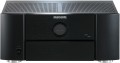 | 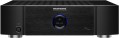 |
|---|---|---|
| Marantz MM7055 | Marantz MM7025 | |
| Compare prices 4 | Compare prices 3 | |
| TOP sellers | ||
| Device type | amplifier | amplifier |
| Element base | transistor | transistor |
Amplifier parameters | ||
| Number of channels | 5 | 2 |
| Frequency range | 5 – 40000 Hz | 5 – 40000 Hz |
| Power per channel (8Ω) | 140 W | 140 W |
| Power per channel (6Ω) | 170 W | 170 W |
| Signal-to-noise ratio (Main) | 105 dB | 105 dB |
| Damping factor | 100 | 100 |
| Harmonic distortion | 0.03 % | 0.03 % |
Channel sensitivity / impedance | ||
| Balanced XLR input | 2400 mV 30 kOhm | 2400 mV 30 kOhm |
| Line input | 1200 mV 22 kOhm | 1200 mV 22 kOhm |
Connectors | ||
| Inputs | control input (IR) | control input (IR) |
| To amplifier (Main) | RCA/XLR | RCA/XLR |
| Trigger | 1 шт | 1 шт |
| For acoustics | 5 шт | 2 шт |
| Trigger output | 1 шт | 1 шт |
Features | ||
| More features | By-pass/Direct auto power off | By-pass/Direct auto power off |
General | ||
| PSU | internal | internal |
| Power consumption | 660 W | 330 W |
| Standby consumption | 0.2 W | 0.2 W |
| Dimensions (WxDxH) | 440x384x183 mm | 440x352x126 mm |
| Weight | 15.7 kg | 10.8 kg |
| Color | ||
| Added to E-Catalog | february 2014 | february 2014 |





Compare Marantz MM7055 and MM7025
Price comparison
You may be interested in
My comparisons
Marantz MM7055 often compared


Marantz MM7025 often compared


Glossary
Number of channels
The maximum number of channels the amplifier can handle. The choice for this parameter depends primarily on the intended format of using the device.
Most modern amplifiers have two channels for normal stereo sound, which is enough for listening to music or radio programs. There are also models designed for multi-channel "surround" sound, but they are much less common. This is due to the fact that such sound is most often used as an accompaniment to high-quality video — and therefore a home theater receiver is usually used for processing, rather than a separate audio amplifier.
Among the top-class models, there may be single-channel amplifiers — they provide maximum opportunities for fine-tuning the sound, but you have to purchase several such devices, one per channel. Another specific variety is amplifiers designed to add a certain number of channels to those already available; the most popular of these options is 3-channel, capable of turning an existing stereo system into a multi-channel one.
Most modern amplifiers have two channels for normal stereo sound, which is enough for listening to music or radio programs. There are also models designed for multi-channel "surround" sound, but they are much less common. This is due to the fact that such sound is most often used as an accompaniment to high-quality video — and therefore a home theater receiver is usually used for processing, rather than a separate audio amplifier.
Among the top-class models, there may be single-channel amplifiers — they provide maximum opportunities for fine-tuning the sound, but you have to purchase several such devices, one per channel. Another specific variety is amplifiers designed to add a certain number of channels to those already available; the most popular of these options is 3-channel, capable of turning an existing stereo system into a multi-channel one.
For acoustics
The number of outputs in the design of the amplifier, designed for direct connection of speakers. One such output is usually a pair of screw terminals designed to connect one speaker. Accordingly, the standard set for sound in stereo mode is two outputs (two pairs). However, in multi-channel devices (see “Number of channels”), as well as in models with the ability to connect additional speakers and/or Bi-Wiring (see “Additionally”), more speaker outputs are installed — in accordance with the capabilities of the amplifier.
Power consumption
The power consumed by the amplifier during normal operation. Some manufacturers may indicate average power values, some — indicators at maximum load. However, anyway, this parameter allows you to quite adequately assess the power consumption of the device and the requirements for connected power.
In addition, it can be useful if you have doubts about the accuracy of the claimed data on the output power (see "Power per channel (8Ω)"). The basic rule is that the total power rating of all channels cannot exceed the total power consumption of the amplifier. In addition, there are special formulas that allow you to derive the maximum possible rated power depending on the power supply and type of amplifier; they can be found in special sources.
In addition, it can be useful if you have doubts about the accuracy of the claimed data on the output power (see "Power per channel (8Ω)"). The basic rule is that the total power rating of all channels cannot exceed the total power consumption of the amplifier. In addition, there are special formulas that allow you to derive the maximum possible rated power depending on the power supply and type of amplifier; they can be found in special sources.