
Comparison X-Digital DIN 336 vs X-Digital DIN 236
Add to comparison | 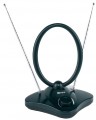 | 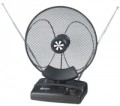 |
|---|---|---|
| X-Digital DIN 336 | X-Digital DIN 236 | |
from $23.96 | from $15.72 up to $27.96 | |
| TOP sellers | ||
| Signal reception | Analogue TV DVB-T/T2 FM radio | Analogue TV DVB-T/T2 FM radio |
Specs | ||
| Instalation type | indoor | indoor |
| Amplification coefficient | 30 dB | 36 dB |
| VHF frequency range | 87.5 – 230 MHz | 87.5 – 230 MHz |
| UHF frequency range | 470 – 862 MHz | 470 – 862 MHz |
| Amplifier |  | |
| Gain control | | |
| Variable tilt angle | | |
General | ||
| Cable length | 1.5 m | 1.5 m |
| Added to E-Catalog | december 2015 | december 2015 |


Compare X-Digital DIN 336 and DIN 236
You may be interested in
X-Digital DIN 336 often compared


X-Digital DIN 236 often compared


Glossary
Amplification coefficient
The amount of received signal amplification provided by the antenna. The higher this indicator, the more confidently the antenna will work in conditions of poor reception, the lower the signal level at which it will be ineffective. At the same time, it is worth considering that a high amplification coefficient is not a guarantee of high quality. Firstly, unscrupulous manufacturers and sellers may indicate figures in the specifications that do not correspond to real indicators. Secondly, the antenna amplifies not only the useful signal, but also various interferences, and in some cases a low amplification coefficient is preferable (for example, in dense multi-storey buildings, when the signal reaches the antenna from different directions and with different delays). And thirdly, performance above 40 dB can only be achieved using amplifiers (see below) — and amplifiers are also a source of noise, which in some situations can be quite noticeable.