
Comparison Forte F200G vs Honda GX160
Add to comparison | 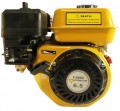 | 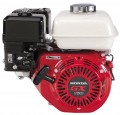 |
|---|---|---|
| Forte F200G | Honda GX160 | |
from $98.00 | from $622.92 | |
| TOP sellers | ||
Depending on the modification, the type of shaft may differ. | ||
Details | ||
| Fuel | petrol | petrol |
| Power | 6.5 hp | 4.8 hp |
| Power | 4.8 kW | 3.6 kW |
| Max. torque | 1.35 Nm | 10.3 Nm |
| Shaft type | keyway | keyway |
| Shaft position | horizontal | horizontal |
| Shaft rotation | clockwise | counterclockwise |
| Shaft speed | 4000 rpm | 3600 rpm |
| Shaft length | 58 mm | |
| Shaft diameter | 19 mm | |
| Shaft internal thread | 8 mm | |
Specs | ||
| Operating cycle | 4-stroke | 4-stroke |
| Capacity | 196 cm³ | 163 cm³ |
| Number of cylinders | 1 | 1 |
| Cooling | air | air |
| Compression ratio | 9:1 | |
| Piston diameter | 68 mm | |
| Piston stroke | 45 mm | |
| Fuel tank volume | 3.6 L | 3.1 L |
| Crankcase oil capacity | 0.6 L | 0.58 L |
| Fuel consumption | 1.4 L/h | |
| Specific fuel consumption | 230 g/kW*h | |
| Start type | manual | manual |
General | ||
| Dimensions | 390x330x350 mm | 312x362x346 mm |
| Weight | 16 kg | 15.1 kg |
| Added to E-Catalog | march 2016 | december 2015 |


Compare Forte F200G and Honda GX160
You may be interested in
My comparisons
Forte F200G often compared


Honda GX160 often compared


Glossary
Power
The rated power of the engine in horsepower (in fact, the maximum power that the unit can produce in normal operation, without overloads). Despite the popularity of the designation in watts (see below), horsepower (hp) is still quite widely used to indicate the power of internal combustion engines. 1 HP is approximately 735 watts.
In general, the more powerful the engine, the more speed and tractive effort it is able to develop. On the other hand, this indicator directly affects the weight, dimensions, and most importantly, the cost of the unit, while the real need for high power is relatively rare. Therefore, it is worth choosing according to this indicator, taking into account the features of the planned application; specific recommendations on the selection of an engine for a specific technique and tasks can be found in special sources. We only note that models of the same power can differ in speed and "torque"; see "Shaft speed" for details.
In general, performance up to 8 hp. are considered low, up to 13 hp. — medium, more than 13 hp — high.
In general, the more powerful the engine, the more speed and tractive effort it is able to develop. On the other hand, this indicator directly affects the weight, dimensions, and most importantly, the cost of the unit, while the real need for high power is relatively rare. Therefore, it is worth choosing according to this indicator, taking into account the features of the planned application; specific recommendations on the selection of an engine for a specific technique and tasks can be found in special sources. We only note that models of the same power can differ in speed and "torque"; see "Shaft speed" for details.
In general, performance up to 8 hp. are considered low, up to 13 hp. — medium, more than 13 hp — high.
Power
The rated power of the engine (the highest power it can deliver in normal operation) in kilowatts. Initially, the power of internal combustion engines (ICE) was usually denoted in horsepower, but now it is also common to record in watts / kilowatts; this, in particular, makes it easier to compare the power of internal combustion engines and electric motors. Some units can be converted to others: 1 hp approximately equal to 0.735 kW.
In general, the more powerful the engine, the more speed and tractive effort it is able to develop. On the other hand, this indicator directly affects the weight, dimensions, and most importantly, the cost of the unit, while the real need for high power is relatively rare. Therefore, it is worth choosing according to this indicator, taking into account the features of the planned application; specific recommendations on choosing an engine for a specific technique and tasks can be found in special sources. We only note that models of the same power can differ in speed and "torque"; see "Shaft speed" for details.
In general, the more powerful the engine, the more speed and tractive effort it is able to develop. On the other hand, this indicator directly affects the weight, dimensions, and most importantly, the cost of the unit, while the real need for high power is relatively rare. Therefore, it is worth choosing according to this indicator, taking into account the features of the planned application; specific recommendations on choosing an engine for a specific technique and tasks can be found in special sources. We only note that models of the same power can differ in speed and "torque"; see "Shaft speed" for details.
Max. torque
The maximum torque developed by the engine during operation. Note that such an indicator is usually achieved only at certain speeds — this nuance can be specified in the characteristics.
Torque can be simplistically described as the force exerted by a motor on a shaft. The higher this effort, the more “high-torque” the motor is, the better it overcomes resistance and handles with high loads. The torque value is directly related to the power. For example, for 5 hp models. and less torque up to 10 Nm is considered quite normal, engines of 4 – 7 hp. give out from 10 to 20 Nm, and values of 20 Nm or more are found in units with a power of at least 8 hp. At the same time, engines of the same power may differ in actual force. So this indicator characterizes the capabilities of the unit well in comparison with analogues.
It is worth saying that many consider torque to be a more reliable and visual parameter than power: the latter can be indicated in different ways (nominal, maximum, etc.), while torque is a completely unambiguous characteristic.
Torque can be simplistically described as the force exerted by a motor on a shaft. The higher this effort, the more “high-torque” the motor is, the better it overcomes resistance and handles with high loads. The torque value is directly related to the power. For example, for 5 hp models. and less torque up to 10 Nm is considered quite normal, engines of 4 – 7 hp. give out from 10 to 20 Nm, and values of 20 Nm or more are found in units with a power of at least 8 hp. At the same time, engines of the same power may differ in actual force. So this indicator characterizes the capabilities of the unit well in comparison with analogues.
It is worth saying that many consider torque to be a more reliable and visual parameter than power: the latter can be indicated in different ways (nominal, maximum, etc.), while torque is a completely unambiguous characteristic.
Shaft rotation
Direction of rotation of the motor shaft. Usually, it is indicated by the direction in which the shaft rotates, if you look at it from the flywheel side (from the side of the engine from which the power is taken off). The classic option is counterclockwise rotation, but the opposite direction is also found. Anyway, the main selection criterion for this parameter is what direction the car is designed for, under which the engine is bought.
Shaft speed
The highest shaft speed provided by the motor. Before buying, you should make sure that this indicator corresponds to the characteristics of the equipment in which you plan to install the engine — too high a speed can damage the working tool, transmission units, etc.
It is also worth considering that a higher rotational speed (for the same engine power and transmission characteristics) means less torque, and vice versa. Therefore, this parameter allows you to compare engines in terms of the speed / thrust ratio (however, only on the condition that they do not have reduction gears — see "Functions").
It is also worth considering that a higher rotational speed (for the same engine power and transmission characteristics) means less torque, and vice versa. Therefore, this parameter allows you to compare engines in terms of the speed / thrust ratio (however, only on the condition that they do not have reduction gears — see "Functions").
Shaft length
It is customary to call the shaft length only the length of its outer part protruding beyond the engine housing. The optimal value of this parameter depends on the characteristics of the machine in which the engine is planned to be installed.
Shaft diameter
The diameter of the motor shaft, more precisely, the diameter of its outer part, located behind the housing. Data on the diameter of the shaft is needed to clarify the compatibility of the engine with the mechanism for which it is bought.
Now on the market there are shafts with the following diameters: 16 mm, 19 mm, 20 mm, 22 mm, 25 mm.
Now on the market there are shafts with the following diameters: 16 mm, 19 mm, 20 mm, 22 mm, 25 mm.
Shaft internal thread
The diameter of the internal thread on the motor shaft (more precisely, on its outer end). This information may be necessary for the successful use of the engine with some mechanisms and devices. It can be indicated both as a real value in millimetres (10 mm) and as a marking (5/16-24UNF, M8, etc.).
Capacity
The working volume of all engine cylinders. Usually, other things being equal, a larger volume allows you to achieve higher power, but increases fuel consumption and affects the dimensions of the unit.