
Comparison Fiskars 123860 vs Fiskars 123870
Add to comparison | 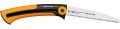 | 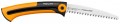 |
|---|---|---|
| Fiskars 123860 | Fiskars 123870 | |
from $21.96 up to $27.96 | from $18.84 up to $30.52 | |
| User reviews | ||
| TOP sellers | ||
| Type | garden | garden |
| Suitable for | wood | wood |
| Folding |  | |
Specs | ||
| Blade length | 160 mm | 160 mm |
| Tooth sharpening | trihedral | classic |
General | ||
| Handle material | plastic / rubber | plastic / rubber |
| Weight | 130 g | |
| Added to E-Catalog | august 2016 | may 2016 |


Compare Fiskars 123860 and 123870
You may be interested in
My comparisons
Fiskars 123870 often compared

Glossary
Tooth sharpening
The type of sharpening used in saw teeth. In fact, this parameter determines the shape of the tooth.
— Standard. The teeth of standard sharpening are usually made in a triangular shape; the only exception is saws for foam concrete, in which “standard” teeth can have rather specific outlines. Standard sharpening is quite functional and suitable for almost any application; in addition, if the teeth are not hardened (see above) and are large enough, they can be sharpened if necessary.
— Triangular. Externally, trihedral teeth can be almost indistinguishable from standard ones; however, if you look closely, you can see an additional edge — as if someone cut the tip of a triangular tooth obliquely and sharpened the resulting surface. Also, this sharpening is called 3D. It is considered to be more efficient and advanced than the standard one: in particular, the saw moves more easily in reverse and the teeth wear less on this move, which reduces fatigue and increases the life of the blade. On the other hand, trihedral blades are expensive, and it is impossible to sharpen dull teeth on your own — you need to change the saw (at best, the blade itself).
— Standard. The teeth of standard sharpening are usually made in a triangular shape; the only exception is saws for foam concrete, in which “standard” teeth can have rather specific outlines. Standard sharpening is quite functional and suitable for almost any application; in addition, if the teeth are not hardened (see above) and are large enough, they can be sharpened if necessary.
— Triangular. Externally, trihedral teeth can be almost indistinguishable from standard ones; however, if you look closely, you can see an additional edge — as if someone cut the tip of a triangular tooth obliquely and sharpened the resulting surface. Also, this sharpening is called 3D. It is considered to be more efficient and advanced than the standard one: in particular, the saw moves more easily in reverse and the teeth wear less on this move, which reduces fatigue and increases the life of the blade. On the other hand, trihedral blades are expensive, and it is impossible to sharpen dull teeth on your own — you need to change the saw (at best, the blade itself).