
Comparison Vitals EH-31 vs Vitals EH-30
Add to comparison | 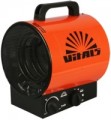 | 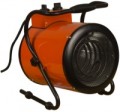 |
|---|---|---|
| Vitals EH-31 | Vitals EH-30 | |
from $43.56 | from $52.00 | |
| TOP sellers | ||
| Power supply | electric | electric |
| Max. thermal output | 3 kW | 3 kW |
| Max. heating area | 30 m² | 30 m² |
Specs | ||
| Supply voltage | 230 V | 230 V |
| Heating element | tubular heater | tubular heater |
| Airflow | 411 m³/h | 360 m³/h |
| Power adjustment | stepped | stepped |
| Features | temperature adjustment thermostat fan mode | temperature adjustment thermostat fan mode |
| Safety features | overheat protection | overheat protection |
More cpecs | ||
| Tilt adjustment |  |  |
| Dimensions (WxHxD) | 224x273x195 mm | 315x400x330 mm |
| Weight | 2.9 kg | 6.9 kg |
| Added to E-Catalog | november 2014 | october 2014 |


Compare Vitals EH-31 and EH-30
You may be interested in
Vitals EH-31 often compared


Glossary
Airflow
The maximum amount of air that an industrial heater can pass through itself in a certain time.
This parameter is associated with an increase in air temperature (see above): at constant power, higher performance usually corresponds to a smaller temperature difference. Accordingly, a more efficient industrial heater will heat the entire volume of the room faster, but the heating temperature will be lower. So, it is worth choosing according to this parameter, taking into account what is more important for you — a large temperature difference or a high heating rate.
This parameter is associated with an increase in air temperature (see above): at constant power, higher performance usually corresponds to a smaller temperature difference. Accordingly, a more efficient industrial heater will heat the entire volume of the room faster, but the heating temperature will be lower. So, it is worth choosing according to this parameter, taking into account what is more important for you — a large temperature difference or a high heating rate.
Tilt adjustment
The ability to change the tilt angle of the industrial heater. Thanks to this, you can adjust the direction of the air flow not only horizontally (by turning the unit), but also vertically — for example, direct heat to the wall section that needs to be dried first.