
Comparison Yamaha RX-V781 vs Yamaha RX-V681
Add to comparison | 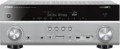 | 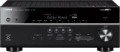 |
|---|---|---|
| Yamaha RX-V781 | Yamaha RX-V681 | |
from $945.62 up to $1,090.00 | from $664.16 up to $918.00 | |
| TOP sellers | ||
| Device type | AV Receiver | AV Receiver |
CPU | ||
| DAC frequency | 192 kHz | 192 kHz |
| Audio DAC | 24 bit | 24 bit |
| Auto sound calibration |  | |
| Auto level | | |
| Surround sound in headphones | | |
| Ultra HD | 4K | 4K |
| Upscaling | Ultra HD (4K) | Ultra HD (4K) |
| 3D | | |
| Multi Zone | | |
Tech specs | ||
| Number of channels | 7.2 | 7.2 |
| Power per channel | 95 W | 90 W |
| Signal to noise ratio | 110 dB | 110 dB |
| Acceptable acoustic impedance | 4 Ohm | 4 Ohm |
| Frequency range | 10 – 100000 Hz | 10 – 100000 Hz |
Media player and tuner | ||
| Tuner and playback | AM/FM radio USB drive network streaming audio internet radio | AM/FM radio USB drive network streaming audio internet radio |
Communications (interface) | ||
| Interfaces | AirPlay Wi-Fi Bluetooth LAN DLNA | AirPlay Wi-Fi Bluetooth LAN DLNA |
Decoder support | ||
| Decoders | Dolby Atmos Dolby Digital Dolby Digital Plus Dolby TrueHD DTS DTS Express DTS 96/24 DTS-HD High Resolution Audio DTS-HD Master Audio DTS ES Matrix 6.1 DTS ES Discrete 6.1 DTS Neo:6 DTS X | Dolby Atmos Dolby Digital Dolby Digital Plus Dolby TrueHD DTS DTS Express DTS 96/24 DTS-HD High Resolution Audio DTS-HD Master Audio DTS ES Matrix 6.1 DTS ES Discrete 6.1 DTS Neo:6 DTS X |
Inputs | ||
| RCA | 4 pairs | 4 pairs |
| Coaxial S/PDIF | 2 pcs | 2 pcs |
| Optical | 2 шт | 2 шт |
| HDMI | 6 шт | 6 шт |
| Composite | 4 шт | 4 шт |
| Component | 2 шт | 2 шт |
| Phono | | |
| Control input (IR) | | |
Outputs | ||
| RCA | 1 pairs | 1 pairs |
| HDMI | 2 шт | 1 шт |
| Composite | 1 шт | 1 шт |
| Component | 1 шт | 1 шт |
| On headphones | 6.35 mm (Jack) | 6.35 mm (Jack) |
| Preamplifier (Pre-Amp) | |  |
| Control output (IR) | | |
| Trigger output | 1 шт | 1 шт |
Front panel | ||
| Headphone output | | |
| USB port | | |
| HDMI input | | |
General | ||
| Power consumption | 300 W | 300 W |
| Standby consumption | 0.1 W | 0.1 W |
| Learning remote control | | |
| Smartphone control | | |
| Dimensions (WxDxH) | 435x379x171 mm | 435x378x171 mm |
| Weight | 10.6 kg | 10 kg |
| Color | ||
| Added to E-Catalog | june 2016 | june 2016 |


Compare Yamaha RX-V781 and RX-V681
You may be interested in
My comparisons
Yamaha RX-V781 often compared


Yamaha RX-V681 often compared


Glossary
Power per channel
the maximum sound power that can be delivered by the power amplifier (if the receiver has one, see "Type") per speaker channel. It is worth noting here that in this case it is customary to indicate the so-called RMS (Rated Maximum Sinusoidal), or rated power. Rated is considered the highest power that the amplifier is guaranteed to be able to produce without interruption for an hour without any failures or breakdowns. Short-term jumps in the signal level can significantly exceed this value, but the main indicator is still the rated power.
The power of the amplifier largely determines the sound volume of the speaker system connected to the device. In fact, the loudness also depends on the characteristics of the speakers — sensitivity, impedance, etc.; however, other things being equal, the same acoustics on a more powerful amplifier will sound louder. In addition, this parameter also affects the compatibility of the speakers and the amplifier — it is believed that the difference in the nominal powers of these components should not exceed 10-15% (and ideally, the powers should generally match). And since different rooms require speakers of different power, this also affects the choice of amplifier for a particular environment; specific recommendations on the ratio of room characteristics and acoustic power can be found in special sources.
Also note that if the amplifier can operate with a load of different resistance (see..."Permissible acoustic impedance"), then for different options the power per channel will be different — the lower the resistance, the higher the power. In the characteristics, in this case, the maximum value of this parameter is usually indicated — that is, the power at the minimum allowable resistance.
The power of the amplifier largely determines the sound volume of the speaker system connected to the device. In fact, the loudness also depends on the characteristics of the speakers — sensitivity, impedance, etc.; however, other things being equal, the same acoustics on a more powerful amplifier will sound louder. In addition, this parameter also affects the compatibility of the speakers and the amplifier — it is believed that the difference in the nominal powers of these components should not exceed 10-15% (and ideally, the powers should generally match). And since different rooms require speakers of different power, this also affects the choice of amplifier for a particular environment; specific recommendations on the ratio of room characteristics and acoustic power can be found in special sources.
Also note that if the amplifier can operate with a load of different resistance (see..."Permissible acoustic impedance"), then for different options the power per channel will be different — the lower the resistance, the higher the power. In the characteristics, in this case, the maximum value of this parameter is usually indicated — that is, the power at the minimum allowable resistance.
HDMI
The number of HDMI outputs provided in the design of the receiver. The presence of several outputs allows you to connect several signal receivers at the same time (in the case of HDMI, these can be, for example, TVs or monitors) and select a playback device without reconnecting cables — by changing the settings of the receiver. And in models that support Multi Zone (see above), you can simultaneously broadcast different signals to different receivers.
HDMI is one of the most advanced digital interfaces used in modern electronics. It was originally developed for HD television and already in the first version it allowed to transmit a video signal with Full HD (1920x1080) resolution, accompanied by eight-channel (7.1, see "Number of channels") sound; in the future, the maximum resolution increased even more. Almost all modern TVs, monitors and plasma panels have at least one HDMI interface, the same applies to playback devices (players, media centers, etc.).
HDMI is one of the most advanced digital interfaces used in modern electronics. It was originally developed for HD television and already in the first version it allowed to transmit a video signal with Full HD (1920x1080) resolution, accompanied by eight-channel (7.1, see "Number of channels") sound; in the future, the maximum resolution increased even more. Almost all modern TVs, monitors and plasma panels have at least one HDMI interface, the same applies to playback devices (players, media centers, etc.).
Preamplifier (Pre-Amp)
The presence of a preamplifier output (Pre-Amp) in the design of the AV receiver.
The preamp itself is the first stage of analogue signal amplification: it increases the power of the signal to a line level. This level is not enough to sound passive speakers, but it is already enough to send a signal to a power amplifier. However, in this case, not all preamplifier outputs are implied: ordinary paired stereo outputs are indicated as RCA pairs (see above), and only the so-called Pre-Amp counts as Pre-Amp. multichannel output. This output also uses RCA connectors, but these connectors cover all channels supported by the receiver: for example, in a 5.1 device, the Pre-Amp output will consist of 6 connectors. Such an interface can be very convenient when organizing multi-channel sound systems.
The preamp itself is the first stage of analogue signal amplification: it increases the power of the signal to a line level. This level is not enough to sound passive speakers, but it is already enough to send a signal to a power amplifier. However, in this case, not all preamplifier outputs are implied: ordinary paired stereo outputs are indicated as RCA pairs (see above), and only the so-called Pre-Amp counts as Pre-Amp. multichannel output. This output also uses RCA connectors, but these connectors cover all channels supported by the receiver: for example, in a 5.1 device, the Pre-Amp output will consist of 6 connectors. Such an interface can be very convenient when organizing multi-channel sound systems.