
Comparison Luxeon IPS-1000M vs Luxeon IPS-1000MC
Add to comparison | 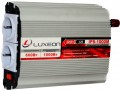 | 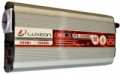 |
|---|---|---|
| Luxeon IPS-1000M | Luxeon IPS-1000MC | |
from $38.88 up to $60.38 | from $64.40 up to $72.36 | |
| TOP sellers | ||
| Connection | crocodiles (to battery) | crocodiles (to battery) |
Specs | ||
| Battery connection voltage | 12 В | 12 В |
| Rated power output | 600 W | 500 W |
| Peak power output | 1000 W | 1000 W |
| Output voltage | 230 В | 230 В |
| Output waveform | modified sine | modified sine |
| Efficiency | 90 % | |
| Number of sockets | 2 шт | 1 шт |
| Low battery alarm |  |  |
| Protection | short circuit overheating overload | short circuit overheating overload |
General | ||
| Dimensions | 235x160x70 mm | 350x165x70 mm |
| Weight | 1.25 kg | 2 kg |
| Added to E-Catalog | february 2017 | november 2014 |


Compare Luxeon IPS-1000M and IPS-1000MC
You may be interested in
My comparisons
Luxeon IPS-1000MC often compared


Glossary
Rated power output
The total power supplied by the autoinverter in normal operation. In other words, this parameter can be described as the highest rated power of the connected load, at which the device is able to work without failures and overloads for a long time (comparable to the discharge time of the battery used for power).
Accordingly, when choosing according to the rated output power, it is worth proceeding from the energy consumption of the intended load. At the same time, it is worth choosing an inverter with a margin of 15-20% — for example, for a laptop with a consumption of 150 W, a device with at least 175 W is recommended. This is due not only to overload protection, but also to the fact that many inverters are able to deliver the claimed power only when the battery is fully charged, and as this charge is exhausted, it decreases.
It is also worth considering that some devices, such as car refrigerators or household vacuum cleaners, consume significantly more energy when starting up than during normal operation. Therefore, when choosing an inverter for such devices, it is worth focus not only on the rated, but also on the peak power — the power that the auto-inverter is capable of delivering without consequences within a few seconds.
Accordingly, when choosing according to the rated output power, it is worth proceeding from the energy consumption of the intended load. At the same time, it is worth choosing an inverter with a margin of 15-20% — for example, for a laptop with a consumption of 150 W, a device with at least 175 W is recommended. This is due not only to overload protection, but also to the fact that many inverters are able to deliver the claimed power only when the battery is fully charged, and as this charge is exhausted, it decreases.
It is also worth considering that some devices, such as car refrigerators or household vacuum cleaners, consume significantly more energy when starting up than during normal operation. Therefore, when choosing an inverter for such devices, it is worth focus not only on the rated, but also on the peak power — the power that the auto-inverter is capable of delivering without consequences within a few seconds.
Efficiency
Efficiency of the autoinverter.
Efficiency is the ratio (in percent) between the amount of energy that the device delivers to the load and the amount that it consumes from the vehicle's on-board network. Accordingly, the higher this indicator, the more efficient the work and the less loss during conversion. In fact, this means that, other things being equal, a device with a higher efficiency will allow the load to run longer on battery power; this is especially important at high power consumption.
In modern auto inverters, efficiency values of 80 – 85% are considered average, 90% or more are good.
Efficiency is the ratio (in percent) between the amount of energy that the device delivers to the load and the amount that it consumes from the vehicle's on-board network. Accordingly, the higher this indicator, the more efficient the work and the less loss during conversion. In fact, this means that, other things being equal, a device with a higher efficiency will allow the load to run longer on battery power; this is especially important at high power consumption.
In modern auto inverters, efficiency values of 80 – 85% are considered average, 90% or more are good.
Number of sockets
The number of standard sockets for 230 V provided in the design of the auto-inverter.
The more outlets, the more electrical appliances can be connected to the inverter at the same time. At the same time, the specifics of using automotive converters is such that they rarely have to be used for several devices at once. In addition, simultaneous connection requires appropriate power (see "Rated output power"), and the sockets themselves also significantly affect the dimensions. Therefore, most often in modern models one outlet is used — this, usually, is enough. However, high-end powerful inverters can have two outlets.
The more outlets, the more electrical appliances can be connected to the inverter at the same time. At the same time, the specifics of using automotive converters is such that they rarely have to be used for several devices at once. In addition, simultaneous connection requires appropriate power (see "Rated output power"), and the sockets themselves also significantly affect the dimensions. Therefore, most often in modern models one outlet is used — this, usually, is enough. However, high-end powerful inverters can have two outlets.
Low battery alarm
The presence in the auto inverter of the low battery alert function to which the device is connected.
This function significantly reduces the risk of “landing” the car battery through the use of an inverter and at the same time eliminates the need to manually monitor the battery status. The alarm, usually, reacts to the voltage at the input: with a significant decrease, indicating a deep discharge, the device gives a warning signal. Many models also have the function of automatic shutdown some time after the alert is triggered (by timer or when the voltage drops to the maximum allowable). The sensitivity threshold is usually adjusted in such a way that after the alarm is triggered and the inverter is turned off, the battery is still able to start the car engine.
This function significantly reduces the risk of “landing” the car battery through the use of an inverter and at the same time eliminates the need to manually monitor the battery status. The alarm, usually, reacts to the voltage at the input: with a significant decrease, indicating a deep discharge, the device gives a warning signal. Many models also have the function of automatic shutdown some time after the alert is triggered (by timer or when the voltage drops to the maximum allowable). The sensitivity threshold is usually adjusted in such a way that after the alarm is triggered and the inverter is turned off, the battery is still able to start the car engine.
Dimensions
General dimensions of the autoinverter.
In modern cars (especially passenger cars), usually, there is not much space for installing additional equipment. This parameter allows you to estimate the space required to place the inverter, make sure that the selected device fits into the “footprint”, and, if necessary, choose another location or another model. At the same time, it must be remembered that for many auto-inverters a certain margin is needed in place — for the normal operation of the cooling system; this margin is usually specified in the detailed documentation.
In modern cars (especially passenger cars), usually, there is not much space for installing additional equipment. This parameter allows you to estimate the space required to place the inverter, make sure that the selected device fits into the “footprint”, and, if necessary, choose another location or another model. At the same time, it must be remembered that for many auto-inverters a certain margin is needed in place — for the normal operation of the cooling system; this margin is usually specified in the detailed documentation.