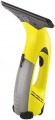
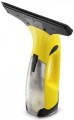
Comparison Karcher WV 2 Plus vs Karcher WV 50 Plus
Add to comparison | ![]() | ![]() |
|---|---|---|
| Karcher WV 2 Plus | Karcher WV 50 Plus | |
from $97.65 | from $159.42 | |
| User reviews | ||
| TOP sellers | ||
Microfibre sprayer included. Unlike the model WV 2 Premium, there is no narrow nozzle vacuum nozzle. | Microfibre sprayer included. | |
| Type | window vacuum cleaner | window vacuum cleaner |
| Power supply | battery | battery |
| Suction power | 10 W | |
| Suction width | 28 cm | 28 cm |
| Waste detergent tank | 0.1 L | 0.1 L |
Battery | ||
| Battery type | Li-Ion | Li-Ion |
| Voltage | 3.7 В | |
| Autonomy time | 35 min | 20 min |
| Charging time | 4 h | 2 h |
More specs | ||
| Noise level | 50 dB | |
| Dimensions | 32x28x12 cm | 36x28x13 cm |
| Weight | 0.6 kg | 0.7 kg |
| Added to E-Catalog | september 2015 | october 2013 |
Compare Karcher WV 2 Plus and WV 50 Plus
You may be interested in
Karcher WV 2 Plus often compared
Karcher WV 50 Plus often compared
Glossary
Suction power
Working power of the machine for suction.
The effort with which the unit draws in pollution during operation directly depends on this indicator. The greater this effort, the higher the quality of cleaning and the more effective cleaning. On the other hand, even in the heaviest and most performant models, the suction power does not exceed 1200 W — it simply does not make sense to increase it further. In addition, we note that with an increase in the width of the grip, the suction power must also be increased, otherwise, the efficiency will decrease. It means that only models of the same type with the same or almost the same working width can be compared in terms of suction power.
Voltage
The voltage of the battery used in the machine with the corresponding type of power supply. This parameter is not key when choosing; it may only be needed when looking for a third-party charger or a replacement/spare battery, as well as for specific calculations related to capacity (see below).
Autonomy time
Operating time of a battery-powered cleaning machine on one charge of a standard battery.
This parameter itself is quite approximate: it is most often indicated for standard operating modes and simple conditions. However, the actual autonomy is usually not very different from the stated one; so, based on the stated operating time, it is quite possible to both evaluate the capabilities of different models and compare them with each other.
Charging time
The time required to fully charge the battery of cleaning machine (see "Power supply").
The larger the battery, the longer it may take to charge it. On the other hand, this moment also depends on the type of battery. In addition, special technologies are being used to speed up the process. So two machines with a similar battery capacity can differ in charging times.
Noise level
The noise level created by the harvesting machine during operation.
Low noise levels are important for the comfort of both the operator and others; the latter is especially true in some specific places such as hospitals or kindergartens. On the other hand, the higher the power, the louder, as a rule, the unit operates and the more difficult it is to reduce this noise to a certain level; despite the fact that in many cases high volume operation is not a particular problem. So you should specifically look for a “quiet” cleaning machine only if a low noise level is more critical for you than high cost and/or reduced power.
When assessing specific loudness values, it is worth considering that the decibel used to indicate the noise level is a non-linear quantity. Therefore, the easiest way is to evaluate specific values using comparative tables. Here's a simplified table for the range that most modern harvesting machines fit into:
55 dB - background noise in an office without special noise sources;
60 dB - loud conversation;
65 dB - city street with average traffic intensity;
70 dB - a conversation between several people in a raised voice.
75 dB – high power vacuum cleaner.
80 dB - traffic noise on a busy street.
Low noise levels are important for the comfort of both the operator and others; the latter is especially true in some specific places such as hospitals or kindergartens. On the other hand, the higher the power, the louder, as a rule, the unit operates and the more difficult it is to reduce this noise to a certain level; despite the fact that in many cases high volume operation is not a particular problem. So you should specifically look for a “quiet” cleaning machine only if a low noise level is more critical for you than high cost and/or reduced power.
When assessing specific loudness values, it is worth considering that the decibel used to indicate the noise level is a non-linear quantity. Therefore, the easiest way is to evaluate specific values using comparative tables. Here's a simplified table for the range that most modern harvesting machines fit into:
55 dB - background noise in an office without special noise sources;
60 dB - loud conversation;
65 dB - city street with average traffic intensity;
70 dB - a conversation between several people in a raised voice.
75 dB – high power vacuum cleaner.
80 dB - traffic noise on a busy street.
Weight
The total weight of the cleaning machine. Usually, weight is indicated with empty tanks for detergent, waste, fuel, etc. At the same time, additional equipment, such as side brushes, may or may not be taken into account. Such equipment has a very small weight compared to the machines themselves. And, when installed/removed, does not seriously affect the mass of the entire machine.