
Comparison Polaris PFD 0905D vs Polaris PFD 0605D
Add to comparison | 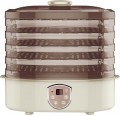 | 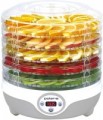 |
|---|---|---|
| Polaris PFD 0905D | Polaris PFD 0605D | |
| Outdated Product | from $43.44 up to $52.76 | |
| TOP sellers | ||
| Type | vertical fruit dryer | vertical fruit dryer |
| Drying levels | 5 pcs | 5 pcs |
| Tray size | Ø255 mm | |
| Tray height | 35 mm | |
| Power consumption | 240 W | 300 W |
Specs | ||
| Thermostat |  | |
| Temperature range | 35 – 55 °C | 35 – 70 °C |
| Location of the fan (heater) | bottom | bottom |
| Control | push-button | push-button |
| Shutdown timer | | |
| Overheat protection | | |
| Tray material | plastic | plastic |
| Added to E-Catalog | october 2016 | february 2016 |


Compare Polaris PFD 0905D and PFD 0605
You may be interested in
My comparisons
Polaris PFD 0905D often compared


Polaris PFD 0605D often compared


Glossary
Tray size
Horizontal dimensions of one dryer tray.
For round models, this paragraph usually indicates the diameter (for example, “Ø250”), for other cases — the length and width. Anyway, the information about the size allows you to estimate the total area and, accordingly, the capacity of the device. At the same time, note that a larger size affects the dimensions and weight of the structure, and also requires more heating power (ceteris paribus).
For round models, this paragraph usually indicates the diameter (for example, “Ø250”), for other cases — the length and width. Anyway, the information about the size allows you to estimate the total area and, accordingly, the capacity of the device. At the same time, note that a larger size affects the dimensions and weight of the structure, and also requires more heating power (ceteris paribus).
Tray height
The size of one tray of the dryer in height. In models where, instead of separate trays, a common working chamber with removable shelves is provided, the distance between two adjacent shelves is indicated.
This size primarily determines the thickness of individual pieces of vegetables, fruits, etc., which can be placed in the device. At the same time, note that the contents should not fill the tray tightly — there should be at least a couple of millimetres of space between the products and the “ceiling”. Also note that in some models, two height values can be indicated in this paragraph — for example, “15 — 25 mm”. This means that the size of the trays can be changed, adjusting them to the specifics of the situation; usually it is a choice between two standard heights (in our example — 15 mm and 25 mm).
This size primarily determines the thickness of individual pieces of vegetables, fruits, etc., which can be placed in the device. At the same time, note that the contents should not fill the tray tightly — there should be at least a couple of millimetres of space between the products and the “ceiling”. Also note that in some models, two height values can be indicated in this paragraph — for example, “15 — 25 mm”. This means that the size of the trays can be changed, adjusting them to the specifics of the situation; usually it is a choice between two standard heights (in our example — 15 mm and 25 mm).
Power consumption
Rated power consumed by the dryer during operation.
This parameter is usually selected by manufacturers depending on the volume of the dryer: the larger the device, the more power is needed to effectively heat the working chamber. At the same time, models with the same volume may differ in power consumption. In such cases, it is worth considering that a higher power reduces the heating time, but affects the price of the device.
This parameter is usually selected by manufacturers depending on the volume of the dryer: the larger the device, the more power is needed to effectively heat the working chamber. At the same time, models with the same volume may differ in power consumption. In such cases, it is worth considering that a higher power reduces the heating time, but affects the price of the device.
Temperature range
The temperature range that the dryer can provide in the working chamber.
The simplest models provide only one operating temperature option, usually from 50 °C to 60 °C. More advanced devices equipped with thermostats (see above) and can have a wide range of adjustment — this is very useful, because different temperature regimes are recommended for different products. To assess the general capabilities of a particular dryer, you can use the following table of temperatures recommended for drying:
— 35...40 °C — plant stems, greens;
— 40...45 °C — bread;
— 38...42 °C (in some cases up to 45 °C) — yoghurt;
— 50...55 °C — vegetables;
— 55...60 °C — fruits;
— 65...75 °C — meat, fish.
We emphasize that these are the most general, conditional data. The specific temperature may differ from the recommended one — depending on the thickness of the slices, the specific type of food, the desired result, etc. Detailed recommendations on this matter can be found in special sources.
The simplest models provide only one operating temperature option, usually from 50 °C to 60 °C. More advanced devices equipped with thermostats (see above) and can have a wide range of adjustment — this is very useful, because different temperature regimes are recommended for different products. To assess the general capabilities of a particular dryer, you can use the following table of temperatures recommended for drying:
— 35...40 °C — plant stems, greens;
— 40...45 °C — bread;
— 38...42 °C (in some cases up to 45 °C) — yoghurt;
— 50...55 °C — vegetables;
— 55...60 °C — fruits;
— 65...75 °C — meat, fish.
We emphasize that these are the most general, conditional data. The specific temperature may differ from the recommended one — depending on the thickness of the slices, the specific type of food, the desired result, etc. Detailed recommendations on this matter can be found in special sources.