
Comparison Ganzo G740 vs Enlan EL-01A
Add to comparison | 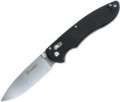 | 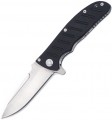 |
|---|---|---|
| Ganzo G740 | Enlan EL-01A | |
from $27.16 up to $38.60 | from $20.20 up to $21.84 | |
| TOP sellers | ||
| Form factor | EDC (everyday) | EDC (everyday) |
Specs | ||
| Design | folding | folding |
| Main blade type | smooth | smooth |
| Blade material | steel | steel |
| Hardness | 58 HRC | 57 HRC |
| Blade length | 95 mm | 95 mm |
| Blade thickness | 3.5 mm | 3.5 mm |
| Handle material | fibreglass | fibreglass |
| Length | 230 mm | 215 mm |
| Weight | 155 g | 155 g |
| More features | blade lock opening with one hand subdigital notch / guard mount for strap | blade lock opening with one hand subdigital notch / guard mount for strap |
Tool | ||
| Country of origin | China | |
| Color | ||
| Added to E-Catalog | july 2016 | november 2014 |


Compare Ganzo G740 and Enlan EL-01A
You may be interested in
Ganzo G740 often compared


Glossary
Hardness
The hardness of the material used for the knife blade. This parameter is one of the key characteristics of the blade. On the one hand, high hardness means that the cutting edge will not deform, wrinkle and dull prematurely, and the blade itself will bend under transverse loads; on the other hand, hard material is difficult to sharpen and is often rather brittle.
For knife blades, Rockwell hardness measurement and designation according to the appropriate scale (HRC) are used. Most good quality steel knives have a hardness of around 52 - 58 HRC - this range is considered to correspond to the optimal ratio of characteristics. For other materials, the numbers can be noticeably lower without any noticeable loss of reliability; see "Blade material" for details. And hardness above 60 HRC is extremely rare - mainly in premium grade steels and higher. In such steels, the brittleness characteristic of hard materials is eliminated through the use of various high-grade additives, and the difficulty in sharpening is compensated by the blade's long service life.
It is worth remembering that hardness is not the only characteristic that determines the quality of the blade: a lot depends on the composition of the alloy, manufacturing technology, etc. However, this is a fairly clear indicator that characterizes the features of a particular material; this is especially true for steel.
For knife blades, Rockwell hardness measurement and designation according to the appropriate scale (HRC) are used. Most good quality steel knives have a hardness of around 52 - 58 HRC - this range is considered to correspond to the optimal ratio of characteristics. For other materials, the numbers can be noticeably lower without any noticeable loss of reliability; see "Blade material" for details. And hardness above 60 HRC is extremely rare - mainly in premium grade steels and higher. In such steels, the brittleness characteristic of hard materials is eliminated through the use of various high-grade additives, and the difficulty in sharpening is compensated by the blade's long service life.
It is worth remembering that hardness is not the only characteristic that determines the quality of the blade: a lot depends on the composition of the alloy, manufacturing technology, etc. However, this is a fairly clear indicator that characterizes the features of a particular material; this is especially true for steel.
Country of origin
The country of origin of the brand under which the knife is marketed. Usually, it is indicated by the "homeland" of the manufacturing company or by the location of its headquarters.
There are many stereotypes associated with the “nationality” of brands and products, but most of them have no basis nowadays. First, the actual place of production is often different from the brand's country of origin. Secondly, the quality of the goods depends not so much on geography, but on the policy of a particular company and how carefully this very quality is controlled in it. Therefore, you should pay attention to the country of origin of the brand only if you fundamentally want or (do not want) to support a manufacturer from a certain state. Quality is best judged by the reputation of a particular brand and the general price category. But still Swiss knives and American knives and multi-tools a> deserve respect. However, this is more of a reputation, German counterparts can be just as good. As well as Ukrainian.
There are many stereotypes associated with the “nationality” of brands and products, but most of them have no basis nowadays. First, the actual place of production is often different from the brand's country of origin. Secondly, the quality of the goods depends not so much on geography, but on the policy of a particular company and how carefully this very quality is controlled in it. Therefore, you should pay attention to the country of origin of the brand only if you fundamentally want or (do not want) to support a manufacturer from a certain state. Quality is best judged by the reputation of a particular brand and the general price category. But still Swiss knives and American knives and multi-tools a> deserve respect. However, this is more of a reputation, German counterparts can be just as good. As well as Ukrainian.