
Comparison STIHL SH 86 vs STIHL SH 56
Add to comparison | 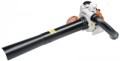 | 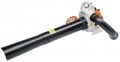 |
|---|---|---|
| STIHL SH 86 | STIHL SH 56 | |
from $395.96 | from $307.96 | |
| TOP sellers | ||
| Type | manual | manual |
| Operating mode | blowing suction grinding | blowing suction grinding |
Specs | ||
| Max. air flow rate | 306 km/h | 259 km/h |
| Air flow control |  | |
| Air flow (blowing) | 13.5 m³/min | 12.1 m³/min |
| Air flow (suction) | 12.8 m³/min | 11.8 m³/min |
Motor | ||
| Motor type | petrol | petrol |
| ICE type | 2-stroke | 2-stroke |
| Engine size | 27.2 cm³ | 27.2 cm³ |
| Motor power | 1.1 hp | 1 hp |
| Motor power | 800 W | 700 W |
| Fuel tank capacity | 0.44 L | 0.54 L |
General | ||
| Noise level | 90 dB | 90 dB |
| Weight | 5.6 kg | 5.2 kg |
| Added to E-Catalog | february 2015 | february 2015 |


Compare STIHL SH 86 and SH 56
Models STIHL SH 86 and STIHL SH 56 are handheld blower-vacuums with blowing, vacuuming, and shredding modes. The SH 86 offers a maximum airspeed of up to 306 km/h and an air flow rate during blowing of 13.5 m³/min, while the SH 56 has a speed of up to 259 km/h and a flow rate of 12.1 m³/min. Both devices are equipped with 2-stroke gasoline engines with the same displacement of 27.2 cm³, but the SH 86 has a power output of 800 W, which is higher than the SH 56's 700 W. The noise level of both models is similar, but the SH 56 is slightly louder when vacuuming. The weight of the SH 86 is 5.6 kg, while the SH 56 weighs 5.2 kg.
You may be interested in
My comparisons
STIHL SH 86 often compared

STIHL SH 56 often compared

Glossary
Max. air flow rate
The highest speed of the air stream given out by the vacuum cleaner. The higher this parameter, the stronger the thrust provided by the device, and the more efficiently it is able to pull or blow out debris particles from cracks and other hard-to-reach places (of course, if there is an appropriate operating mode — see above). At the same time, in most modern models, this figure exceeds 150 km/h — this is more than enough for work of small and medium complexity. Therefore, paying attention to a high flow rate makes sense only when choosing a powerful model for working in difficult conditions; we note that in the most “high-speed” vacuum cleaners, the indicators can exceed 400 km/h.
Air flow (blowing)
Performance of the garden vacuum cleaner when blowing (see "Operating mode").
This parameter determines the amount of air that the device distills through itself in a certain time. It should be noted that it depends not only on the speed of this air, but also on other parameters — for example, the diameter of the pipe. Therefore, two models with the same performance can noticeably differ in speed, and vice versa. You also need to keep in mind that the efficiency of "purging" bottlenecks with stuck debris does not depend on performance, but on the flow rate. On the other hand, good performance makes it easier to work on large areas, as allows you to simultaneously cover a large area with a jet of air.
Most modern garden vacuum cleaners in blowing mode provide up to 15 m / min; higher rates are typical mainly for professional models.
This parameter determines the amount of air that the device distills through itself in a certain time. It should be noted that it depends not only on the speed of this air, but also on other parameters — for example, the diameter of the pipe. Therefore, two models with the same performance can noticeably differ in speed, and vice versa. You also need to keep in mind that the efficiency of "purging" bottlenecks with stuck debris does not depend on performance, but on the flow rate. On the other hand, good performance makes it easier to work on large areas, as allows you to simultaneously cover a large area with a jet of air.
Most modern garden vacuum cleaners in blowing mode provide up to 15 m / min; higher rates are typical mainly for professional models.
Air flow (suction)
Performance of the garden vacuum cleaner when working on suction (see "Operating mode").
As with blowing described above, this parameter primarily characterizes how large the area covers the vacuum cleaner when working: high performance means that the device captures more air and draws debris from a larger surface. But this indicator is weakly related to suction efficiency: the ability of a vacuum cleaner to “pull out” debris particles from cracks, thick grass, etc. depends primarily on speed characteristics, not performance.
As with blowing described above, this parameter primarily characterizes how large the area covers the vacuum cleaner when working: high performance means that the device captures more air and draws debris from a larger surface. But this indicator is weakly related to suction efficiency: the ability of a vacuum cleaner to “pull out” debris particles from cracks, thick grass, etc. depends primarily on speed characteristics, not performance.
Motor power
The engine power of a garden vacuum cleaner, expressed in horsepower. This unit of power is considered somewhat obsolete and is mainly used for internal combustion engines (see "Engine type"), while in many cases the power figures in horsepower are also duplicated in watts. However, if there is no such clarification, it is quite simple to estimate the power in watts: 1 hp. approximately corresponds to 735 watts.
For more information about the value of engine power, see the paragraph of the same name below.
For more information about the value of engine power, see the paragraph of the same name below.
Motor power
Power of the garden vacuum cleaner motor, expressed in watts. This unit is by far the main one, it is used for both electric and gasoline engines (see "Engine type").
The more powerful the motor — the more air the vacuum cleaner is able to pass through itself, the greater the speed it is able to give the air flow and the more efficient the chopper (if there is one at all — see "Operating mode"). At the same time, all these moments depend not only on power, but also on many other design features; and manufacturers select each motor in such a way as to provide the vacuum cleaner with certain performance characteristics. Therefore, when choosing, it is worth looking primarily at practical characteristics (flow rate, blowing and suction performance), and engine power is of secondary importance.
The more powerful the motor — the more air the vacuum cleaner is able to pass through itself, the greater the speed it is able to give the air flow and the more efficient the chopper (if there is one at all — see "Operating mode"). At the same time, all these moments depend not only on power, but also on many other design features; and manufacturers select each motor in such a way as to provide the vacuum cleaner with certain performance characteristics. Therefore, when choosing, it is worth looking primarily at practical characteristics (flow rate, blowing and suction performance), and engine power is of secondary importance.
Fuel tank capacity
The volume of the fuel tank installed in a garden vacuum cleaner with a petrol engine (see "Engine type"). The more capacious the tank, the longer the unit is able to work without refueling (for more details, see "Fuel Consumption"). On the other hand, a large volume affects the dimensions and weight of the vacuum cleaner.
Weight
The total weight of the garden vacuum cleaner. Usually, this paragraph indicates the "net" weight of the unit — with an empty dust container (or even without a dust container at all), without fuel and oil (in models with an internal combustion engine, see "Engine type"), without a battery (in the corresponding devices, also see "Engine type"), etc. This parameter is important primarily for models designed to be carried "on oneself" — that is, hand-held and knapsack (see "Type").