
Comparison Makita GA5041C vs Makita 9565CVR
Add to comparison | 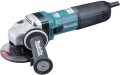 | 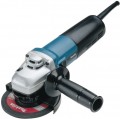 |
|---|---|---|
| Makita GA5041C | Makita 9565CVR | |
from $284.72 | from $124.00 up to $197.20 | |
| TOP sellers | ||
9565CR has no RPM preset, 9565CVR has RPM preset | ||
| Type | angle grinder | angle grinder |
| Power source | mains (230 V) | mains (230 V) |
Specs | ||
| Power consumption | 1400 W | 1400 W |
| Rotation speed | 2800 – 11000 rpm | 2800 – 12000 rpm |
| Max. disc diameter | 125 mm | 125 mm |
Protective functions | ||
| Soft start |  | |
| Safety lock-off | | |
| Motor brake | |  |
| Kickback protection | mechanical | mechanical |
Additional features | ||
| Features | speed controller speed control | speed controller speed control |
| In box | additional handle | additional handle |
General | ||
| Noise level | 95 dB | 93 dB |
| Power cord length | 4 m | 2.5 m |
| Dimensions | 299x139x103 mm | |
| Weight | 2.7 kg | 2.2 kg |
| Added to E-Catalog | september 2016 | july 2015 |


Compare Makita GA5041C and 9565CVR
You may be interested in
My comparisons
Makita GA5041C often compared


Makita 9565CVR often compared


Glossary
Rotation speed
The speed of rotation of the working attachment, which is capable of providing a grinder of the appropriate design (for example, angle — see "Type"). If the device has speed control, this paragraph shows the range of such adjustment, from minimum to maximum.
It makes sense to compare by this parameter units belonging to the same type and having the same maximum diameter of the disk (or other working nozzle). The latter is due to the fact that the larger the disk, the faster its edge moves (at the same speed); i.e. a larger diameter requires less RPM for the same performance/efficiency. In general, when comparing different models, the following should be taken into account. The higher rotation speed is well suited for large volumes of work (because it improves productivity) as well as for fine polishing with “delicate” nozzles. A lower setting, in turn, improves accuracy (reduces the chance of removing excess material), as well as provides more torque and allows you to more effectively deal with hard, stubborn materials. More detailed recommendations for different types of work and different nozzle diameters can be found in special sources; here we note that an increase in the rotation speed, usually, affects the cost of the machine compared to analogues (since this requires a more powerful engine). In addition, discs and other attachments may have maximum RPM limits.
It makes sense to compare by this parameter units belonging to the same type and having the same maximum diameter of the disk (or other working nozzle). The latter is due to the fact that the larger the disk, the faster its edge moves (at the same speed); i.e. a larger diameter requires less RPM for the same performance/efficiency. In general, when comparing different models, the following should be taken into account. The higher rotation speed is well suited for large volumes of work (because it improves productivity) as well as for fine polishing with “delicate” nozzles. A lower setting, in turn, improves accuracy (reduces the chance of removing excess material), as well as provides more torque and allows you to more effectively deal with hard, stubborn materials. More detailed recommendations for different types of work and different nozzle diameters can be found in special sources; here we note that an increase in the rotation speed, usually, affects the cost of the machine compared to analogues (since this requires a more powerful engine). In addition, discs and other attachments may have maximum RPM limits.
Motor brake
A special brake that stops the engine shaft from rotating after the power is turned off. Thanks to this device, there's no need to wait for the grinder attachment to stop spinning by inertia after finishing work — the rotation stops in just a couple of seconds (whereas without a brake, it could take several tens of seconds). The engine brake not only enhances work safety but also positively affects the tool's lifespan.
Noise level
Approximate noise level generated by the grinder during operation. Note that this indicator is quite approximate, because. actual "loudness" can vary markedly depending on the type and shape of the material being processed, the surface it is placed on, and other circumstances. In addition, different manufacturers may use different measurement methods. Nevertheless, this indicator makes it possible to assess how comfortable this or that model is in operation and whether special hearing protection is required.
The most “quiet” modern grinders give out about 65 dB — this is comparable to loud speech at a distance of 1 m; in the loudest, the noise level reaches 107 dB — this is the volume of an industrial workshop.
The most “quiet” modern grinders give out about 65 dB — this is comparable to loud speech at a distance of 1 m; in the loudest, the noise level reaches 107 dB — this is the volume of an industrial workshop.
Power cord length
The length of the network cable can tell you how far from the outlet you can operate the device. Therefore, for domestic use, it is more relevant to choose models with a short cord, for construction work or use in production, in the garage a longer cable is better.
Weight
The total weight of the grinder; for battery models (see "Power Source"), usually, it is indicated without taking into account the battery.
This indicator has two meanings. On the one hand, light weight has a positive effect on manoeuvrability and reduces fatigue during work — especially when processing vertical surfaces and ceilings, as well as in other situations where the tool has to be held on weight. On the other hand, for grinders with a vibrational principle of operation (see "Type"), used for processing horizontal surfaces, a significant weight is considered optimal: it allows the tool to fit closer to the material being processed, and also contributes to stability and retention. So when choosing such a model by weight, it is worth considering the features of its intended application.
This indicator has two meanings. On the one hand, light weight has a positive effect on manoeuvrability and reduces fatigue during work — especially when processing vertical surfaces and ceilings, as well as in other situations where the tool has to be held on weight. On the other hand, for grinders with a vibrational principle of operation (see "Type"), used for processing horizontal surfaces, a significant weight is considered optimal: it allows the tool to fit closer to the material being processed, and also contributes to stability and retention. So when choosing such a model by weight, it is worth considering the features of its intended application.