
Comparison DeWALT DWE4151 vs DeWALT DWE4051
Add to comparison | 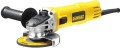 | 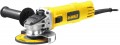 |
|---|---|---|
| DeWALT DWE4151 | DeWALT DWE4051 | |
from $87.00 | from $84.00 | |
| User reviews | ||
| TOP sellers | ||
| Type | angle grinder | angle grinder |
| Power source | mains (230 V) | mains (230 V) |
Specs | ||
| Power consumption | 900 W | 800 W |
| Rotation speed | 11800 rpm | 11800 rpm |
| Max. disc diameter | 125 mm | 125 mm |
Additional features | ||
| In box | additional handle | additional handle |
General | ||
| Noise level | 103 dB | 101 dB |
| Weight | 2.05 kg | 1.9 kg |
| Added to E-Catalog | december 2013 | may 2013 |


Compare DeWALT DWE4151 and DWE4051
You may be interested in
DeWALT DWE4051 often compared


Glossary
Power consumption
The power consumed by the grinder during operation. Usually more than the output (useful) power (see above) due to losses during the conversion of energy from electrical to mechanical. However, the general patterns in this case are the same: a more powerful tool, on the one hand, is usually more performant, on the other hand, it is heavier, larger and more expensive. In addition, the total electricity consumption depends on this indicator; however, grinders, even the most powerful ones, consume relatively little energy, and difficulties can arise only when connecting a high-performance professional tool to weak electrical wiring.
Note that it is much easier to determine the consumed power than the useful one; therefore, only this parameter is often indicated in the characteristics, without specifying the useful power. In general, it is quite possible to compare grinders of the same type using it (see above): a modern tool has approximately the same efficiency, and in most cases the useful power values bare related in the same way as the consumed values.
Note that it is much easier to determine the consumed power than the useful one; therefore, only this parameter is often indicated in the characteristics, without specifying the useful power. In general, it is quite possible to compare grinders of the same type using it (see above): a modern tool has approximately the same efficiency, and in most cases the useful power values bare related in the same way as the consumed values.
Noise level
Approximate noise level generated by the grinder during operation. Note that this indicator is quite approximate, because. actual "loudness" can vary markedly depending on the type and shape of the material being processed, the surface it is placed on, and other circumstances. In addition, different manufacturers may use different measurement methods. Nevertheless, this indicator makes it possible to assess how comfortable this or that model is in operation and whether special hearing protection is required.
The most “quiet” modern grinders give out about 65 dB — this is comparable to loud speech at a distance of 1 m; in the loudest, the noise level reaches 107 dB — this is the volume of an industrial workshop.
The most “quiet” modern grinders give out about 65 dB — this is comparable to loud speech at a distance of 1 m; in the loudest, the noise level reaches 107 dB — this is the volume of an industrial workshop.
Weight
The total weight of the grinder; for battery models (see "Power Source"), usually, it is indicated without taking into account the battery.
This indicator has two meanings. On the one hand, light weight has a positive effect on manoeuvrability and reduces fatigue during work — especially when processing vertical surfaces and ceilings, as well as in other situations where the tool has to be held on weight. On the other hand, for grinders with a vibrational principle of operation (see "Type"), used for processing horizontal surfaces, a significant weight is considered optimal: it allows the tool to fit closer to the material being processed, and also contributes to stability and retention. So when choosing such a model by weight, it is worth considering the features of its intended application.
This indicator has two meanings. On the one hand, light weight has a positive effect on manoeuvrability and reduces fatigue during work — especially when processing vertical surfaces and ceilings, as well as in other situations where the tool has to be held on weight. On the other hand, for grinders with a vibrational principle of operation (see "Type"), used for processing horizontal surfaces, a significant weight is considered optimal: it allows the tool to fit closer to the material being processed, and also contributes to stability and retention. So when choosing such a model by weight, it is worth considering the features of its intended application.