
Comparison Procraft PW1100 vs Procraft PW1200E
Add to comparison | 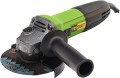 | 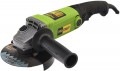 |
|---|---|---|
| Procraft PW1100 | Procraft PW1200E | |
from $20.00 up to $22.16 | from $24.40 | |
| User reviews | ||
| TOP sellers | ||
Model PW1200 without RPM preset, PW1200E model with RPM preset | ||
| Type | angle grinder | angle grinder |
| Power source | mains (230 V) | mains (230 V) |
Specs | ||
| Power consumption | 1100 W | 1200 W |
| Rotation speed | 11000 rpm | 11000 rpm |
| Max. disc diameter | 125 mm | 125 mm |
Additional features | ||
| Features | speed controller | |
| In box | additional handle | additional handle |
General | ||
| Weight | 1.7 kg | 1.9 kg |
| Added to E-Catalog | april 2016 | january 2016 |


Compare Procraft PW1100 and PW1200E
You may be interested in
Procraft PW1100 often compared

Procraft PW1200E often compared


Glossary
Power consumption
The power consumed by the grinder during operation. Usually more than the output (useful) power (see above) due to losses during the conversion of energy from electrical to mechanical. However, the general patterns in this case are the same: a more powerful tool, on the one hand, is usually more performant, on the other hand, it is heavier, larger and more expensive. In addition, the total electricity consumption depends on this indicator; however, grinders, even the most powerful ones, consume relatively little energy, and difficulties can arise only when connecting a high-performance professional tool to weak electrical wiring.
Note that it is much easier to determine the consumed power than the useful one; therefore, only this parameter is often indicated in the characteristics, without specifying the useful power. In general, it is quite possible to compare grinders of the same type using it (see above): a modern tool has approximately the same efficiency, and in most cases the useful power values bare related in the same way as the consumed values.
Note that it is much easier to determine the consumed power than the useful one; therefore, only this parameter is often indicated in the characteristics, without specifying the useful power. In general, it is quite possible to compare grinders of the same type using it (see above): a modern tool has approximately the same efficiency, and in most cases the useful power values bare related in the same way as the consumed values.
Features
— Speed Controller. The ability to limit the engine's maximum speed. Essentially, this function is a smooth speed adjustment; it's convenient when full speed isn't required — for example, in delicate tasks where precision is more important than performance. Note that this feature is found in all types of sanders — including those with a vibrational or belt operation (see "Type"): even in these machines, the vibration frequency or belt speed is determined by the engine's rotations.
— Speed Maintenance. The ability to maintain a set number of rotations regardless of the load on the working attachment. This function is implemented through automation, which adjusts the engine's power accordingly — increasing it under more load and decreasing it under lighter load. Constant rotation speed positively affects both the quality of processing and the lifespan of the working attachments and the tool itself.
— Brushless Motor. The presence of a brushless motor in an electric sander (see "Power Source"). These motors are considered more advanced than traditional brushed motors: they are more energy-efficient, quieter, and do not spark, which can be crucial in fire-hazardous environments. The main downside of brushless motors is their high cost.
— Lighting. This feature is undoubtedly desirable when working in lo...w-light conditions. However, it can also be useful in bright external light: the work area often ends up in shadow (e.g., from the tool itself), making it difficult to work without special lighting.
— Display. A built-in display that can show various information about the device's operation and status. Such a screen provides additional convenience and clarity, but overall, it is quite a specific feature that is rarely found in modern power tools.
— Smartphone Synchronization. The ability to connect the tool to a smartphone or other gadget (like a tablet) via Wi-Fi or Bluetooth. Such a connection is usually used for adjusting work parameters; it's often more convenient to do this through a mobile app than through the controls on the tool itself.
— Rotating Main Handle. The ability to rotate the main handle of the sander around the longitudinal axis. This feature is mainly found in angle models (see "Type") — it provides extra convenience, allowing you to adjust the handle's position according to the situation. This is important for working in unusual positions and hard-to-reach areas.
— Keyless Disc Replacement. The ability to change discs in a sander (usually angle, see "Type") without using keys and other additional tools. The convenience of this feature is clear: you don't need to constantly have a key on hand, keep track of it not getting lost, etc. However, keyless mounting is considered somewhat less reliable than keyed mounting, so it's rarely found in heavy-duty professional models.
— X-LOCK Mounting System. An advanced mounting system for the working attachment, used in some angle machines (see "Type") — predominantly made by Bosch and Makita. This system is somewhat more expensive than traditional 22-millimeter mounting using a nut or washer, but it has several advantages. Firstly, X-LOCK provides the simplest and quickest installation: no need to fuss with additional parts or tools, just place the disc on the spindle and press until it clicks; for removing the attachment, just press a button that disables the lock. Secondly, you can only install the attachment in one correct way relative to the tool — the design of the mounting disallows any other way. The main disadvantage of machines with this system is their incompatibility with cheaper and more common 22 mm standard discs; fittings under X-LOCK are not yet available in every hardware store.
— Collet Chuck. A specially designed chuck used in straight grinders (see "Type"). The grip of such a chuck consists of several elastic petals (usually 2-3) that compress when tightened, securing the working attachment. The main advantages of collets are the speed and convenience in changing attachments, simplicity of design, and low cost.
— Coolant Supply (Coolant). The ability to supply coolant to the work area. This function is mainly found in machines for stone and concrete (see "Type"), as water cooling is most relevant for these materials: it not only prevents overheating but also reduces dust formation. The machine provides a nozzle directed at the working attachment and a fitting for connecting to a water hose.
— Dust Collector Connection. The ability to connect a dust collection container to the tool for collecting dust and other debris generated during operation. Such a container may come with the machine, but this is not guaranteed, and this point should be clarified separately. In any case, a dust collector, while not providing 100% protection against debris, significantly reduces it and simplifies cleanup afterward. Dust collectors can be either reusable or disposable.
— Speed Maintenance. The ability to maintain a set number of rotations regardless of the load on the working attachment. This function is implemented through automation, which adjusts the engine's power accordingly — increasing it under more load and decreasing it under lighter load. Constant rotation speed positively affects both the quality of processing and the lifespan of the working attachments and the tool itself.
— Brushless Motor. The presence of a brushless motor in an electric sander (see "Power Source"). These motors are considered more advanced than traditional brushed motors: they are more energy-efficient, quieter, and do not spark, which can be crucial in fire-hazardous environments. The main downside of brushless motors is their high cost.
— Lighting. This feature is undoubtedly desirable when working in lo...w-light conditions. However, it can also be useful in bright external light: the work area often ends up in shadow (e.g., from the tool itself), making it difficult to work without special lighting.
— Display. A built-in display that can show various information about the device's operation and status. Such a screen provides additional convenience and clarity, but overall, it is quite a specific feature that is rarely found in modern power tools.
— Smartphone Synchronization. The ability to connect the tool to a smartphone or other gadget (like a tablet) via Wi-Fi or Bluetooth. Such a connection is usually used for adjusting work parameters; it's often more convenient to do this through a mobile app than through the controls on the tool itself.
— Rotating Main Handle. The ability to rotate the main handle of the sander around the longitudinal axis. This feature is mainly found in angle models (see "Type") — it provides extra convenience, allowing you to adjust the handle's position according to the situation. This is important for working in unusual positions and hard-to-reach areas.
— Keyless Disc Replacement. The ability to change discs in a sander (usually angle, see "Type") without using keys and other additional tools. The convenience of this feature is clear: you don't need to constantly have a key on hand, keep track of it not getting lost, etc. However, keyless mounting is considered somewhat less reliable than keyed mounting, so it's rarely found in heavy-duty professional models.
— X-LOCK Mounting System. An advanced mounting system for the working attachment, used in some angle machines (see "Type") — predominantly made by Bosch and Makita. This system is somewhat more expensive than traditional 22-millimeter mounting using a nut or washer, but it has several advantages. Firstly, X-LOCK provides the simplest and quickest installation: no need to fuss with additional parts or tools, just place the disc on the spindle and press until it clicks; for removing the attachment, just press a button that disables the lock. Secondly, you can only install the attachment in one correct way relative to the tool — the design of the mounting disallows any other way. The main disadvantage of machines with this system is their incompatibility with cheaper and more common 22 mm standard discs; fittings under X-LOCK are not yet available in every hardware store.
— Collet Chuck. A specially designed chuck used in straight grinders (see "Type"). The grip of such a chuck consists of several elastic petals (usually 2-3) that compress when tightened, securing the working attachment. The main advantages of collets are the speed and convenience in changing attachments, simplicity of design, and low cost.
— Coolant Supply (Coolant). The ability to supply coolant to the work area. This function is mainly found in machines for stone and concrete (see "Type"), as water cooling is most relevant for these materials: it not only prevents overheating but also reduces dust formation. The machine provides a nozzle directed at the working attachment and a fitting for connecting to a water hose.
— Dust Collector Connection. The ability to connect a dust collection container to the tool for collecting dust and other debris generated during operation. Such a container may come with the machine, but this is not guaranteed, and this point should be clarified separately. In any case, a dust collector, while not providing 100% protection against debris, significantly reduces it and simplifies cleanup afterward. Dust collectors can be either reusable or disposable.
Weight
The total weight of the grinder; for battery models (see "Power Source"), usually, it is indicated without taking into account the battery.
This indicator has two meanings. On the one hand, light weight has a positive effect on manoeuvrability and reduces fatigue during work — especially when processing vertical surfaces and ceilings, as well as in other situations where the tool has to be held on weight. On the other hand, for grinders with a vibrational principle of operation (see "Type"), used for processing horizontal surfaces, a significant weight is considered optimal: it allows the tool to fit closer to the material being processed, and also contributes to stability and retention. So when choosing such a model by weight, it is worth considering the features of its intended application.
This indicator has two meanings. On the one hand, light weight has a positive effect on manoeuvrability and reduces fatigue during work — especially when processing vertical surfaces and ceilings, as well as in other situations where the tool has to be held on weight. On the other hand, for grinders with a vibrational principle of operation (see "Type"), used for processing horizontal surfaces, a significant weight is considered optimal: it allows the tool to fit closer to the material being processed, and also contributes to stability and retention. So when choosing such a model by weight, it is worth considering the features of its intended application.