
Comparison Makita GA5040 vs Makita GA5030
Add to comparison | 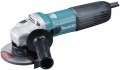 | 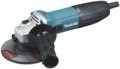 |
|---|---|---|
| Makita GA5040 | Makita GA5030 | |
from $99.32 up to $133.48 | from $102.13 | |
| User reviews | ||
| TOP sellers | ||
Slim body. Low noise level. GA5030 set includes 1 sanding disc, GA5030X3 set includes 5 cutting discs B-45808, 1 grinding discs, GA5030X5 set includes 5 cutting D-25557, 1 grinding discs, GA5030K set includes 1 grinding disc and case, GA5030KSP3 set includes case, 4 discs and cap | ||
| Type | angle grinder | angle grinder |
| Power source | mains (230 V) | mains (230 V) |
Specs | ||
| Power consumption | 1100 W | 720 W |
| Rotation speed | 11000 rpm | 11000 rpm |
| Max. disc diameter | 125 mm | 125 mm |
Protective functions | ||
| Kickback protection | mechanical | |
Additional features | ||
| In box | additional handle disk | additional handle grinding disc |
General | ||
| Noise level | 97 dB | 96 dB |
| Power cord length | 4 m | 2.5 m |
| Dimensions | 303x140x116 mm | 266x138x103 mm |
| Weight | 2.4 kg | 1.8 kg |
| Added to E-Catalog | december 2014 | april 2010 |


Compare Makita GA5040 and GA5030
You may be interested in
My comparisons
Makita GA5030 often compared


Glossary
Power consumption
The power consumed by the grinder during operation. Usually more than the output (useful) power (see above) due to losses during the conversion of energy from electrical to mechanical. However, the general patterns in this case are the same: a more powerful tool, on the one hand, is usually more performant, on the other hand, it is heavier, larger and more expensive. In addition, the total electricity consumption depends on this indicator; however, grinders, even the most powerful ones, consume relatively little energy, and difficulties can arise only when connecting a high-performance professional tool to weak electrical wiring.
Note that it is much easier to determine the consumed power than the useful one; therefore, only this parameter is often indicated in the characteristics, without specifying the useful power. In general, it is quite possible to compare grinders of the same type using it (see above): a modern tool has approximately the same efficiency, and in most cases the useful power values bare related in the same way as the consumed values.
Note that it is much easier to determine the consumed power than the useful one; therefore, only this parameter is often indicated in the characteristics, without specifying the useful power. In general, it is quite possible to compare grinders of the same type using it (see above): a modern tool has approximately the same efficiency, and in most cases the useful power values bare related in the same way as the consumed values.
Kickback protection
Kickback protection is a set of solutions that reduces tool jerking and twisting when the disc binds in material (concrete, metal, stone). It is implemented in two ways: mechanical safety clutch and electronic systems. The clutch (for example, S-automatic from Metabo, SJS/SJS II from Makita) disengages the drive when the torque increases sharply, saving the gearbox and wrist—the tool does not "shoot" out of hands and does not tear gear teeth. Electronics (Bosch KickBack Control, DeWalt E-CLUTCH, Hilti ATC, HiKOKI/Hitachi RFC, Milwaukee AUTOSTOP, Makita AFT) monitors current and accelerations, instantly shutting off the motor and often, in conjunction with a brake, quickly stopping the disc. In comparison: the clutch works even without power, providing a smooth "slip," but the disc continues to rotate briefly; electronic protection shuts down the motor "to zero," but requires functioning electronics and sometimes a restart. In practice, this is important during grooving and cutting of reinforcement, when the risk of binding increases: with protection, the operator controls the tool, reduces dangerous jerks, and protects the gearbox—whether it is a compact 125-mm cordless grinder or a powerful 230-mm corded model.
In box
— Additional Handle. A separate handle for the second hand. In theory, such equipment may make the tool more comfortable to hold with both hands. However, in practice, the absence of an additional handle is often not critical: many tools without it are either designed for one-handed use (like some straight grinders, see "Type") or have other attachments for the second hand (such as a protrusion on the body). So, to answer whether you need an additional handle, you should consider the type and size of the grinder, as well as the specifics of the intended projects. Note also that by default, such a handle is designed for right-handed use, and the possibility of using it in left-handed operation needs to be clarified separately.
— 3-Position Additional Handle. An additional handle installed on a detachable mount and having three installation options: on the left (traditional option for right-handed use), on the right (for left-handed use), and on top (for specific cases — situations when you need to periodically change grip, work in hard-to-reach places, etc.). This function provides extended possibilities for tool customization according to personal preferences. It is mainly found in angular models (see "Type").
— Charger (C). A device for charging the battery in a grinder with the appropriate power type (see "Power Source"). This section usually specifies...the specific model of the charger. Having a "charger" included relieves you from the need to search and purchase it separately; moreover, such a charger is optimally suited at least to the "native" battery, and often to other compatible batteries. The details on the model will be useful primarily in case the included charger is lost or fails, and you have to buy the same or a similar one instead. Moreover, knowing the model of the charger allows you to find detailed data about it and assess the characteristics and features (compatibility with various batteries, additional functions, etc.). At the same time, the configuration "without charger" is also quite popular — see below.
— Without Charger. This feature is indicated exclusively for battery models (machines with other power types — see "Power Source" — by definition do not have a charger, so this point does not need to be clarified for them). The meaning of such a configuration is that modern grinders most often use standard batteries, which also fit other power tools of the same brand and are thus designed for standard "chargers." Thus, if there is already a battery tool "in the household" — the charger for it may turn out to be suitable for the grinder, and you will not need to pay extra for a second copy of the charger. And even if there is no charger available — it can usually be purchased separately without much difficulty (and some tools even allow you to choose the most suitable model of such a device from several options).
— Case / Bag included. The presence of a case or bag for storing and transporting the tool in the supply kit. The case is a suitcase made of durable material and usually has space not only for the grinder itself but also for working tips and other additional accessories. The bag is soft, allowing it to be compactly folded when not needed. Check the availability of a case or bag directly before purchase.
— Dust Collector. A container for collecting dust and other contaminants generated during work. See "Additional — Dust Collector Connection" for more details.
— Extension Pole. A long pole significantly expands the "radius of operation" of the tool: with such equipment, you can reach greater heights, process a large area without moving the platform or other stand, etc. Such capabilities are mainly relevant when processing walls, so the vast majority of grinders with extension poles included pertain to wall sanders (see "Type").
— 3-Position Additional Handle. An additional handle installed on a detachable mount and having three installation options: on the left (traditional option for right-handed use), on the right (for left-handed use), and on top (for specific cases — situations when you need to periodically change grip, work in hard-to-reach places, etc.). This function provides extended possibilities for tool customization according to personal preferences. It is mainly found in angular models (see "Type").
— Charger (C). A device for charging the battery in a grinder with the appropriate power type (see "Power Source"). This section usually specifies...the specific model of the charger. Having a "charger" included relieves you from the need to search and purchase it separately; moreover, such a charger is optimally suited at least to the "native" battery, and often to other compatible batteries. The details on the model will be useful primarily in case the included charger is lost or fails, and you have to buy the same or a similar one instead. Moreover, knowing the model of the charger allows you to find detailed data about it and assess the characteristics and features (compatibility with various batteries, additional functions, etc.). At the same time, the configuration "without charger" is also quite popular — see below.
— Without Charger. This feature is indicated exclusively for battery models (machines with other power types — see "Power Source" — by definition do not have a charger, so this point does not need to be clarified for them). The meaning of such a configuration is that modern grinders most often use standard batteries, which also fit other power tools of the same brand and are thus designed for standard "chargers." Thus, if there is already a battery tool "in the household" — the charger for it may turn out to be suitable for the grinder, and you will not need to pay extra for a second copy of the charger. And even if there is no charger available — it can usually be purchased separately without much difficulty (and some tools even allow you to choose the most suitable model of such a device from several options).
— Case / Bag included. The presence of a case or bag for storing and transporting the tool in the supply kit. The case is a suitcase made of durable material and usually has space not only for the grinder itself but also for working tips and other additional accessories. The bag is soft, allowing it to be compactly folded when not needed. Check the availability of a case or bag directly before purchase.
— Dust Collector. A container for collecting dust and other contaminants generated during work. See "Additional — Dust Collector Connection" for more details.
— Extension Pole. A long pole significantly expands the "radius of operation" of the tool: with such equipment, you can reach greater heights, process a large area without moving the platform or other stand, etc. Such capabilities are mainly relevant when processing walls, so the vast majority of grinders with extension poles included pertain to wall sanders (see "Type").
Noise level
Approximate noise level generated by the grinder during operation. Note that this indicator is quite approximate, because. actual "loudness" can vary markedly depending on the type and shape of the material being processed, the surface it is placed on, and other circumstances. In addition, different manufacturers may use different measurement methods. Nevertheless, this indicator makes it possible to assess how comfortable this or that model is in operation and whether special hearing protection is required.
The most “quiet” modern grinders give out about 65 dB — this is comparable to loud speech at a distance of 1 m; in the loudest, the noise level reaches 107 dB — this is the volume of an industrial workshop.
The most “quiet” modern grinders give out about 65 dB — this is comparable to loud speech at a distance of 1 m; in the loudest, the noise level reaches 107 dB — this is the volume of an industrial workshop.
Power cord length
The length of the network cable can tell you how far from the outlet you can operate the device. Therefore, for domestic use, it is more relevant to choose models with a short cord, for construction work or use in production, in the garage a longer cable is better.
Weight
The total weight of the grinder; for battery models (see "Power Source"), usually, it is indicated without taking into account the battery.
This indicator has two meanings. On the one hand, light weight has a positive effect on manoeuvrability and reduces fatigue during work — especially when processing vertical surfaces and ceilings, as well as in other situations where the tool has to be held on weight. On the other hand, for grinders with a vibrational principle of operation (see "Type"), used for processing horizontal surfaces, a significant weight is considered optimal: it allows the tool to fit closer to the material being processed, and also contributes to stability and retention. So when choosing such a model by weight, it is worth considering the features of its intended application.
This indicator has two meanings. On the one hand, light weight has a positive effect on manoeuvrability and reduces fatigue during work — especially when processing vertical surfaces and ceilings, as well as in other situations where the tool has to be held on weight. On the other hand, for grinders with a vibrational principle of operation (see "Type"), used for processing horizontal surfaces, a significant weight is considered optimal: it allows the tool to fit closer to the material being processed, and also contributes to stability and retention. So when choosing such a model by weight, it is worth considering the features of its intended application.