
Comparison GoodLuck GL4500M vs GoodLuck GL4500
Add to comparison | 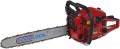 | 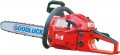 |
|---|---|---|
| GoodLuck GL4500M | GoodLuck GL4500 | |
| Outdated Product | from $46.80 up to $92.72 | |
| User reviews | ||
| TOP sellers | ||
| Product type | chainsaw | chainsaw |
| Type | portable | portable |
| Power source | petrol engine | petrol engine |
Motor | ||
| Engine size | 45 cm³ | 45 cm³ |
| Power | 2000 W | 2000 W |
| Power | 2.72 hp | 2.72 hp |
| Idle speed | 3000 rpm | 2800 rpm |
| No load speed | 11000 rpm | 11000 rpm |
Cutting equipment | ||
| Bar/blade size | 450 mm | 450 mm |
| Chain pitch | 0.325 " | 0.325 " |
Protective functions | ||
| Chain brake |  | |
| Anti-vibration system | | |
General | ||
| Noise level | 116 dB | 110 dB |
| Fuel tank volume | 0.55 L | 0.55 L |
| Oil tank volume | 0.26 L | 0.26 L |
| Size | 460x255x300 mm | |
| Weight | 4.9 kg | 4.9 kg |
| Added to E-Catalog | december 2017 | october 2014 |


Compare GoodLuck GL4500M and GL4500
You may be interested in
My comparisons
GoodLuck GL4500M often compared

GoodLuck GL4500 often compared


Glossary
Idle speed
The speed of rotation of the engine in a saw with an internal combustion engine (see "Power") with no load on the blade and with the speed controller fully released (set to minimum). Theoretically, the lower the idle speed, the lower the fuel consumption without load (ceteris paribus); however, the difference between modern chainsaws is usually so insignificant that this parameter is more of a reference than a real practical value.
Noise level
The noise level produced by the saw during operation. Note that this parameter is rather approximate, because in fact, the “loudness of the work” depends not only on the tool, but also on the material being processed and the characteristics of the environment. Nevertheless, the data given in the characteristics make it possible to assess the comfort of working with the tool. The lower this indicator, the less discomfort the noise will cause, and at high values, even special hearing protection may be needed.
Note that the noise level is usually measured in decibels, and this unit is not linear: for example, a difference of 3 dB corresponds to a difference of 2 times, 10 dB — to 10 times. Therefore, it is easiest to evaluate the noise level using comparative tables. Here is a simplified version of such a table for the range in which modern saws operate:
70 dB — loud conversation of several people in close proximity;
75 dB — a cry in the immediate vicinity;
80 dB — truck engine, mechanical alarm ringing;
85 dB — loud scream;
90 dB — freight car at a distance of 7 – 10 m;
95 dB — subway car at a distance of 7 – 10 m;
100 dB — industrial shop;
110 dB — tractor engine;
120 dB — demolition hammer, thunder from a close lightning strike (pain threshold of auditory perception).
Note that the noise level is usually measured in decibels, and this unit is not linear: for example, a difference of 3 dB corresponds to a difference of 2 times, 10 dB — to 10 times. Therefore, it is easiest to evaluate the noise level using comparative tables. Here is a simplified version of such a table for the range in which modern saws operate:
70 dB — loud conversation of several people in close proximity;
75 dB — a cry in the immediate vicinity;
80 dB — truck engine, mechanical alarm ringing;
85 dB — loud scream;
90 dB — freight car at a distance of 7 – 10 m;
95 dB — subway car at a distance of 7 – 10 m;
100 dB — industrial shop;
110 dB — tractor engine;
120 dB — demolition hammer, thunder from a close lightning strike (pain threshold of auditory perception).
Size
General dimensions of the saw. For a stationary tool (see "Type"), this parameter determines primarily the amount of space that will be required for installation; problems with this can only arise in very tight spaces, so in most cases the dimensions of a stationary saw do not need to be given special attention. In the case of hand-held models, the small size makes it easier to work in hard-to-reach places and improves overall usability. On the other hand, a compact tool inevitably turns out to be low-power; and some jobs by definition require large, heavy saws, with large bar lengths or blade diameters.