
Comparison Microlife A2 Classic vs Microlife A1 Easy
Add to comparison | 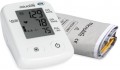 | 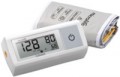 |
|---|---|---|
| Microlife A2 Classic | Microlife A1 Easy | |
| Outdated Product | from $36.60 up to $50.00 | |
| User reviews | ||
| TOP sellers | ||
| Type | auto | auto |
| Place of measurement | shoulder | shoulder |
| Power source | batteries / mains | batteries / mains |
| Batteries | 4xAA | |
| Battery indicator |  | |
| Device dimensions | 120x87x59 mm | 146x65x46 mm |
Specs | ||
| Pressure measuring range | 20 – 280 mmHg | |
| Pulse measurement range | 40 – 200 bpm | |
| Cuff dimensions | 22 – 42 cm | 22 – 42 cm |
| Recording readings | 30 pcs | 1 pcs |
Features | ||
| Functions | pulse measurement determination of arrhythmia measurement error signal auto switch-off | pulse measurement determination of arrhythmia measurement error signal auto switch-off |
| Added to E-Catalog | may 2017 | december 2013 |


Compare Microlife A2 Classic and A1 Easy
You may be interested in
Microlife A2 Classic often compared


Microlife A1 Easy often compared


Glossary
Batteries
The type of batteries used in blood pressure monitors.
— AA. One of the most common types of batteries today. Voltage — 1.5 V. One of the main advantages of this type of power supply is availability: AA batteries are sold almost everywhere where any batteries are sold at all.
— AAA. A kind of reduced analogue of AA batteries (see above) with the same operating voltage of 1.5 V. AAA batteries are also very common, and the dimensions allow them to be used in more compact devices.
— AA. One of the most common types of batteries today. Voltage — 1.5 V. One of the main advantages of this type of power supply is availability: AA batteries are sold almost everywhere where any batteries are sold at all.
— AAA. A kind of reduced analogue of AA batteries (see above) with the same operating voltage of 1.5 V. AAA batteries are also very common, and the dimensions allow them to be used in more compact devices.
Pressure measuring range
The effective measurement range of a blood pressure monitor covers both "upper" and "lower" pressure values. Most modern devices have a lower limit within 0-20 mm Hg, which is adequate for the majority of cases. As for the upper limit, a device with a maximum value of 180 mm Hg is generally sufficient for individuals without a history of significant blood pressure spikes until old age or without serious illnesses. However, for those prone to substantial increases, it's advisable to consider devices with higher upper limit values, which can reach up to 280 mm Hg in modern blood pressure monitors.
Pulse measurement range
The blood pressure monitor's pulse rate measurement capability typically falls within a range of 30-40 to 180 beats per minute. While extending the lower limit is unnecessary for household blood pressure monitors, a higher upper limit may be essential for measurements during intense physical activity or for individuals with conditions causing significant heart rate acceleration, such as tachycardia.
Recording readings
The number of results that can be simultaneously stored in the blood pressure monitor's memory. The ability to store several results in memory can be useful, for example, to compare pressure readings in the morning, afternoon and evening — these results do not have to be manually recorded or memorized.