
Comparison Omron M3 Comfort vs Omron M2+
Add to comparison | 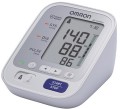 | 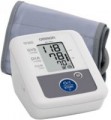 |
|---|---|---|
| Omron M3 Comfort | Omron M2+ | |
from $101.00 | from $82.00 | |
| User reviews | ||
| TOP sellers | ||
| Type | auto | auto |
| Place of measurement | shoulder | shoulder |
| Power source | batteries / mains | batteries / mains |
| Batteries | 4xAA | 4xAA |
| Battery indicator |  |  |
| Device dimensions | 107x79x141 mm | 103x82x140 mm |
| Weight | 250 g | |
Specs | ||
| Pressure measuring range | 0 – 299 mmHg | 40 – 260 mmHg |
| Pulse measurement range | 40 – 180 bpm | 40 – 180 bpm |
| Cuff dimensions | 22 – 42 cm | 22 – 42 cm |
| Memory | 2 persons | |
| Recording readings | 60 pcs | 30 pcs |
Features | ||
| Functions | pulse measurement determination of arrhythmia medium pressure calculation measurement error signal auto switch-off | pulse measurement determination of arrhythmia |
| In box | cover / case batteries | power supply unit cover / case batteries |
| Added to E-Catalog | august 2016 | april 2013 |


Compare Omron M3 Comfort and M2+
Blood pressure monitors Omron M3 Comfort and Omron M2+ have similar features, but there are key differences. M3 Comfort offers a wider blood pressure measurement range (0 – 299 mmHg) compared to M2+ (40 – 260 mmHg), which can be important for users with high blood pressure. Additionally, M3 Comfort supports memory for 60 readings for each of 2 users, whereas M2+ is limited to 30 readings. Otherwise, both devices have similar functions for measuring pulse and detecting arrhythmia, and operate on batteries or from the mains.
You may be interested in
Omron M3 Comfort often compared


Omron M2+ often compared


Glossary
Battery indicator
Here, it refers to a battery level indicator on the blood pressure monitor display, showed as an icon similar to those found on mobile phones. While the charge indication is typically approximate, this feature allows users to monitor battery status and prepare for replacements in advance.
Pressure measuring range
The effective measurement range of a blood pressure monitor covers both "upper" and "lower" pressure values. Most modern devices have a lower limit within 0-20 mm Hg, which is adequate for the majority of cases. As for the upper limit, a device with a maximum value of 180 mm Hg is generally sufficient for individuals without a history of significant blood pressure spikes until old age or without serious illnesses. However, for those prone to substantial increases, it's advisable to consider devices with higher upper limit values, which can reach up to 280 mm Hg in modern blood pressure monitors.
Memory
The number of users that can be stored in the device's memory.
Blood pressure moitors with such capabilities are capable of at least storing data for several measurements for each user, which makes it possible not to get confused in the readings if several people use the device. At the same time, a guest mode is also provided so that the measurement made is not wedged into your list.
Blood pressure moitors with such capabilities are capable of at least storing data for several measurements for each user, which makes it possible not to get confused in the readings if several people use the device. At the same time, a guest mode is also provided so that the measurement made is not wedged into your list.
Recording readings
The number of results that can be simultaneously stored in the blood pressure monitor's memory. The ability to store several results in memory can be useful, for example, to compare pressure readings in the morning, afternoon and evening — these results do not have to be manually recorded or memorized.
Functions
— Pulse measurement. The ability to use a blood pressure monitor to measure heart rate (pulse). This frequency, along with blood pressure, is one of the most important indicators of the state of the cardiovascular system.
— Determination of arrhythmia. Blood pressure monitors with this feature are able to track irregularities in the heartbeat (arrhythmia) — one of the important signals of health problems — and warn the user about it.
— Medium pressure calculation. This function allows you to automatically calculate the average pressure based on several consecutive measurements.
— Signal about measurement errors. Blood pressure monitors with this function are able to display error signals that can affect the accuracy of measurements — such as incorrect cuff application, air leakage from it, movement during measurement, device electronics failure, etc.
— Auto switch-off. Most semi-automatic and automatic models of blood pressure monitors are able to automatically turn off after a few minutes of inactivity. This saves battery power.
— Synchronization with PC. In this case, a wired connection is implied, not Bluetooth. Synchronization of the blood pressure monitor with a PC allows you to track...all the measurement results in one table (in some models — even with the date and time), save the results to the PC, freeing up the device's memory, select measurements for calculating the average pressure, etc.
— Bluetooth. The presence of wireless data transfer technology allows you to use the features described in the paragraph "Synchronization with a PC" by connecting to a smartphone and using a special application. This method is more mobile, easier and faster.
— Voicing the measurements. Such blood pressure monitors are able not only to display the measurement results on the screen, but also to voice them, which can be very useful for elderly people with poor eyesight.
— Date and time indication. Having the ability to display the current date and time is useful for recording blood pressure measurements and tracking them over time. Blood pressure monitors equipped with a clock and calendar feature can automatically store measured pressure results in memory, associating them with specific date and time stamps when there is a recording mode.
— WHO colour scale. The World Health Organization has established standards defining normal, low, or elevated blood pressure values. These standards incorporate a color scale that, after each measurement, aids in assessing the pressure status and determining appropriate actions. It's important to note that individual variations exist, and what constitutes normal pressure differs for each person. Therefore, these standards are generally advisory, providing guidance rather than prescribing specific actions.
— Determination of arrhythmia. Blood pressure monitors with this feature are able to track irregularities in the heartbeat (arrhythmia) — one of the important signals of health problems — and warn the user about it.
— Medium pressure calculation. This function allows you to automatically calculate the average pressure based on several consecutive measurements.
— Signal about measurement errors. Blood pressure monitors with this function are able to display error signals that can affect the accuracy of measurements — such as incorrect cuff application, air leakage from it, movement during measurement, device electronics failure, etc.
— Auto switch-off. Most semi-automatic and automatic models of blood pressure monitors are able to automatically turn off after a few minutes of inactivity. This saves battery power.
— Synchronization with PC. In this case, a wired connection is implied, not Bluetooth. Synchronization of the blood pressure monitor with a PC allows you to track...all the measurement results in one table (in some models — even with the date and time), save the results to the PC, freeing up the device's memory, select measurements for calculating the average pressure, etc.
— Bluetooth. The presence of wireless data transfer technology allows you to use the features described in the paragraph "Synchronization with a PC" by connecting to a smartphone and using a special application. This method is more mobile, easier and faster.
— Voicing the measurements. Such blood pressure monitors are able not only to display the measurement results on the screen, but also to voice them, which can be very useful for elderly people with poor eyesight.
— Date and time indication. Having the ability to display the current date and time is useful for recording blood pressure measurements and tracking them over time. Blood pressure monitors equipped with a clock and calendar feature can automatically store measured pressure results in memory, associating them with specific date and time stamps when there is a recording mode.
— WHO colour scale. The World Health Organization has established standards defining normal, low, or elevated blood pressure values. These standards incorporate a color scale that, after each measurement, aids in assessing the pressure status and determining appropriate actions. It's important to note that individual variations exist, and what constitutes normal pressure differs for each person. Therefore, these standards are generally advisory, providing guidance rather than prescribing specific actions.
In box
— Additional cuff. The blood pressure monitor set includes two cuffs, main and auxiliary, which differ from each other only in standard size. Usually, the auxiliary cuff has a longer length. For example, if the length of the main cuff is 22-36 cm, then the auxiliary cuff will be one size larger, that is, 30-42 cm. An additional larger cuff allows you to expand the circle of users of the blood pressure monitor.
— Power source. Blood pressure monitors with a power supply option can operate using a 230 V household power supply, eliminating the need for frequent battery replacements. Interestingly, many of these monitors also come equipped with batteries, providing users flexibility in choosing the power source for the measuring device.
— Cover/case. The blood pressure monitor comes with a dedicated bag for convenient storage and transportation of all its components. Depending on the tonometer's configuration, the case can accommodate the device, primary and auxiliary cuffs, a stethoscope, spare batteries, a power supply, and instructions. Some cases even include an extra compartment for storing medications. Typically, the tonometer bag is soft.
— Batteries. The blood pressure monitor operates on replaceable batteries, commonly using AA or AAA batteries. This battery-powered design makes the device self-contained, allowing its use in remo...te locations or while traveling without access to a household electrical outlet. However, a drawback of battery-powered blood pressure monitors is the requirement for regular battery replacement or recharging.