
Comparison Ferroli DIVAproject C24 23.5 kW 230 V vs Ferroli DIVA C24 23.5 kW
Add to comparison | 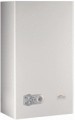 | 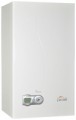 |
|---|---|---|
| Ferroli DIVAproject C24 23.5 kW 230 V | Ferroli DIVA C24 23.5 kW | |
from $377.88 up to $455.60 | from $406.00 up to $675.67 | |
| User reviews | ||
| TOP sellers | ||
| Energy source | gas | gas |
| Installation | wall | wall |
| Type | dual-circuit (heating and DHW) | dual-circuit (heating and DHW) |
| Heating area | 188 m² | 188 m² |
Technical specs | ||
| Heat output | 23.5 kW | 23.5 kW |
| Min. heat output | 7 kW | |
| Power supply | 230 В | 230 В |
| Power consumption | 80 W | |
| Coolant max. T | 90 °С | 90 °С |
| Heating circuit max. pressure | 3 bar | 3 bar |
| DHW circuit max. pressure | 9 bar | 9 bar |
Consumer specs | ||
| Performance (ΔT=25°C) | 13.4 L/min | 13.4 L/min |
| "Summer" mode |  | |
| Warm start | | |
| Circulation pump | | |
Boiler specs | ||
| Efficiency | 91 % | 91 % |
| Combustion chamber | open (atmospheric) | open (atmospheric) |
| Flue diameter | 131 mm | |
| Inlet gas pressure | 20 mbar | |
| Max. gas consumption | 2.73 m³/h | 2.73 m³/h |
| Expansion vessel capacity | 8 L | 8 L |
| Expansion vessel pressure | 1 bar | 1 bar |
Connections | ||
| Mains water intake | 1/2" | |
| DHW flow | 1/2" | |
| Gas supply | 1/2" | |
| Central heating flow | 3/4" | |
| Central heating return | 3/4" | |
Safety | ||
| Safety systems | gas pressure drop water overheating flame loss draft control water circulation failure frost protection | gas pressure drop water overheating flame loss draft control frost protection |
More specs | ||
| Dimensions (HxWxD) | 700x400x330 mm | 700x400x330 mm |
| Weight | 27 kg | 27 kg |
| Added to E-Catalog | august 2014 | october 2013 |


Compare Ferroli DIVAproject C24 and DIVA C24
You may be interested in
My comparisons
Ferroli DIVAproject C24 often compared

Ferroli DIVA C24 often compared

Glossary
Min. heat output
The minimum heat output at which the heating boiler can operate in constant mode. Operation at minimum power allows you to reduce the number of on-and-off cycles that adversely affect the durability of heating boilers.
Power consumption
The maximum electrical power consumed by the boiler during operation. For non-electric models (see Energy source), this power is usually low, as it is required mainly for control circuits and it can be ignored. Regarding electric boilers, it is worth noting that the power consumption in them is most often somewhat higher than the useful one since part of the energy is inevitably dissipated and not used for heating. Accordingly, the ratio of useful and consumed power can be used to evaluate the efficiency of such a boiler.
Flue diameter
The diameter of the pipe through which combustion products are discharged from the combustion chamber.
In boilers with a closed combustion chamber often used the coaxial flue, consisting of two pipes nested one inside the other. At the same time, products of combustion are discharged from the combustion chamber through the inner pipe, and the air is supplied through the gap between the inner and outer ones. For such flues, the diameter is usually shown in the form of two numbers — the diameter of the inner and outer pipes, respectively. The most popular values are 60/100, 80/80 and 80/125. Non-coaxial flues can be 100, 110, 125, 130, 140, 150, 160, 180 and 200 mm.
In boilers with a closed combustion chamber often used the coaxial flue, consisting of two pipes nested one inside the other. At the same time, products of combustion are discharged from the combustion chamber through the inner pipe, and the air is supplied through the gap between the inner and outer ones. For such flues, the diameter is usually shown in the form of two numbers — the diameter of the inner and outer pipes, respectively. The most popular values are 60/100, 80/80 and 80/125. Non-coaxial flues can be 100, 110, 125, 130, 140, 150, 160, 180 and 200 mm.
Inlet gas pressure
It is the optimum gas pressure supplied to the inlet of the boiler system. Most often indicated for natural gas and is about 15-20 mbar. This parameter must match the specs of the gas supply system. However, the pressure in the latter may be higher, which may require the installation of a special gas regulator.
Mains water intake
The diameter of the pipe for connecting the pipe through which cold water is supplied to the boiler for heating and use in the hot water supply system.
Diameters are indicated in inches. It is allowed to connect a pipe of a different diameter through an adapter, but the best option is still a match in size. There are connection options 1/2", 3/4", 1" and 1 1/2".
Diameters are indicated in inches. It is allowed to connect a pipe of a different diameter through an adapter, but the best option is still a match in size. There are connection options 1/2", 3/4", 1" and 1 1/2".
DHW flow
The diameter of the pipe for connecting the pipe through which hot water leaves the boiler for the DHW system.
Diameters are indicated in inches. It is allowed to connect a pipe of a different diameter through an adapter, but the best option is still a match in size.
Diameters are indicated in inches. It is allowed to connect a pipe of a different diameter through an adapter, but the best option is still a match in size.
Gas supply
The diameter of the pipe for connecting the gas supply pipe in the boiler with the corresponding type of power supply (see "Energy source").
Diameters are indicated in inches. In some cases, it is allowed to connect a pipe of a different diameter through an adapter, but the best option is still a match in size. The most common options are 1/2" and 3/4".
Diameters are indicated in inches. In some cases, it is allowed to connect a pipe of a different diameter through an adapter, but the best option is still a match in size. The most common options are 1/2" and 3/4".
Central heating flow
The diameter of the pipe for connecting the pipe through which the heated water enters the heating system from the boiler.
Diameters are indicated in inches. In some cases, it is allowed to connect a pipe of a different diameter through an adapter, but the best option is still a match in size. Among which models stand out for 3/4", 1", 1 1/4" and 1 1/2".
Diameters are indicated in inches. In some cases, it is allowed to connect a pipe of a different diameter through an adapter, but the best option is still a match in size. Among which models stand out for 3/4", 1", 1 1/4" and 1 1/2".
Central heating return
The diameter of the pipe for connecting the pipe through which the cooled water returns from the heating system to the boiler.
Diameters are indicated in inches. In some cases, it is allowed to connect a pipe of a different diameter through an adapter, but the best option is still a match in size.
Diameters are indicated in inches. In some cases, it is allowed to connect a pipe of a different diameter through an adapter, but the best option is still a match in size.