
Comparison Immergas EOLO Star 24-4 E 23.8 kW 230 V vs Immergas EOLO Star 24-3 E 23.4 kW 230 V
Add to comparison | 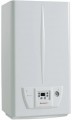 | 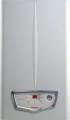 |
|---|---|---|
| Immergas EOLO Star 24-4 E 23.8 kW 230 V | Immergas EOLO Star 24-3 E 23.4 kW 230 V | |
| Outdated Product | from $385.25 up to $479.52 | |
| User reviews | ||
| TOP sellers | ||
| Energy source | gas | gas |
| Installation | wall | wall |
| Type | dual-circuit (heating and DHW) | dual-circuit (heating and DHW) |
| Heating area | 190 m² | 176 m² |
Technical specs | ||
| Heat output | 23.8 kW | 23.4 kW |
| Min. heat output | 6.8 kW | |
| Power supply | 230 В | 230 В |
| Power consumption | 130 W | 135 W |
| Coolant min. T | 35 °С | 35 °С |
| Coolant max. T | 80 °С | 80 °С |
| Heating circuit max. pressure | 3 bar | 3 bar |
| DHW circuit max. pressure | 10 bar | 8 bar |
Consumer specs | ||
| DHW min. T | 35 °С | 35 °С |
| DHW max. T | 55 °С | 55 °С |
| Performance (ΔT=25°C) | 11.1 L/min | 11.1 L/min |
| "Summer" mode |  | |
| Circulation pump | | |
Boiler specs | ||
| Efficiency | 93.4 % | 93.4 % |
| Combustion chamber | closed (turbocharged) | closed (turbocharged) |
| Flue diameter | 60/100 mm | 60/100 mm |
| Inlet gas pressure | 13 mbar | 13 mbar |
| Max. gas consumption | 2.7 m³/h | 2.7 m³/h |
| Expansion vessel capacity | 6 L | 6 L |
| Expansion vessel pressure | 1 bar | 1 bar |
Connections | ||
| Mains water intake | 1/2" | 1/2" |
| DHW flow | 1/2" | 1/2" |
| Gas supply | 3/4" | 3/4" |
| Central heating flow | 3/4" | 3/4" |
| Central heating return | 3/4" | 3/4" |
Safety | ||
| Safety systems | gas pressure drop water overheating flame loss draft control water circulation failure frost protection | gas pressure drop water overheating flame loss draft control water circulation failure frost protection |
More specs | ||
| Dimensions (HxWxD) | 756x440x240 mm | 786x440x240 mm |
| Weight | 29 kg | 29 kg |
| Added to E-Catalog | november 2017 | june 2012 |


Compare Immergas EOLO Star 24-4 E and EOLO Star 24-3 E
You may be interested in
My comparisons
Immergas EOLO Star 24-4 E often compared


Immergas EOLO Star 24-3 E often compared

Glossary
Heating area
A very conditional parameter that slightly characterizes the purpose based on the size of the room. And depending on the height of the ceilings, layout, building design and equipment, actual values may differ significantly. However, this item represents the maximum recommended area of the room that the boiler can effectively heat. However, it is worth considering that different buildings have different thermal insulation properties and modern buildings are much “warmer” than 30-year-old and especially 50-year-old houses. Accordingly, this item is more of a reference nature and does not allow us to fully assess the actual heated area. There is a formula by which you can derive the maximum heating area, knowing the useful power of the boiler and the climatic conditions in which it will be used; For more information on this, see "Useful Power". In our case, the heating area is calculated using the formula “boiler power multiplied by 8”, which is approximately equivalent to use in houses that are several decades old.
Heat output
It is the maximum useful power of the boiler.
The ability of the device to heat a room of a particular area directly depends on this parameter; by power, you can approximately determine the heating area, if this parameter is not indicated in the specs. The most general rule says that for a dwelling with a ceiling height of 2.5 – 3 m, at least 100 W of heat power is needed to heat 1 m2 of area. There are also more detailed calculation methods that take into account specific factors: the climatic zone, heat gain from the outside, design features of the heating system, etc.; they are described in detail in special sources. Also note that in dual-circuit boilers (see "Type"), part of the heat generated is used to heat water for the hot water supply; this must be taken into account when evaluating the output power.
It is believed that boilers with a power of more than 30 kW must be installed in separate rooms (boiler rooms).
The ability of the device to heat a room of a particular area directly depends on this parameter; by power, you can approximately determine the heating area, if this parameter is not indicated in the specs. The most general rule says that for a dwelling with a ceiling height of 2.5 – 3 m, at least 100 W of heat power is needed to heat 1 m2 of area. There are also more detailed calculation methods that take into account specific factors: the climatic zone, heat gain from the outside, design features of the heating system, etc.; they are described in detail in special sources. Also note that in dual-circuit boilers (see "Type"), part of the heat generated is used to heat water for the hot water supply; this must be taken into account when evaluating the output power.
It is believed that boilers with a power of more than 30 kW must be installed in separate rooms (boiler rooms).
Min. heat output
The minimum heat output at which the heating boiler can operate in constant mode. Operation at minimum power allows you to reduce the number of on-and-off cycles that adversely affect the durability of heating boilers.
Power consumption
The maximum electrical power consumed by the boiler during operation. For non-electric models (see Energy source), this power is usually low, as it is required mainly for control circuits and it can be ignored. Regarding electric boilers, it is worth noting that the power consumption in them is most often somewhat higher than the useful one since part of the energy is inevitably dissipated and not used for heating. Accordingly, the ratio of useful and consumed power can be used to evaluate the efficiency of such a boiler.
DHW circuit max. pressure
The maximum pressure in the hot water circuit (DHW) at which it can operate for a long time without failures and damage. See "Heating circuit maximum pressure".