
Comparison Yongnuo YN-565EX vs Yongnuo YN-568EX
Add to comparison | 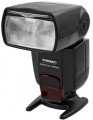 | 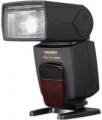 |
|---|---|---|
| Yongnuo YN-565EX | Yongnuo YN-568EX | |
from $110.00 | from $167.99 | |
| User reviews | ||
| TOP sellers | ||
| Type | regular (classic) | regular (classic) |
| Camera compatibility | Canon Nikon Olympus Panasonic Pentax Sony | Canon Nikon Olympus Panasonic Pentax Sony |
Specs | ||
| Guide number | 39 | 58 |
| Reload time | 3 с | 3 с |
| Pulse duration | 1/200 c | 1/200 c |
| TTL | E-TTL, I-TTL | E-TTL, I-TTL |
| Power management | + | + |
| Beam angle | 24 - 105 mm | 24 - 105 mm |
| Rotary head |  | |
| Head angle | vertical - 97 degrees, horizontal - 270 degrees | vertically - 97 degrees, horizontally - 360 degrees |
Features | ||
| Features | autofocus illumination automatic zoom manual zoom master mode slave mode Оптическая ловушка | autofocus illumination automatic zoom manual zoom master mode slave mode Оптическая ловушка |
| Wireless control | + | + |
Power supply | ||
| Power source | 4xAA | 4xAA |
General | ||
| Screen | | |
| Screen backlight | | |
| Added to E-Catalog | october 2013 | october 2013 |


Compare Yongnuo YN-565EX and YN-568EX
You may be interested in
My comparisons
Yongnuo YN-565EX often compared


Yongnuo YN-568EX often compared


Glossary
Guide number
The guide number is the main characteristic that describes the power of the light pulse of the flash. It is described as the maximum distance (in metres) at which, at ISO 100 and f/1 lens speed (aperture 1), a flash is able to illuminate an "average" subject sufficiently for a normal exposure; in other words, at what distance from the flash it will be possible to normally shoot the scene at the specified ISO and aperture.
There are formulas by which, knowing the guide number, you can derive the practical shooting distance for each specific value of sensitivity and aperture. The simplest formula used to calculate the distance at ISO 100 is: S=N/f, where S is the distance, N is the guide number, f is the aperture value. For example, for a guide number of 56 and an f/2.8 lens, this distance would be 56/2.8 = 20 m. Increasing or decreasing sensitivity by a factor of 2 would increase or decrease the specified distance by approximately 1.4 times, respectively. If you need to calculate the distance as accurately as possible, you should refer to more detailed formulas that can be found in specialized sources.
Separately, it is worth noting that the leading numbers of flashes, usually, are indicated by manufacturers for specific focal lengths of lenses. This is due to the fact that the shorter the focal length and, accordingly, the wider the viewing angle, the more light is needed to illuminate the scene being shot and the more powerful the flash pulse should b...e (at the same distance). Therefore, when choosing by the guide number, it makes sense to pay attention to the focal length indicated by the manufacturer and select a model with a power reserve — especially since guide numbers are often prescribed for rather “long-range” lenses (with a focal length of about 80-100 mm in equiv. 35 mm).
There are formulas by which, knowing the guide number, you can derive the practical shooting distance for each specific value of sensitivity and aperture. The simplest formula used to calculate the distance at ISO 100 is: S=N/f, where S is the distance, N is the guide number, f is the aperture value. For example, for a guide number of 56 and an f/2.8 lens, this distance would be 56/2.8 = 20 m. Increasing or decreasing sensitivity by a factor of 2 would increase or decrease the specified distance by approximately 1.4 times, respectively. If you need to calculate the distance as accurately as possible, you should refer to more detailed formulas that can be found in specialized sources.
Separately, it is worth noting that the leading numbers of flashes, usually, are indicated by manufacturers for specific focal lengths of lenses. This is due to the fact that the shorter the focal length and, accordingly, the wider the viewing angle, the more light is needed to illuminate the scene being shot and the more powerful the flash pulse should b...e (at the same distance). Therefore, when choosing by the guide number, it makes sense to pay attention to the focal length indicated by the manufacturer and select a model with a power reserve — especially since guide numbers are often prescribed for rather “long-range” lenses (with a focal length of about 80-100 mm in equiv. 35 mm).