
Comparison Eagle TV4267 vs KVADO K-133
Add to comparison | 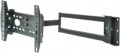 | 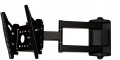 |
|---|---|---|
| Eagle TV4267 | KVADO K-133 | |
from $27.96 up to $29.16 | from $16.92 up to $27.00 | |
| TOP sellers | ||
| Type | wall mount | wall mount |
Specs | ||
| Minimum size | 15 " | 15 " |
| Max. size | 42 " | 37 " |
| Max. weight | 25 kg | 25 kg |
| Minimum distance from the wall | 105 mm | 105 mm |
| Max. distance from wall | 670 mm | 430 mm |
| Adjustments | tilt turn depth adjustment slide rotation | tilt turn depth adjustment slide rotation |
| Built-in level |  |  |
Angles and dimensions | ||
| Upward tilt angle | 15 ° | 15 ° |
| Downward tilt angle | 15 ° | 15 ° |
| Turn angle | 180 ° | 360 ° |
| Rotation angle | 24 ° | |
| VESA | 50x50 mm 75x75mm 100x100 mm 100x200mm 200x100mm 200x200mm | 50x50 mm 75x75mm 100x100 mm 100x200mm 200x100mm 200x200mm |
General | ||
| Dimensions (WxHxD) | 100x160 mm | |
| Color | ||
| Added to E-Catalog | june 2016 | august 2013 |


Compare Eagle TV4267 and KVADO K-133
You may be interested in
KVADO K-133 often compared


Glossary
Max. size
The maximum size of the TV screen that can be installed on the stand/mount. Like the minimum size (see above), it is in some way a conditional indicator — TVs with a larger size can also fit for the mount, and then the main determining parameter will be the maximum weight (see below).
Max. distance from wall
The maximum distance from the TV mounting point to the wall (in the case of ceiling mounts, to the ceiling) provided by the mount. See "Minimum distance from wall" for details.
Built-in level
The presence of a water level on the body of the device greatly facilitates the installation of a wall mount, helping to hang the TV mount perfectly straight.
Turn angle
The angle within which the screen installed on the mount can rotate. Measured from far left to far right. In modern models, it can reach 180°.
Rotation angle
The angle within which the screen installed on the mount can rotate. Rotation refers to turning around a horizontal axis perpendicular to the screen; see "Adjustments" for details. And the angle is usually indicated from one extreme position to another.
According to this parameter, two categories of mounts can be distinguished. In one of them, the rotation angle is small — about 10 – 15 ° — and this feature is mainly intended to compensate for inaccuracies made during the installation of the structure: even if the mount hangs slightly unevenly, rotation allows you to set the screen straight. The second variety is models with a rotation angle of 180° and above (up to 360°); they allow user to rotate the screen from landscape to portrait and vice versa.
According to this parameter, two categories of mounts can be distinguished. In one of them, the rotation angle is small — about 10 – 15 ° — and this feature is mainly intended to compensate for inaccuracies made during the installation of the structure: even if the mount hangs slightly unevenly, rotation allows you to set the screen straight. The second variety is models with a rotation angle of 180° and above (up to 360°); they allow user to rotate the screen from landscape to portrait and vice versa.