
Comparison Remax RB-T9 vs Remax RB-T7
Add to comparison | 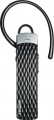 | 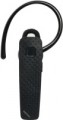 |
|---|---|---|
| Remax RB-T9 | Remax RB-T7 | |
from $6.87 | from $11.12 up to $11.96 | |
| User reviews | ||
| TOP sellers | ||
Up to 4 devices can be connected at the same time. 6 hours talk time. Ear mount. Noise suppression. Volume control. The headset supports 4 languages: English, French, Spanish and Chinese. | ||
| Device | bluetooth headset | bluetooth headset |
| Design | earbuds | earbuds |
| Behind ear |  | |
| Connection | Bluetooth v4.1 | Bluetooth v4.1 |
| Range | 10 m | 10 m |
Specs | ||
| Frequency range | 20 – 20000 Hz | 20 – 20000 Hz |
| Features | Multipoint noise cancellation volume control voice dialing A2DP profile AVRCP profile | Multipoint noise cancellation volume control voice dialing A2DP profile AVRCP profile |
General | ||
| Power source | battery | battery |
| Battery capacity | 100 mAh | |
| Battery life | 6 h | 4 h |
| USB charging port | microUSB | microUSB |
| Charging time | 2 h | |
| Replaceable ear hooks | | |
| Replaceable silicone tips | |  |
| Dimensions (WxHxD) | 58x22x14 mm | |
| Weight | 8 g | 8 g |
| Color | ||
| Added to E-Catalog | august 2017 | august 2016 |


Compare Remax RB-T9 and RB-T7
You may be interested in
My comparisons
Remax RB-T9 often compared


Remax RB-T7 often compared
Glossary
Battery capacity
The capacity of the battery installed in the device (see "Power").
Theoretically, a higher battery capacity allows you to work longer on one charge. At the same time, the actual battery life will also depend on the power consumption of the device, and it is determined by a number of technical specs. Therefore, it is better to evaluate battery life not by battery capacity, but by directly claimed operating time (see below). It makes sense to use this parameter if the operating time is not specified; at the same time, it makes sense to make conclusions only if devices similar in specs differ in capacity — for example, 60 and 110 mAh.
Theoretically, a higher battery capacity allows you to work longer on one charge. At the same time, the actual battery life will also depend on the power consumption of the device, and it is determined by a number of technical specs. Therefore, it is better to evaluate battery life not by battery capacity, but by directly claimed operating time (see below). It makes sense to use this parameter if the operating time is not specified; at the same time, it makes sense to make conclusions only if devices similar in specs differ in capacity — for example, 60 and 110 mAh.
Battery life
Time of operation of the self-powered device (see "Power") on one battery charge.
Usually, the battery life in the talk mode is meant, when the device consumes the most energy. In headsets with high-capacity batteries, this battery life can be 9 hours or more. However, talking for several hours without pauses is almost impossible, so in fact the operating time is noticeably longer than in the specifications. So, a headset with an operating time of the same 9 hours is most likely quite enough for a 12-hour work shift, even if you have to constantly make calls through it; and if we are talking about only 5 – 6 calls per day, then the charge is guaranteed to last for several days, or even a week. At the same time, the difference in the claimed operating time is usually quite consistent with the difference in actual battery life, and it is quite possible to compare the real capabilities of different models by it.
Usually, the battery life in the talk mode is meant, when the device consumes the most energy. In headsets with high-capacity batteries, this battery life can be 9 hours or more. However, talking for several hours without pauses is almost impossible, so in fact the operating time is noticeably longer than in the specifications. So, a headset with an operating time of the same 9 hours is most likely quite enough for a 12-hour work shift, even if you have to constantly make calls through it; and if we are talking about only 5 – 6 calls per day, then the charge is guaranteed to last for several days, or even a week. At the same time, the difference in the claimed operating time is usually quite consistent with the difference in actual battery life, and it is quite possible to compare the real capabilities of different models by it.
Charging time
The time it takes to fully charge the battery in powered headsets.
In this case, we mean the time it takes to charge the battery from 0 to 100% when using a standard charger (or a third-party charger with identical specs). Accordingly, this indicator may differ from the stated one, depending on the specifics of the situation. However, it is quite possible to evaluate different models using it, compare them with each other and choose a headset with fast charging.
We also note that increasing the battery capacity inevitably implies an increase in charging time. To compensate for this point, special fast charging technologies can be used. However, they affect the cost and require the use of specialized chargers.
In this case, we mean the time it takes to charge the battery from 0 to 100% when using a standard charger (or a third-party charger with identical specs). Accordingly, this indicator may differ from the stated one, depending on the specifics of the situation. However, it is quite possible to evaluate different models using it, compare them with each other and choose a headset with fast charging.
We also note that increasing the battery capacity inevitably implies an increase in charging time. To compensate for this point, special fast charging technologies can be used. However, they affect the cost and require the use of specialized chargers.
Replaceable silicone tips
Replaceable silicone tips that come in a box with with the Bluetooth headset (see "Device").
Modern headsets are traditionally equipped with in-ear headphones or earbuds (see "Design"); both of them are held in the ear by a soft attachment, usually made of silicone. The size of such a tip may not be suitable for the user — in this case, the ability to change it to another, more convenient one, will be essential. Most often, there are three replaceable tip in the kit — large, regular and small.
Modern headsets are traditionally equipped with in-ear headphones or earbuds (see "Design"); both of them are held in the ear by a soft attachment, usually made of silicone. The size of such a tip may not be suitable for the user — in this case, the ability to change it to another, more convenient one, will be essential. Most often, there are three replaceable tip in the kit — large, regular and small.