
Comparison TP-LINK RE305 vs TP-LINK RE350
Add to comparison | 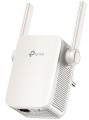 | 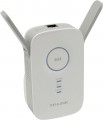 |
|---|---|---|
| TP-LINK RE305 | TP-LINK RE350 | |
| Compare prices 10 | Compare prices 6 | |
| User reviews | ||
| TOP sellers | ||
| Product type | Wi-Fi range extender | Wi-Fi range extender |
| Data input (WAN-port) | Ethernet (RJ45) Wi-Fi | Ethernet (RJ45) Wi-Fi |
Wireless Wi-Fi connection | ||
| Wi-Fi standards | Wi-Fi 3 (802.11g) Wi-Fi 4 (802.11n) Wi-Fi 5 (802.11ac) | Wi-Fi 3 (802.11g) Wi-Fi 4 (802.11n) Wi-Fi 5 (802.11ac) |
| Frequency band | 2.4GHz 5 GHz | 2.4GHz 5 GHz |
| Operating ranges | dual-band (2.4 GHz and 5 GHz) | dual-band (2.4 GHz and 5 GHz) |
| Wireless speed 2.4 GHz | 300 Mbps | 300 Mbps |
| Wireless speed 5 GHz | 867 Mbps | 867 Mbps |
Connection and LAN | ||
| LAN | 1 port 100 Mbps | |
Antenna and transmitter | ||
| Number of antennas | 2 | 2 |
| Antenna type | external | external |
| 2.4 / 5 GHz antennas | 2 | 2 |
| Transmitter power | 17 dBm | 20 dBm |
| Signal strength 2.4 GHz | 17 dBm | |
| Signal strength 5 GHz | 17 dBm | |
Functions | ||
| Features | repeater | repeater |
Security | ||
| Safety standards | WPA WEP WPA2 | WPA WEP WPA2 |
General | ||
| Dimensions | 80x78x77 mm | 126x43x75 mm |
| Color | ||
| Added to E-Catalog | november 2017 | february 2017 |




Compare TP-LINK RE305 and RE350
Price comparison
You may be interested in
My comparisons
TP-LINK RE305 often compared


Glossary
LAN
In this case, LAN means standard network connectors (known as RJ-45) designed for wired connection of LAN devices — PCs, servers, additional access points, etc. The number of ports corresponds to the number of devices that can be directly connected to wired equipment. way.
In terms of speed, 100 Mbps (Fast Ethernet) and 1 Gbps (Gigabit Ethernet) are the most popular options today. At the same time, thanks to the development of technology, more and more gigabit devices are being produced, although in fact this speed is critical only when transferring large amounts of information. At the same time, some models, in addition to the standard speed of the main LAN ports, may have a 2.5 Gbps, 5 Gbps and even 10 Gbps LAN port with increased bandwidth.
In terms of speed, 100 Mbps (Fast Ethernet) and 1 Gbps (Gigabit Ethernet) are the most popular options today. At the same time, thanks to the development of technology, more and more gigabit devices are being produced, although in fact this speed is critical only when transferring large amounts of information. At the same time, some models, in addition to the standard speed of the main LAN ports, may have a 2.5 Gbps, 5 Gbps and even 10 Gbps LAN port with increased bandwidth.
Transmitter power
Rated power of the Wi-Fi transmitter used in the device. If multiple bands are supported (see “Ranges of operation”) the power for different frequencies may be different, for such cases the maximum value is indicated here.
The total transmitting power provided by the device directly depends on this parameter. This power can be calculated by adding the transmitter power and the antenna gain (see above): for example, a 20 dBm transmitter coupled with a 5 dBi antenna results in a total power of 25 dBm (in the main antenna coverage area). For simple domestic use (for example, buying a router in a small apartment), such details are not required, but in the professional field it often becomes necessary to use wireless devices of a strictly defined power. Detailed recommendations on this matter for different situations can be found in special sources, but here we note that the total value of 26 dBm or more allows the device to be classified as equipment with a powerful transmitter. At the same time, such capabilities are not always required in fact: excessive power can create a lot of interference both for surrounding devices and for the transmitter itself (especially in urban and other similar conditions), as well as degrade the quality of the connection with low-power electronics. And for effective communication over a long distance, both the equipment itself and external devices must have the appropriate power (which is far from alway...s achievable). So, when choosing, you should not chase the maximum number of decibels, but take into account the recommendations for a particular case; in addition, a Wi-Fi amplifier or MESH system often turns out to be a good alternative to a powerful transmitter.
The total transmitting power provided by the device directly depends on this parameter. This power can be calculated by adding the transmitter power and the antenna gain (see above): for example, a 20 dBm transmitter coupled with a 5 dBi antenna results in a total power of 25 dBm (in the main antenna coverage area). For simple domestic use (for example, buying a router in a small apartment), such details are not required, but in the professional field it often becomes necessary to use wireless devices of a strictly defined power. Detailed recommendations on this matter for different situations can be found in special sources, but here we note that the total value of 26 dBm or more allows the device to be classified as equipment with a powerful transmitter. At the same time, such capabilities are not always required in fact: excessive power can create a lot of interference both for surrounding devices and for the transmitter itself (especially in urban and other similar conditions), as well as degrade the quality of the connection with low-power electronics. And for effective communication over a long distance, both the equipment itself and external devices must have the appropriate power (which is far from alway...s achievable). So, when choosing, you should not chase the maximum number of decibels, but take into account the recommendations for a particular case; in addition, a Wi-Fi amplifier or MESH system often turns out to be a good alternative to a powerful transmitter.
Signal strength 2.4 GHz
The power of the transmitter installed in the equipment when operating in the 2.4 GHz band (see "Frequency Band").
This parameter directly affects the overall power and, accordingly, the communication efficiency. For more on this, see p. "Transmitter power" above, but here we separately emphasize that high power is not always required, and in some cases it is frankly harmful.
This parameter directly affects the overall power and, accordingly, the communication efficiency. For more on this, see p. "Transmitter power" above, but here we separately emphasize that high power is not always required, and in some cases it is frankly harmful.
Signal strength 5 GHz
The power of the transmitter installed in the equipment when operating in the 5 GHz band (see "Frequency Band").
This parameter directly affects the overall power and, accordingly, the communication efficiency. For more on this, see p. "Transmitter power" above, but here we separately emphasize that high power is not always required, and in some cases it is frankly harmful.
This parameter directly affects the overall power and, accordingly, the communication efficiency. For more on this, see p. "Transmitter power" above, but here we separately emphasize that high power is not always required, and in some cases it is frankly harmful.