
Comparison Netis WF2411E vs Netis WF2419E
Add to comparison | 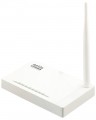 | 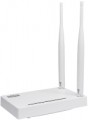 |
|---|---|---|
| Netis WF2411E | Netis WF2419E | |
from $11.28 up to $13.60 | from $19.99 | |
| User reviews | ||
| TOP sellers | ||
| Product type | router | router |
| Data input (WAN-port) | Ethernet (RJ45) Wi-Fi | Ethernet (RJ45) Wi-Fi |
Wireless Wi-Fi connection | ||
| Wi-Fi standards | Wi-Fi 3 (802.11g) Wi-Fi 4 (802.11n) | Wi-Fi 3 (802.11g) Wi-Fi 4 (802.11n) |
| Frequency band | 2.4GHz | 2.4GHz |
Connection and LAN | ||
| WAN | 1 port 100 Mbps | 1 port 100 Mbps |
| LAN | 4 ports 100 Mbps | 4 ports 100 Mbps |
Antenna and transmitter | ||
| Number of antennas | 1 | 2 |
| Antenna type | external | external |
| Gain | 5 dBi | 5 dBi |
| 2.4 GHz antennas | 1 | 2 |
| Transmitter power | 20 dBm | 20 dBm |
Functions | ||
| Features | NAT bridge mode repeater firewall | NAT bridge mode repeater firewall |
| More features | DHCP server VPN | DHCP server VPN |
Security | ||
| Safety standards | WPA WEP WPA2 | WPA WEP WPA2 |
General | ||
| Dimensions | 133x99x27 mm | |
| Weight | 149 g | |
| Color | ||
| Added to E-Catalog | february 2017 | february 2016 |


Compare Netis WF2411E and WF2419E
You may be interested in
My comparisons
Netis WF2411E often compared


Netis WF2419E often compared


Glossary
Number of antennas
The total number of antennas (of all types — see below) provided in the design of the device.
In modern Wi-Fi equipment, this indicator can be different: in addition to the simplest devices with 1 antenna, there are models where this number is 2, 3, 4 and even more. The point of using multiple antennas is twofold. Firstly, if there are several external devices per antenna, they have to share the bandwidth among themselves, and the actual communication speed for each subscriber drops accordingly. Secondly, such a design may also be required when communicating with one external device — to work with MU-MIMO technology (see below), which allows you to fully realize the capabilities of modern Wi-Fi standards.
Anyway, more antennas, usually, means a more advanced and functional device. On the other hand, this parameter significantly affects the cost; so specifically looking for equipment with numerous antennas makes sense mainly when the speed and stability of communication are critical.
Note that antennas intended for mobile communications may also be considered in this clause. So when choosing a model with support for mobile networks, it's ok to clarify this point.
In modern Wi-Fi equipment, this indicator can be different: in addition to the simplest devices with 1 antenna, there are models where this number is 2, 3, 4 and even more. The point of using multiple antennas is twofold. Firstly, if there are several external devices per antenna, they have to share the bandwidth among themselves, and the actual communication speed for each subscriber drops accordingly. Secondly, such a design may also be required when communicating with one external device — to work with MU-MIMO technology (see below), which allows you to fully realize the capabilities of modern Wi-Fi standards.
Anyway, more antennas, usually, means a more advanced and functional device. On the other hand, this parameter significantly affects the cost; so specifically looking for equipment with numerous antennas makes sense mainly when the speed and stability of communication are critical.
Note that antennas intended for mobile communications may also be considered in this clause. So when choosing a model with support for mobile networks, it's ok to clarify this point.
2.4 GHz antennas
The total number of antennas in the router that are responsible for communication in the 2.4 GHz band. For details about the number of antennas, see "Total antennas", about the range — "Frequency range".