
Comparison Manfrotto MT190XPRO3 vs Manfrotto 055XPRO3
Add to comparison | 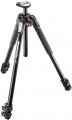 | 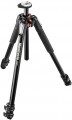 |
|---|---|---|
| Manfrotto MT190XPRO3 | Manfrotto 055XPRO3 | |
from $274.95 | Compare prices 2 | |
| TOP sellers | ||
Quick rotation of the central column to a horizontal position. Easylink mount. Two level indicators. Wide height range. High quality materials and assembly. Withstands loads up to 9 kg. No head included. Heavy. | ||
| Type | tripod | tripod |
| Mount | floor | floor |
| Features | cameras | cameras |
Specs | ||
| Minimum height | 9 cm | 9 cm |
| Maximum height | 160 cm | 170 cm |
| Rod diameter | 25 mm | 28 mm |
| Leg sections | 3 | 3 |
| Central bar reverse |  |  |
| Horizontal centre bar | | |
| Extra equipment mount | | |
| Built-in level | | |
| Maximum load | 7 kg | 9 kg |
General | ||
| Body material (legs) | aluminum | aluminum |
| Support material | rubber | rubber |
| Weight | 2 kg | 2.5 kg |
| Length (folded) | 59 cm | 61 cm |
| Color | ||
| Added to E-Catalog | february 2015 | october 2014 |




Compare Manfrotto MT190XPRO3 and 055XPRO3
Price comparison
You may be interested in
My comparisons
Manfrotto MT190XPRO3 often compared

Manfrotto 055XPRO3 often compared


Glossary
Maximum height
The maximum height from the base on which the tripod base can be mounted.
For desktop use (see "Installation"), a large height is not required, therefore, in most of these models, this figure does not exceed 20 cm — the only exceptions are some specific monopods. Accordingly, the difference in height between different desktop structures in most cases does not matter much. But in the floor models, the most "undersized" have a maximum height of about 40 – 50 cm, and the highest ones are able to open up to 2.5 m and even higher. In such cases, the choice should take into account the specifics of use. So, it makes sense to specifically look for a model at 150 – 160 cm if it is fundamentally important to install the camera at eye level (eye level is usually about 10 cm lower than a person’s height). At the same time, most camcorders and many cameras have swivel screens that allow you to comfortably look at the device from top to bottom; and even in the absence of such a screen, bending down to the level of the camera is not so difficult. And it makes sense to pay attention to tripods with a height of 170 cm and above mainly in those cases when shooting over heads is planned — for example, reports from public events.
For desktop use (see "Installation"), a large height is not required, therefore, in most of these models, this figure does not exceed 20 cm — the only exceptions are some specific monopods. Accordingly, the difference in height between different desktop structures in most cases does not matter much. But in the floor models, the most "undersized" have a maximum height of about 40 – 50 cm, and the highest ones are able to open up to 2.5 m and even higher. In such cases, the choice should take into account the specifics of use. So, it makes sense to specifically look for a model at 150 – 160 cm if it is fundamentally important to install the camera at eye level (eye level is usually about 10 cm lower than a person’s height). At the same time, most camcorders and many cameras have swivel screens that allow you to comfortably look at the device from top to bottom; and even in the absence of such a screen, bending down to the level of the camera is not so difficult. And it makes sense to pay attention to tripods with a height of 170 cm and above mainly in those cases when shooting over heads is planned — for example, reports from public events.
Rod diameter
The diameter of the centre shaft of a tripod or the main shaft of a monopod (see "Type"). In both cases, thicker rods increase the weight and dimensions of the structure, but have a positive effect on strength. And for classic tripods, a lot of weight can be an advantage — a massive rod has a positive effect on stability, especially in the lowered position.
Central bar reverse
The ability to turn the central rod of a classic tripod (see "Type") "upside down" — so that the platform is not above the top of the tripod, but below it, between the legs. Thanks to this, you can install the camera at a very small (in many models — almost zero) height, which can be useful, for example, when shooting macro.
Maximum load
The maximum camera weight that this tripod can support.
If the tripod is purchased for use with a smartphone or action camera, you can ignore this parameter: the weight of such gadgets usually does not exceed 200 g, any tripod of the corresponding specialization can easily handle such a load (see "By Purpose"). Compact point-and-shoot cameras usually weigh up to 300 g, and amateur video cameras - up to 700 g; but in both cases, there are also more massive models. This should be taken into account when choosing a tabletop tripod (see "Installation") for such equipment - some tabletop models have rather limited weight restrictions; but with floor-standing ones, there are usually no difficulties.
But if a tripod is purchased for professional equipment, special attention should be paid to the permissible weight. Thus, a professional video camera can “pull” 2.5 kg or even more; the average weight of a SLR camera is 600 – 800 g, but this is only the “body”, to which the weight of the optics is added – and in some powerful telephoto lenses it can exceed 2 kg. So such devices may require quite “durable” tripods.
If the tripod is purchased for use with a smartphone or action camera, you can ignore this parameter: the weight of such gadgets usually does not exceed 200 g, any tripod of the corresponding specialization can easily handle such a load (see "By Purpose"). Compact point-and-shoot cameras usually weigh up to 300 g, and amateur video cameras - up to 700 g; but in both cases, there are also more massive models. This should be taken into account when choosing a tabletop tripod (see "Installation") for such equipment - some tabletop models have rather limited weight restrictions; but with floor-standing ones, there are usually no difficulties.
But if a tripod is purchased for professional equipment, special attention should be paid to the permissible weight. Thus, a professional video camera can “pull” 2.5 kg or even more; the average weight of a SLR camera is 600 – 800 g, but this is only the “body”, to which the weight of the optics is added – and in some powerful telephoto lenses it can exceed 2 kg. So such devices may require quite “durable” tripods.